
ChatGPT For Ecommerce: What To Do Now That Instant Checkout Is Gone
OpenAI dropped ChatGPT's Instant Checkout in 2026. See what replaced it and how to prepare your store for AI-driven product discovery.


-
OpenAI launched Instant Checkout with big promises in September 2025, then quietly dropped it six months later when adoption never materialized.
-
ChatGPT sessions convert at roughly 15.9%, compared to 1.8% for Google organic traffic, so the platform still drives real purchase intent, it’s just not happening through in-chat checkout anymore.
-
In its place: visual, comparison-first shopping for every user, free tier included, powered by an expanded Agentic Commerce Protocol (ACP) that surfaces product images, prices, and side-by-side comparisons, checkout still happens on the retailer’s own site.
Plenty of merchants spent the past year building toward ChatGPT sending them a finished, paid order. It seemed like a safe opportunity at first, but it never worked at scale, and the platform has already moved on from it.
Here’s what replaced it, and where the real opportunity sits now.
What Happened To ChatGPT Instant Checkout
In September 2025, OpenAI launched Instant Checkout, letting shoppers complete a purchase without leaving the chat. Etsy went live first, with Shopify, Walmart, and Sam’s Club “coming soon.” Shopify’s president called it the “new frontier” for online retail.
The frontier didn’t hold. By February 2026, Forrester found only about 30 Shopify merchants were actually live on the feature, a rounding error against the million once promised.
By March 2026, OpenAI confirmed it was deprioritizing Instant Checkout as a standalone product, saying it “did not offer the level of flexibility” merchants and shoppers needed.
It wasn’t a strategy shift, it was a practical problem. Handling checkout, fulfillment, returns, and customer service inside someone else’s chat interface is a much bigger lift for a merchant than most were ready for, and OpenAI found the enablement work far harder to scale than expected.
What Replaced It
OpenAI didn’t abandon ecommerce, it repositioned around what ChatGPT actually does well: helping people figure out what to buy, not processing the payment itself.
The current experience, rolled out to every ChatGPT tier including the free plan, includes:
- Visual product browsing, with real images instead of text-only recommendations.
- Side-by-side comparisons, showing price, ratings, and key features across products in a table.
- Image-based search, where a shopper uploads a photo and gets similar products back.
- Conversational refinement, narrowing options by budget, style, or use case through natural back-and-forth.
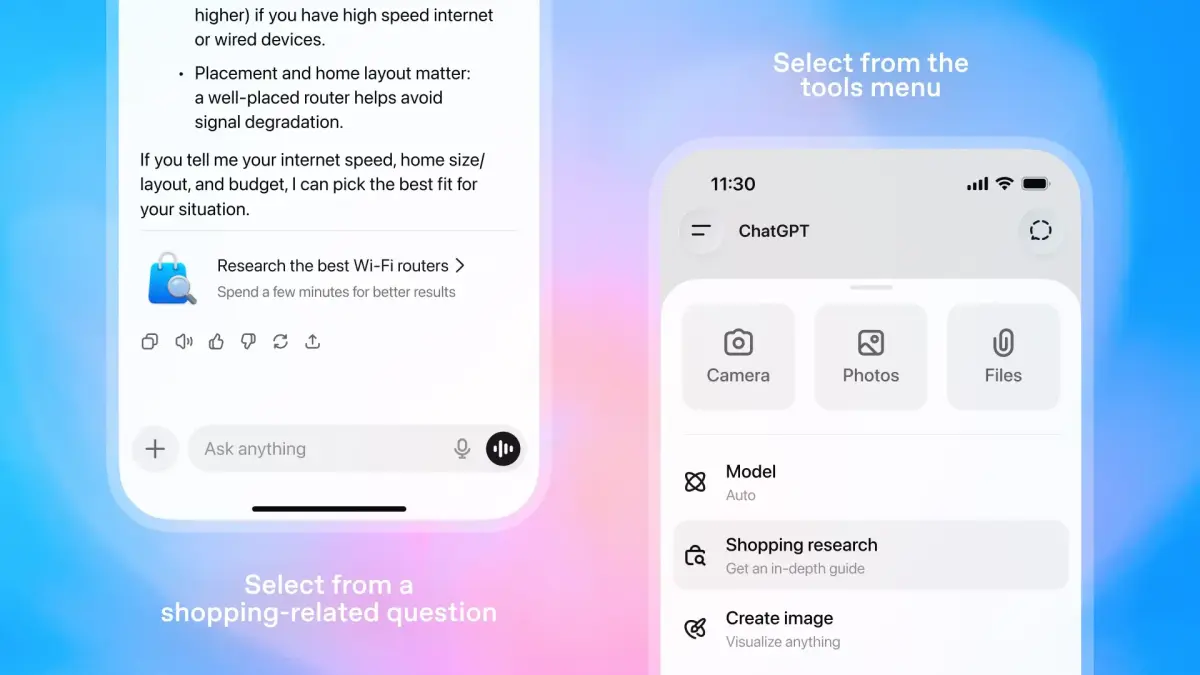
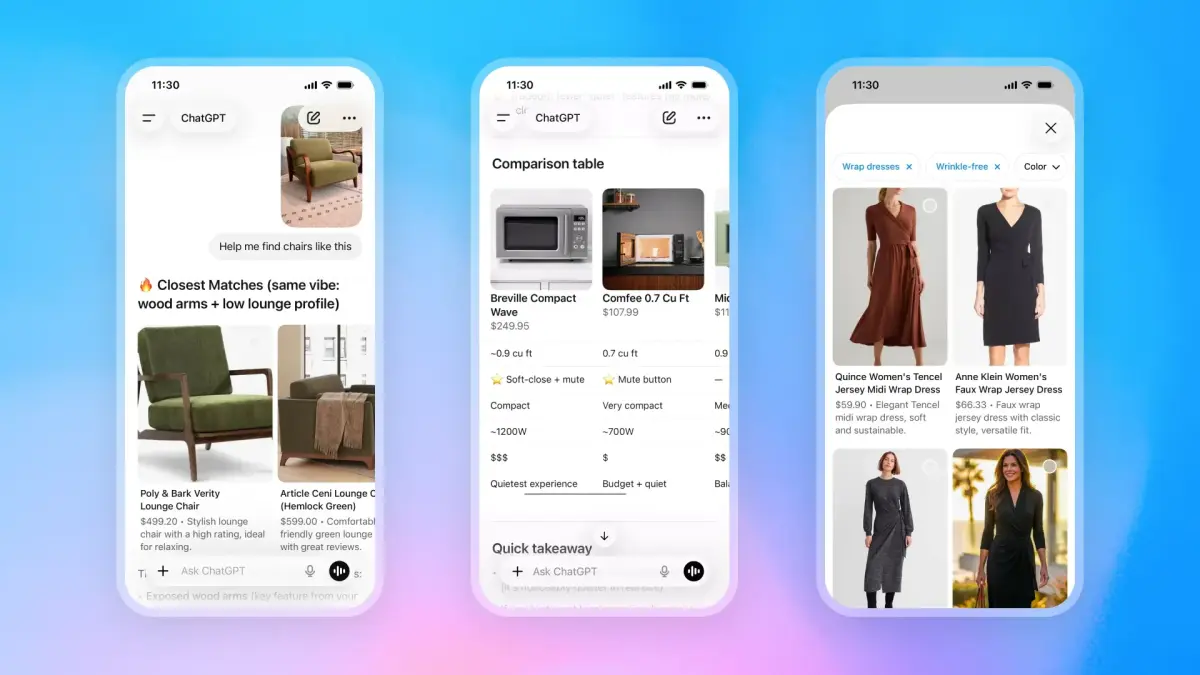
Checkout now happens on the retailer’s own site, not inside ChatGPT. Major retailers including Walmart, Target, Best Buy, Sephora, Nordstrom, and The Home Depot are already feeding live product data into ChatGPT through the expanded Agentic Commerce Protocol.
For Shopify merchants specifically, the shift is actually good news: connection to ChatGPT’s product discovery layer is automatic, no application, no development work, and no dependency on being one of a small number of Instant Checkout pilot brands.
Why This Still Matters For Ecommerce Sellers
It’s tempting to read the Instant Checkout retreat as “AI shopping didn’t work.” That’s the wrong takeaway. What actually happened is the industry converged on a clearer model: discover in AI, buy on your own site.
That model still puts real buying intent in front of your store. ChatGPT is already the most downloaded generative AI platform in the world, with over 900 million installs (see more generative AI statistics), and product discovery now happens earlier in the funnel, often before a shopper ever lands on a retailer’s homepage.
The businesses set up to win aren’t the ones chasing an in-chat buy button. They’re the ones whose product data is accurate, complete, and easy for ChatGPT to compare against competitors.
Proof This Matters:
When Zywave’s website lost visibility partly because its content sat locked inside embedded PDFs and dense, product-first navigation, limiting both traditional SEO and visibility in AI-powered search, Digital Silk rebuilt it into structured, crawlable pages organized around user intent.
Within five months, monthly lead form submissions rose 135%, converting users per month grew 115%, and homepage click engagement increased 60%.
How To Prepare Your Store For ChatGPT Shopping
Since checkout lives on your site again, the real work is making sure your store shows up correctly, and convincingly, when ChatGPT is doing the comparing.
- For a broader look at where AI fits into your store beyond search visibility, also read our guide to the best AI tools for ecommerce businesses.
Keep Product Data Accurate And Structured
ChatGPT pulls from your live product feed through ACP. Titles, prices, availability, and variants need to be current and clean, since outdated or incomplete data means ChatGPT either skips your product or represents it inaccurately.
Write Content That Answers The Comparison, Not Just The Search
ChatGPT is now built around side-by-side comparisons. Product pages and buyer guides that clearly lay out trade-offs, this fabric versus that one, this size range versus that one, give the model something concrete to work with when a shopper asks it to compare options.
This isn’t unique to ecommerce, either. For Opus 2, a legal AI platform, Digital Silk rebuilt the site’s structure, persona pages, and content hierarchy so a genuinely complex technology became easy for buyers to understand and positioned the company as an industry leader in its space. The same clarity that helps a shopper compare products helps a buyer understand a complex service.

Build Trust Signals Into Your Content
Reviews, return policies, and credible third-party mentions all factor into whether ChatGPT treats your brand as a trustworthy recommendation. Thin, sales-only pages don’t give the model much to point to.
Don’t Neglect Traditional SEO
GEO isn’t a replacement for SEO, it’s built on top of it. Structured data, clean site architecture, and fast page speed still matter, both for classic search rankings and for how easily an AI model can parse your site.
Should You Still Chase Instant Checkout-Style Features?
Not as a priority. The market already tested this exact idea at scale, with the backing of OpenAI, Shopify, and Etsy, and the actual adoption numbers didn’t hold up. Chasing a rebuilt version of in-chat checkout right now means optimizing for a feature that just got deprioritized once already.
The better use of that time and budget is making sure your product data, content, and site experience hold up when ChatGPT is doing the comparing, since that’s the part of the funnel that’s actually staying.
Ready To Show Up When ChatGPT Is Doing The Comparing?
Most stores don’t have a visibility problem with customers. They have one with the AI systems now doing research before a customer ever lands on their site.
Our team structures product data, rebuilds content around real comparisons, and strengthens the SEO foundation that AI models actually parse, the same work that’s already driven real gains for our clients.
We’ve done it for a company that lost visibility in AI search entirely and for AI-native platforms trying to explain themselves clearly online. We start by finding where your store is invisible to AI systems, then fix the structure and content responsible for it.
Contact our team, call us today at (800) 206-9413 or fill in the Request a Quote form below to tell us about your project and get your store ready for AI-driven shopping.
ChatGPT For Ecommerce FAQs
Is ChatGPT Instant Checkout still available?
No. OpenAI deprioritized it in March 2026 after limited merchant adoption, only about 30 Shopify stores went live out of the million promised.
Can shoppers still buy directly inside ChatGPT?
Not through Instant Checkout anymore. ChatGPT shows products, prices, and comparisons, then sends shoppers to the retailer’s own site to complete the purchase.
Do I need to build anything to show up in ChatGPT shopping results?
No. Shopify merchants and other connected platforms feed into ChatGPT’s discovery layer automatically through the Agentic Commerce Protocol, no application or setup required.
Does GEO replace traditional SEO?
No. It builds on it. Structured data, clean site architecture, and fast pages still matter for both classic search rankings and how easily AI models can parse your site.
What actually matters for ranking well in ChatGPT’s comparisons?
Accurate, structured product data, content that clearly lays out trade-offs, and trust signals like reviews and return policies. Thin, sales-only pages don’t give the model much to work with.
Should I still invest in an Instant Checkout-style integration?
Not as a priority. The market already tested that at scale and adoption didn’t hold up. Better to focus budget on product data and content quality instead.
Tell us about your website goals and let our experts give you a custom proposal
"*" indicates required fields