AutogenAI is a generative AI platform expanding into the US market with Google PPC and LinkedIn Ads targeting decision-makers across key industries. We cut CPA by 68%, scaled lead volume and built a pipeline that consistently outperformed targets.
New York laser studio struggling with inconsistent leads and limited local visibility in a competitive market. We launched Meta Ads and rebuilt their SEO foundation to drive steady, cost-efficient growth.
B2B components distributor with a strong offline reputation but virtually no digital presence or lead generation infrastructure. We launched LinkedIn Ads, organic content and SEO to build visibility and drive qualified leads fast.
Personal injury law firm looking to scale leads while fixing tracking gaps between Google Ads and HubSpot. We overhauled targeting, cleaned up keyword bloat and introduced lead-quality segmentation.
430% ROAS in 90 days
280%reduction in acquisition costs
Lead-quality segmentation built directly into Google Ads
Cybersecurity intelligence platform with underperforming Google Ads that weren’t reaching enough of the right decision-makers. We expanded high-intent keyword coverage, introduced Performance Max and tightened audience targeting to capture users closer to conversion.
277.78% increase in overall conversions
475%increase in conversion rate
Higher impression share maintained throughout the campaign
Leading international schools group looking to grow student enrollment leads year-over-year without increasing their ad spend. We restructured campaigns across 7 schools, optimized for 900+ keywords and refined targeting to drive more qualified inquiries at a lower cost.
2x conversions with the yearly lead goal hit by mid-year
47%reduction in cost-per-lead, from $161 to $86
23 active campaigns running simultaneously across seven schools
We are a PPC management agency that works with brands of all sizes. Our PPC services include campaign management, bid strategy, ad creative and ROI tracking.
IBM
Northwestern University
Paul Stuart
Rollink
Spar & Bernstein
ZipTie
Babies R Us
Xerox
Absolute Dogs
Mitsui Plastics
Puma Energy
Enchant Christmas
Grenco Science
As a new company, we were in need to push all social channels and streamline our messaging. We found that Digital Silk team has an effective workflow. For sure, they’d helped our company to stand out against its competitors and made Fast Forward recognizable.
Need a full account rebuild? Better results from what you already have? Our PPC management services cover both, along with everything in between. That means audits, strategy, campaign setup, ongoing optimization and reporting, all handled by the same team.
PPC Strategy Audit
Every engagement starts with a deep look at what you’re currently running.
Our PPC management team reviews your campaigns, keyword performance, funnel structure and spend distribution to find where money is being wasted and where the real opportunities are.
We also analyze competitor positioning and search intent to ground your paid media services in what the market looks like.
PPC Plan Development
Audits only matter if they lead somewhere.
Based on what we find, our team creates a plan that maps out platform selection, budget allocation, audience segments and a testing schedule tied to your sales cycle.
Plans are not static. We revisit and adjust them as performance data comes in and your market evolves.
PPC Campaign Setup
Our PPC campaign management team builds out campaigns on Google, Bing, LinkedIn, Meta, TikTok and Pinterest.
Not every brand needs all six. We prioritize the platforms your audience uses the most.
Landing Page Optimization
Ad clicks only matter if they lead to conversions.
A great ad sending traffic to a bad landing page is wasted budget. Our team goes through the pages tied to your campaigns and looks at what’s causing drop-offs before visitors convert.
That might be a weak headline, a slow load time, a clunky mobile experience or a call to action that isn’t pulling its weight. Small issues like these quietly drag down Quality Score and push your cost per click up.
We fix those issues so your ad spend turns into qualified leads and sales.
Conversion Tracking & Analytics Setup
Most underperforming PPC accounts have a tracking problem before they have a strategy problem.
Our PPC management team configures GA4, server-side tracking, conversion APIs and custom events so every meaningful action gets attributed to the right source.
What you get back is clean data you can trust. Reports stop measuring platform noise and start reflecting what’s happening in your business.
WHY COMPANIES CHOOSE US
Why Brands Choose Our PPC Management Services
We are a PPC management agency that handles strategy, execution and optimization under one roof.
Expertise
Our PPC management team knows how platform algorithms, auction dynamics and audience targeting interact and we use that knowledge to build campaigns that perform across B2B, eCommerce, enterprise, franchise and SaaS accounts.
Five-Star Reviews
We’re a PPC management company with five-star reviews on DesignRush and Clutch.
Clients regularly highlight our communication and transparency:
“Digital Silk helped us to increase […] traffic over 200% and to attract more qualified traffics and leads. We were amazed with [the] professionalism of the team and that everything was ready on time. All respect to the real industry experts!,” Ivana Kljajic-Peric, Software Tester at Smart Software Solutions Company“
Project Ownership
Every account gets a dedicated strategist and creative team.
Our team owns the results from day one and works alongside your internal marketing team.
There are no handoffs between departments and no gaps in communication.
Brand Growth
Good PPC management goes further than generating leads.
As a pay-per-click advertising agency, we also focus on audience quality, repeat conversions and how your paid media supports your brand long term.
We needed help with some projects and got recommendations to contact Digital Silk as a digital marketing agency. Their team is really creative, fast, and professional. We are very happy with the deliverables.
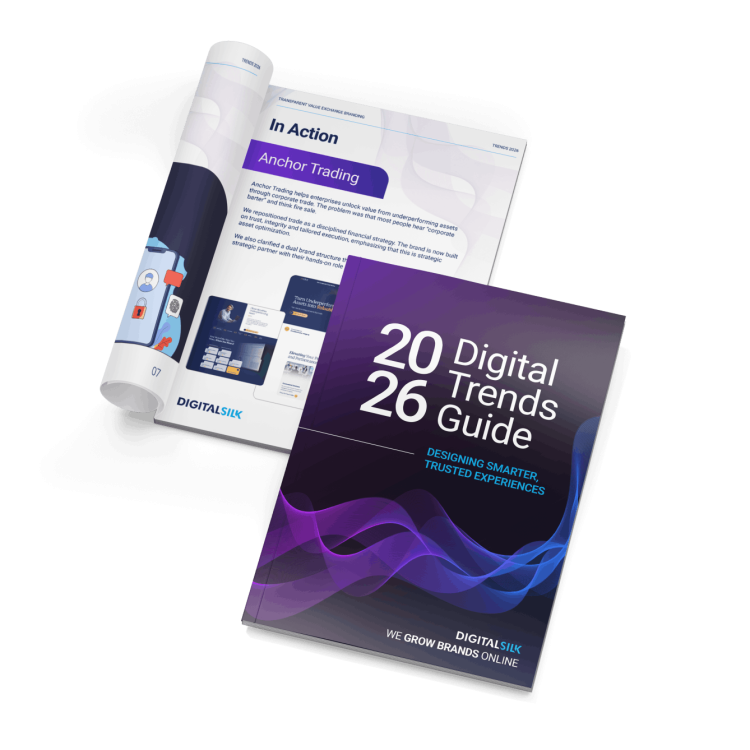
Download the Top Digital Trends Shaping Branding & Web Design
"*" indicates required fields
PPC Management Services FAQs
What platforms do you manage paid media campaigns on?
We run paid search campaigns on Google and Bing, and paid social campaigns on Meta, LinkedIn, TikTok and Pinterest.
The platforms we recommend depend on where your audience spends time and where your budget will work hardest.
For most B2B clients, that means a heavier weighting toward Google and LinkedIn. For eCommerce and DTC brands, Meta, TikTok and Pinterest tend to deliver stronger returns.
What’s included in your PPC management services?
Our PPC management services cover the full lifecycle of a paid advertising campaign.
That includes a full account audit, conversion tracking setup, strategy development, ad copywriting and creative production, landing page optimization, ongoing account management and regular performance reporting.
We also build custom reports tailored to the metrics that matter most to your business, so you’re never trying to make sense of generic dashboards.
How long does it take to see results from a PPC campaign?
It depends on your historical account performance, business model and monthly ad spend.
If you’re starting fresh or coming off a poorly built account, the algorithms need time to gather enough data before they can target effectively. How long that takes really comes down to your spend level.
For accounts that are already stable but need a new direction or want to scale, results usually show up faster.
How often are campaigns monitored and optimized?
Every Digital Silk client gets a dedicated specialist for each platform they advertise on.
That specialist monitors and optimizes your accounts daily, not weekly or monthly.
That way, if something needs attention, we handle it the same day.
Can I get a free audit before committing?
Yes. We’ll review your current PPC accounts at no cost so you can see where things stand before signing anything.
You’ll walk away with concrete findings about your account’s performance and the opportunities we’d prioritize, regardless of whether you decide to work with us afterward.
How can I start working with your PPC management agency?
We’ll review your objectives, assess your current setup and send a proposal with scope, timeline and deliverables.
How does PPC advertising work?
PPC advertising allows businesses to place paid ads on search engines and other digital platforms. Advertisers typically pay when someone clicks on an ad, allowing businesses to reach people actively searching for relevant products or services.
What is the difference between PPC and paid search?
PPC is a broader advertising model where advertisers pay for clicks, while paid search specifically refers to PPC ads that appear on search engine results pages. Paid search is therefore one type of PPC advertising.
How can PPC advertising support lead generation?
PPC can help businesses reach people who are actively searching for relevant products or services. Targeted ads can direct these users to relevant landing pages where they can submit an inquiry, request information or take another desired action.
How can PPC advertising support ecommerce sales?
PPC can put products in front of people actively searching for what a business sells. Product-focused ads can direct shoppers to relevant product pages and encourage them to complete a purchase.
What is a good PPC conversion rate?
There is no single conversion rate that qualifies as good for every PPC campaign. Performance can vary based on factors such as industry, offer, audience, keywords, competition and conversion goals.
How does keyword selection affect PPC performance?
Keywords determine which searches can trigger your ads and help connect campaigns with relevant user intent. Choosing keywords that closely match your products, services and target audience can help improve ad relevance and reduce wasted clicks.
What is Quality Score in PPC advertising?
Quality Score is a Google Ads diagnostic metric that evaluates the relevance and quality of keywords, ads and landing pages. It can help advertisers identify areas that may affect the performance of their search ads.
How can PPC advertising complement SEO?
PPC and SEO can work together to increase a brand’s visibility in search results. PPC can provide paid visibility while SEO focuses on earning organic search visibility over time.
How can businesses measure PPC campaign performance?
PPC performance can be evaluated using metrics such as clicks, impressions, click-through rate, conversion rate, cost per click and cost per conversion. The most relevant metrics depend on the campaign’s objectives.
Stay On Top Of Digital Trends
Subscribe to our newsletter to get the latest industry insights and web design best practices delivered to your inbox.