










Your New York WebsiteIs A Regulated Communication
-
01The Rules That Govern The Page, Not Just The MessageNew York regulates attorney advertising more prescriptively than most states, and several of those rules land directly on the website build rather than on the copy.
Rule 7.1(f) requires that an advertisement be labeled “Attorney Advertising” — on the first page, or in the case of a website, on the home page. Not the footer of a privacy policy. The home page.
Rules 7.1(d) and (e) require the disclaimer “Prior results do not guarantee a similar outcome” wherever the site makes claims about past results, comparisons to other lawyers, or the quality of services. For a firm that leads with verdicts and settlements — most New York injury firms do — that disclaimer needs to be a designed, systematic part of the results component, not a line someone remembers to paste.
Rule 7.1(k) requires that a copy of computer-accessed communications be retained for not less than one year, and that a website’s contents be preserved on initial publication, on any major redesign, and after any significant content change — at intervals of no less than every 90 days.
That last one is a build requirement, and almost nobody designs for it. It means your CMS needs a deliberate archiving strategy: scheduled snapshots, retained and retrievable, surviving a theme change or a migration. If your site is on a platform where content history is thin and your agency has never mentioned this, you are almost certainly not meeting it.
Rule 7.4 restricts claiming to be a “specialist.” Outside patent and admiralty practice, the claim generally requires certification by an ABA-accredited body, with a disclaimer noting the certification isn’t granted by a governmental authority and isn’t required to practice law in New York. This shapes navigation labels, page titles and H1s across the whole practice area section.
Rule 7.5 governs firm names and domains. A domain that doesn’t contain the firm name is permitted only under conditions — including that it not imply an ability to obtain results. Names promising settlements or outcomes are the classic failure.
Rule 7.1(c) and (e) govern testimonials: paid endorsements must be disclosed, and a testimonial concerning a pending matter requires the client’s informed consent, confirmed in writing.
None of this is exotic. It’s just rarely handled at design stage, which is where it’s cheap to handle. Building a results module without the disclaimer designed into it, or a testimonial component with no field to flag consent status, means every future content update is a compliance risk carried by whoever happens to be editing the page.
We design these as components with the rules built in — so compliance is a property of the system rather than a task someone has to remember. -
02New York Statutes Are A Content Architecture ProblemThe substantive law here is different enough that a practice area structure imported from another state will miss what New York clients are actually searching for.
Labor Law §240 and §241 — the Scaffold Law — impose a standard of liability on owners and contractors in gravity-related construction accidents that has no real equivalent elsewhere in the country. For a New York construction injury practice, this isn’t a subsection of a personal injury page. It’s a content cluster of its own, because it’s the specific thing that makes a New York case winnable and the specific thing an injured worker’s family starts searching after an accident.
No-fault and the serious injury threshold — New York’s no-fault system under Insurance Law Article 51, and the §5102(d) threshold that determines whether a car accident claimant can sue at all, generate a whole layer of questions that don’t exist in tort states. What counts as a serious injury. What the 30-day filing window means. Why a claim was denied. Each is a real search, and most New York firm websites answer none of them.
The 90-day notice of claim — under General Municipal Law §50-e, claims against the City, the MTA, NYC Health + Hospitals and other public entities require notice within 90 days. A significant share of New York accidents involve a municipal defendant. A site that doesn’t surface this prominently is failing the visitor at the exact moment the clock is running.
Housing Court and the HSTPA — landlord-tenant practice in New York operates in a system, and under a statutory regime, that simply doesn’t exist in most jurisdictions.
We plan practice area architecture around what’s distinct about New York cases, because that’s where the search volume with real intent actually sits — and where the large national legal content farms have nothing useful to say. -
03You Are Competing In The Most Expensive Legal Market In AmericaNew York is the deepest legal advertising market in the country. The firms above you on the results page have budgets you likely can’t match, and outspending them isn’t the strategy.
What works is precision. Borough and neighborhood-level relevance rather than one “New York” page. Attorney profiles with genuine substance — bar admissions, reported decisions, languages spoken, correct Attorney schema — because New York clients research the individual lawyer, not just the firm. Practice area pages built on New York statutes rather than generic explainers. And an intake path that works on a phone, one-handed, from a hospital waiting room, because that’s where a meaningful share of these inquiries originate.
Our New York Law Firm Web Design Work
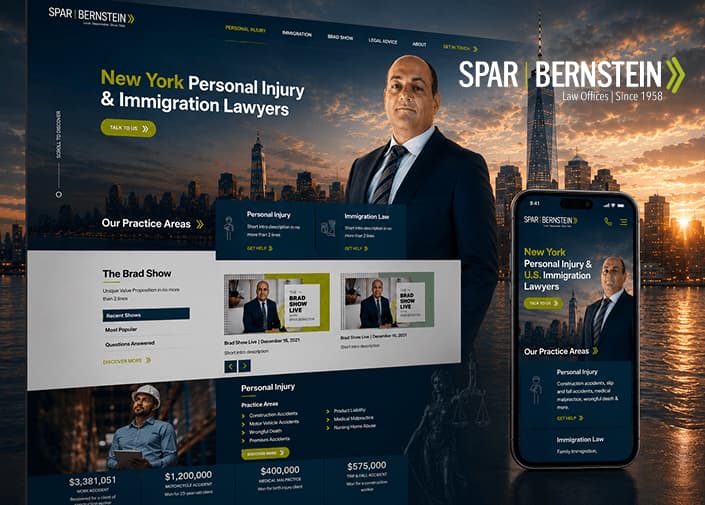
Spar & Bernstein — A trusted NYC firm, with organic traffic up 14x
Spar & Bernstein has practiced immigration and personal injury law from its offices in Manhattan since 1958.
Digital Silk aligned the site’s messaging and technical foundation with how New Yorkers search for legal help, clearing the barriers to visibility.
Within six months, organic traffic climbed 14x — growth that continued well past the initial launch window.
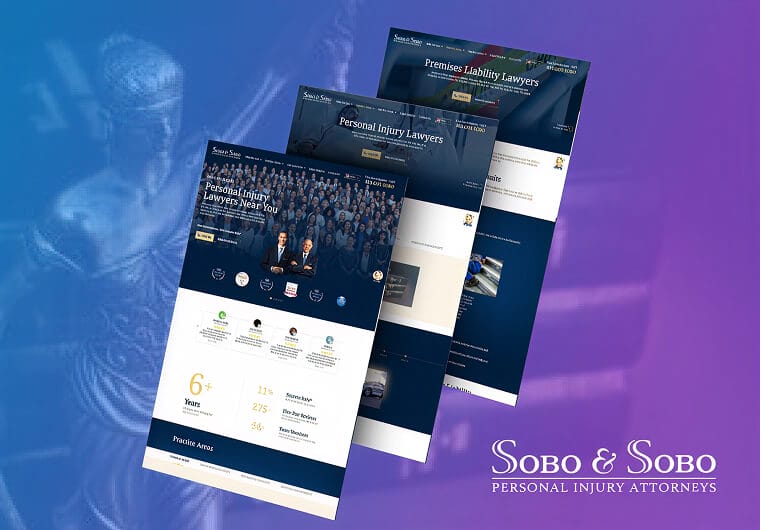
Sobo & Sobo — A New York injury firm, with a site that earns the call
Sobo & Sobo runs 19 offices across the Northeast, with more than 2,500 five-star reviews from injured clients it has represented.
The team organizned the site around the practice areas people search for most, backed by office pages and video from real clients.
More visitors reach the right team by phone or form, and the quality of those enquiries has risen.
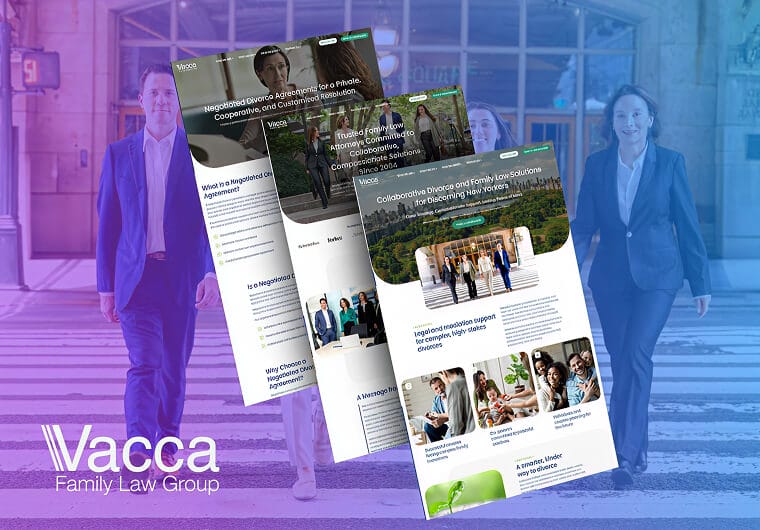
Vacca Family Law Group – Expertise in collaborative divorce, front and center
Vacca Family Law Group guides high-net-worth clients through some of the most sensitive legal decisions of their lives.
Our experts redesigned the site with a cleaner, more authoritative feel, putting Andrea Vacca’s expertise in collaborative divorce front and center, with messaging and structure calibrated to earn trust quickly.
That reassurance comes through fast, lifting active users 105.1% and engaged sessions nearly 76% in four months.
What A New York Client Does Before They Call
A searchable plan-level list, current and easy to find, resolves the single biggest reason a qualified patient bounces.

If tapping the number takes three screens, the next firm gets the call. Intake path length is a design decision.
Real translated content on indexable URLs — not a translate widget.
A denied no-fault claim. Specificity is what converts, and in New York the specifics are statutory.
Our New York Law Firm Web Design Services
We create websites for law offices across New York, helping them increase visibility and conversions.

Advertising-Rule-Aware Design Systems
Results modules with the prior-results disclaimer designed in. Testimonial components with consent status as a field.
Home page labeling handled at template level. Compliance as a property of the system, not a task.


Website Archiving & Retention Build
A CMS archiving strategy that meets Rule 7.1(k) — scheduled snapshots that survive redesigns and migrations, retained and retrievable.


New York Practice Area Architecture
Content structure built on the statutes that decide New York cases — Labor Law §240, the serious injury threshold, §50-e notice requirements, HSTPA — rather than a generic template.

Attorney Profiles And Firm Credibility
Substantive profiles with bar admissions, notable matters and correct schema, built to rank for attorney-name searches.
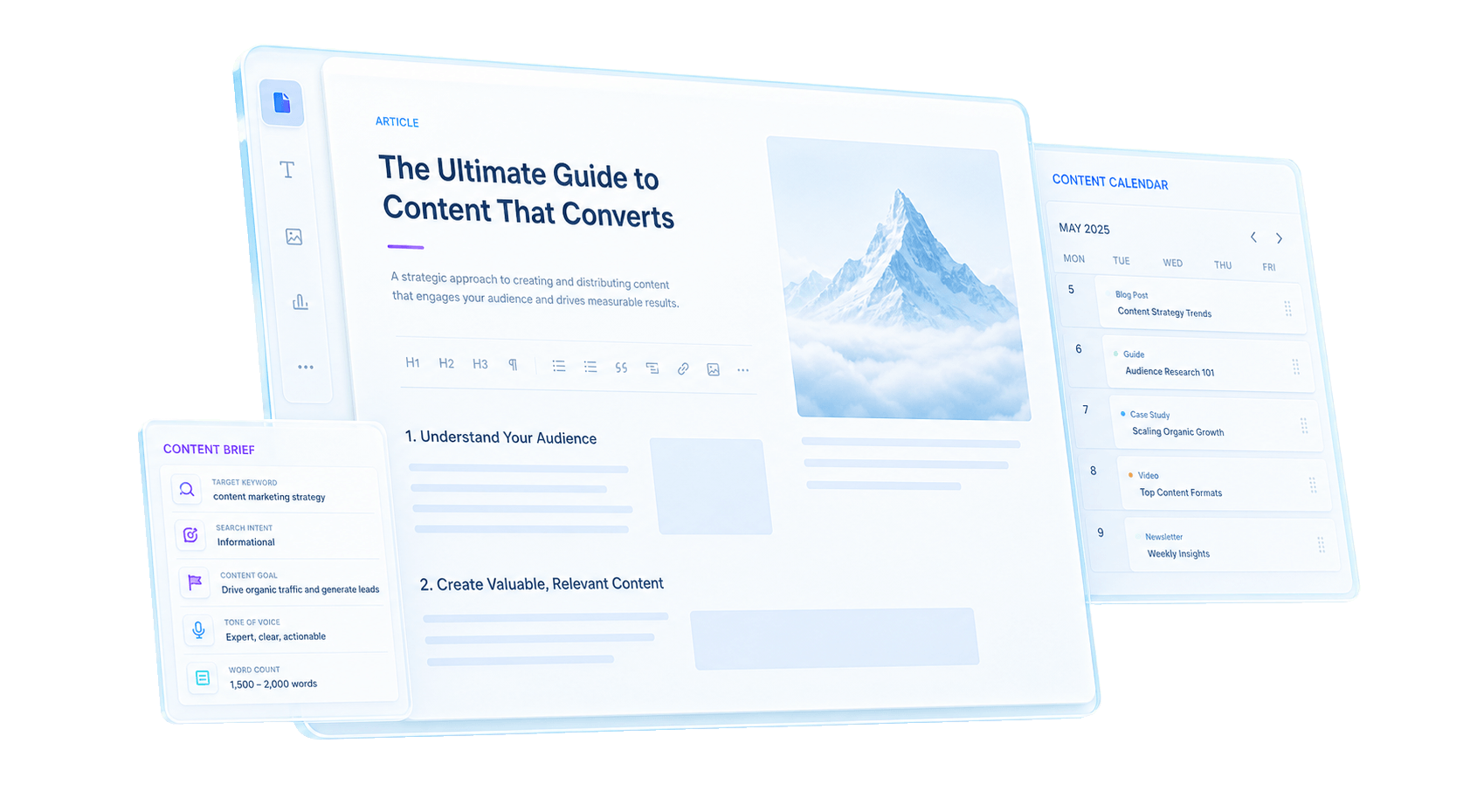

Intake & Conversion Design
Mobile-first intake paths tested against how legal enquiries actually arrive — fast, one-handed, often urgent.
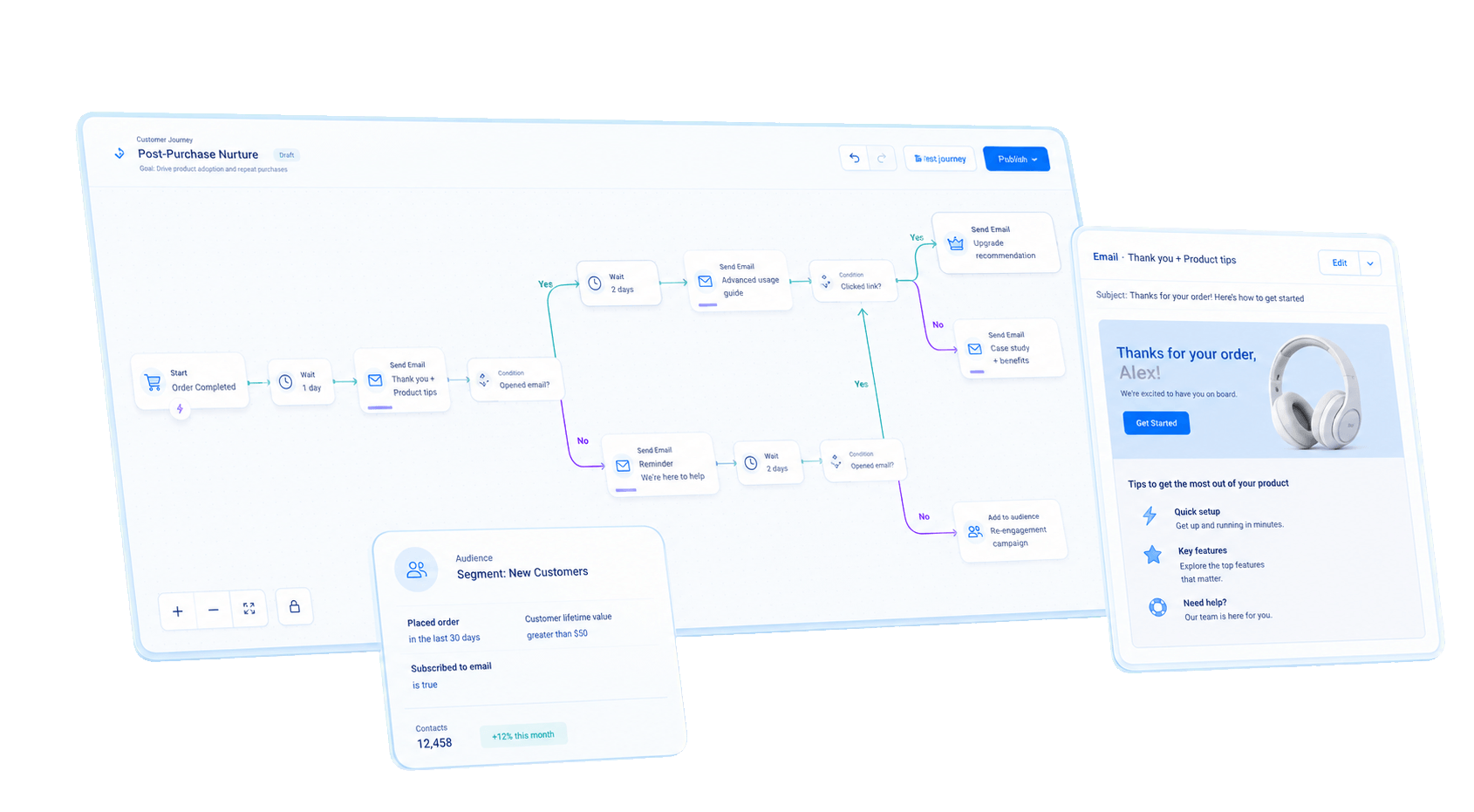

Why New York Law Firms Work With Digital Silk
-
01Legal DepthImmigration, personal injury, matrimonial, mass tort and legal technology. We understand the ethical constraints each practice works under.
-
02Compliance By DesignRules 7.1 to 7.5 handled at the design stage, where it’s cheap, rather than in a pre-launch scramble.
-
03Project OwnershipOne team from strategy to post-launch. No gaps where a compliance decision gets dropped between vendors.
-
04Measured GrowthWe report on qualified enquiries and signed matters. Not impressions.
Our Web Design Process For Law & Legal Firms
Here’s the process we follow when it comes to law firm web design in New York.

We get to know your firm, your practice areas and the pages already pulling their weight.
Attorney advertising rules come into play early, so we check labeling, disclaimers and testimonials against what’s required. We set clear goals and land on the platform that fits what you’re building.

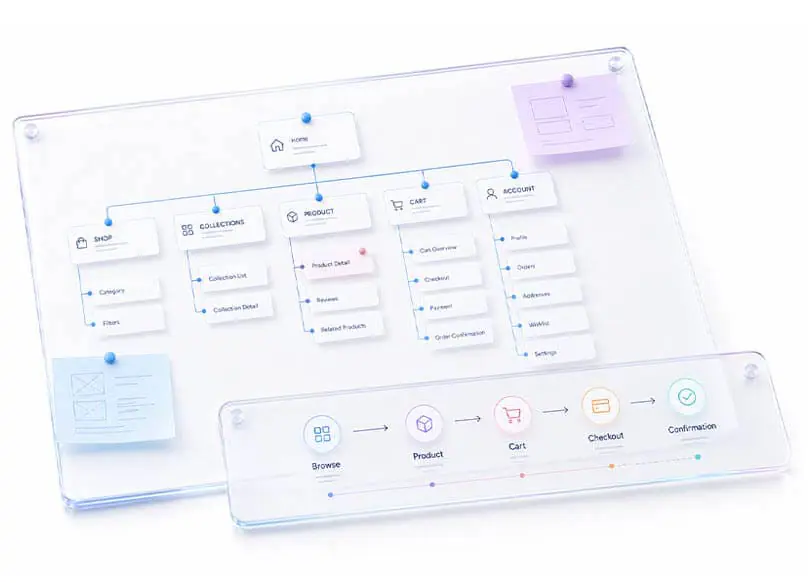
We plan how a prospective client moves through the site before any screen gets designed, through wireframes, user flows and page structure.
Once that holds up, we move into UI, custom or themed, with interactions placed to move a client toward contact. A compliance pass happens here too, catching advertising-rule issues before development.

Our development team builds the approved design into a working site. Attorney directories, intake forms and any CRM integrations get built and connected here.
Custom functionality gets handled within the same team, so there’s no juggling separate vendors.


Before launch, we run through the full site ourselves. We test across devices and browsers, submitting intake forms repeatedly and following every contact path a client might take.
We find what could stop someone mid-action before a client does.

Once you’ve signed off, the site goes live, and we stay close to it for the first several days.
From there, focus shifts to performance, which pages hold attention and which draw traffic without generating inquiries. Launch isn’t the finish line for a law firm site.

New York Law Firm Web Design FAQs
Does my law firm website need to say “Attorney Advertising”?
Yes. Rule 7.1(f) requires advertisements to be labeled “Attorney Advertising,” and for a website that means the home page.
Many firms place it site-wide in the footer as well. It’s one of the most common compliance gaps we find on New York firm sites, and one of the easiest to fix.
Where does the “prior results” disclaimer have to appear?
Wherever the site makes claims about past results, comparisons with other lawyers, or the quality of services — under Rules 7.1(d) and (e), using the language “Prior results do not guarantee a similar outcome.” We build it into the results component itself so it can’t be omitted by a future content edit.
Am I required to keep an archive of my website?
Rule 7.1(k) requires computer-accessed communications to be retained for at least a year, and website contents to be preserved on publication, on major redesign and after significant content changes — at intervals of no less than every 90 days.
It’s a real build requirement and almost never designed for. We can set up an archiving approach that satisfies it without adding manual work.
Can I call my firm a “specialist” in a practice area?
Generally not, unless you hold certification from an ABA-accredited body — and then the required disclaimers apply under Rule 7.4. This affects navigation labels, page titles and H1s throughout the practice area section, which is why we resolve it during information architecture rather than at copywriting.
Can I use a domain name that isn’t my firm’s name?
Sometimes, under conditions set out in Rule 7.5 — including that the domain not imply an ability to obtain results. Domains promising settlements or outcomes are the usual problem. If you’re weighing a keyword domain, this is worth resolving before you buy it.
Should my personal injury pages be organized by injury or by statute?
In New York, often by statute — because that’s what determines the case. A construction worker who fell doesn’t search “personal injury lawyer”; the family searches what happened and what law applies. Labor Law §240, the serious injury threshold and §50-e notice requirements each deserve their own substantive page.
Do you handle accessibility?
Yes — we build to WCAG 2.1 AA as a design requirement. New York’s federal courts see more website accessibility filings than any other jurisdiction in the country, so it matters here more than most places.
How long does a law firm website take?
Typically 10–18 weeks depending on practice area count, attorney roster size and how much content needs writing. The advertising-rule review is built into the timeline rather than bolted on before launch.
