
Plastic Surgery SEO In 2026: What Changed, And What Still Works
AI Overviews now answer most healthcare searches before patients click a link. See what's changed in plastic surgery SEO for 2026, and what still works.


-
SEO helps plastic surgery practices get found earlier in a patient’s research, when they’re comparing providers, not just when they’re ready to book.
-
The fundamentals haven’t changed: site structure, procedure-specific content, local signals, and reviews still decide who ranks and who gets recommended, only now they also decide whether AI systems recommend your practice.
-
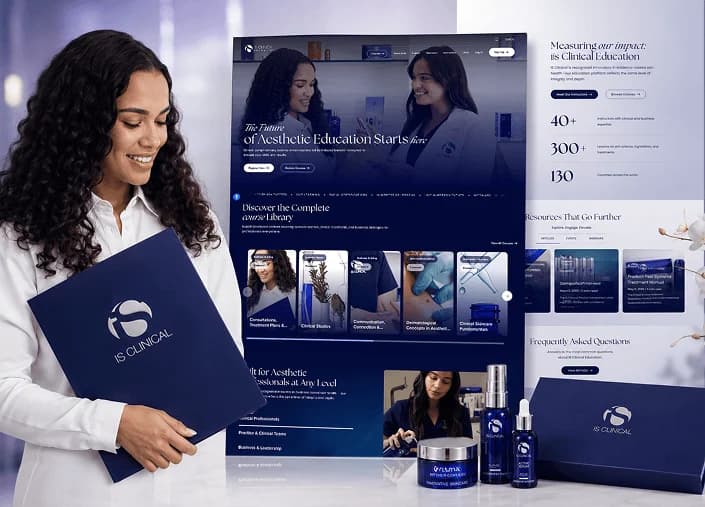
When Digital Silk restructured iS Clinical’s platform, better content organization made a large, technical library far easier for patients and search engines alike to navigate.
Before booking a consultation, most patients research a procedure across several sources: reviews, comparisons, and increasingly, an AI Overview or chatbot that answers the question first.
An SEO strategy built only around “ranking on Google” is solving last year’s problem. Here’s what actually changed, and what still works regardless.
Why Plastic Surgery SEO Matters
The demand is there. Cosmetic surgery remains a large and growing market, with millions of surgical and minimally invasive procedures performed every year in the U.S. alone.
The problem for most practices isn’t demand, it’s visibility. Patients researching a procedure typically compare several providers before booking a consultation, and that comparison happens across search results, reviews, before-and-after galleries, and increasingly, AI-generated summaries.
A practice that isn’t visible during that research phase doesn’t lose the patient to a better surgeon. It loses them to a more visible one.
If that sounds familiar, if your practice does great work but consultations aren’t matching the demand you know is out there, SEO is usually where the gap lives.
What Changed: AI Now Answers Most Of The Research Phase
Here’s the shift that changes the math for healthcare and aesthetic practices specifically.
AI Overviews and AI-generated answers now cover roughly 88% of healthcare and education-related searches, according to BrightEdge’s Q1 2026 data, a far higher share than the average across all search categories.
That doesn’t mean SEO stopped mattering. It means the same fundamentals search engines and AI systems both rely on, clean site structure, accurate practice information, real patient reviews, and content that genuinely answers patient questions, still decide most of the outcome.
The difference is what that outcome now includes. It’s not just whether you rank, but whether an AI system trusts your practice enough to name it in an answer.
SEOEngico, “AI Overviews Click Through Rate Drop 2026”
What Still Works: The Fundamentals Behind Both
- Procedure-specific content that answers real questions. Generic service pages don’t rank well and rarely get cited by AI systems. Pages built around the specific questions patients ask about a procedure, recovery time, cost ranges, candidacy, risks, tend to perform far better on both fronts.
- Local SEO signals. Most patients search with location in mind, phrases like “rhinoplasty near me” or “best plastic surgeon in [city].” A complete, consistent Google Business Profile, along with accurate and location-specific content, feeds directly into local visibility.
- Reputation and reviews. Reviews aren’t just a trust signal for patients, they’re a data source AI systems read when deciding who to name in a response. A steady stream of recent, detailed reviews does more for visibility than most practices realize.
- Site structure that’s easy for both patients and machines to navigate. A confusing site structure hurts patient conversion and makes it harder for search engines and AI crawlers to understand what your practice actually offers.
How Digital Silk Structures Content For Healthcare Audiences
For iS Clinical, a skincare education platform serving a global professional audience, Digital Silk restructured the platform’s architecture and reorganized its course and resource content around clearer user journeys.
The result made a large, technical content library easier to browse and engage with, the same structural discipline a plastic surgery practice’s procedure pages and patient resources need to perform well in both traditional and AI-driven search.
How To Make Your Content More Attractive To Patients And AI
Knowing the fundamentals matter is one thing. Making your content genuinely competitive is another.
A few tactics move the needle fastest:
- Add real before-and-after content with context, not just images. A gallery with no explanation gives AI systems and search engines nothing to read. Pair each result with the procedure name, the patient’s starting concern, and recovery timeline, content search engines can actually index and AI can actually cite.
- Build comparison content for the decisions patients are already making. “Rhinoplasty vs. non-surgical nose job” or “mini facelift vs. full facelift” pages address the exact side-by-side questions patients ask ChatGPT and Google alike, and they tend to rank and get cited more often than a standalone procedure page.
- Use structured data (schema markup) on procedure and FAQ pages. This doesn’t just help Google understand your content, it’s often the specific format AI systems pull from when generating an answer, since it separates questions and answers cleanly.
- Feature real patient outcomes and reviews prominently, not buried in a separate page. Surfacing recent, detailed reviews directly on procedure pages, not just a testimonials page, gives both patients and AI systems the trust signal they’re both looking for at the moment they need it.

Ready To Show Up Where Your Patients Are Searching?
Most practices aren’t losing patients to better surgeons. They’re losing them to competitors who show up first, in Google and in AI-generated answers.
Our team builds procedure-specific content, strengthens local search signals, and structures sites so both patients and AI systems can find and trust what they see. We start by finding where your practice is invisible in search, then fix the structure and content responsible for it.
Contact our team, call us today at (800) 206-9413, or fill in the Request a Quote form below to tell us about your project and start showing up where patients are already looking.
Plastic Surgery SEO FAQs
How does SEO help plastic surgeons get more patients?
SEO improves visibility for high-intent searches around specific procedures, builds trust through accurate content and strong reviews, and creates more opportunities for prospective patients to request a consultation.
Why do AI Overviews matter for a plastic surgery practice’s SEO?
Healthcare and education-related searches see AI Overviews on a notably higher share of queries than average, so patients researching procedures increasingly get their first answer from an AI summary rather than a website link. Practices with strong, accurate content are more likely to be cited in those summaries.
How long does SEO take to show results for a plastic surgery practice?
Most practices start seeing improvement within 3 to 6 months, with stronger growth developing over 6 to 12 months as content, local signals, and site authority build up.
What matters most for local plastic surgery SEO?
A complete and accurate Google Business Profile, consistent location information across the web, and location-specific procedure content all directly affect whether a practice shows up in local search results and map packs.
Tell us about your website goals and let our experts give you a custom proposal
"*" indicates required fields