Unlike any other category, in Sports and Entertainment, the audience believes it owns the brand — and in ways that matter commercially. Fans build the equity that carries it in public, and they will defend it against the organization that legally owns it.
When Leeds United redesigned its crest, more than 77,000 people signed a petition against it, and the club scrapped the design. Everton’s 2013 badge drew 23,000 signatures in opposition and was abandoned within a season. Aston Villa spent under £80,000 removing a single word.
Branding needs to connect with the audience, and we are experts at creating engaging designs for strong communities.
We build brands for sports, entertainment, and fan-driven organizations — including NASCAR, G2 Esports, and CrawlSF — treating that relationship as a central design constraint rather than a risk to be managed after launch.
Positioning that accounts for what the audience already believes about you, because in this category they arrived with an opinion.
Brand Identity & Marks
Identity systems designed to work at the sizes and in the company they’ll actually appear in: on a kit beside three sponsors, in a broadcast corner, on a 40,000-seat scoreboard, and as a 24px avatar.
Co-Branding Architecture
Rules for how your mark coexists with sponsors, leagues, broadcasters, venues and talent, so partnership doesn’t erode the identity.
Fan & Community Research
Structured audience work before a rebrand, not after the backlash.
Merchandise & Fan Commerce Branding
Identity built to carry into product, because merchandise is how fandom is expressed.
Rebranding & Brand Evolution
Evolution strategies for brands where heritage is an asset and change is a risk.
Leeds United ran what it described as a six-month design process. The crest lasted a matter of hours in public: 77,000+ petition signatures, and the club abandoned it.
Everton’s in-house redesign attracted 23,000 signatures calling it amateurish, and was gone the next season. Juventus replaced a charging bull with two stripes and spent months being compared to a sportswear retailer’s logo. Aston Villa paid to remove one word.
These are not failures of taste. They’re failures of process, and the process failed in a way that’s specific to this industry.
In most categories a brand belongs to the company. Customers have preferences, but no standing. In sports and entertainment the audience has spent years wearing the mark, tattooing it, passing it to their children and defending it against rivals. They hold real equity in it — and unlike a customer of almost any other product, they will organize.
The practical consequence is that research and consultation aren’t a nice-to-have stage that gets cut when the timeline compresses. They’re the thing that determines whether the work survives.
That means understanding which elements carry meaning and which are merely old, testing directions with the people who’ll live with them, and being able to explain why — because in this category the explanation gets scrutinized in public.
It also means knowing when not to change something. A heritage mark that looks dated to a design team can be the most valuable asset the organization owns.
Evolution usually beats revolution here, and an agency that can’t say so isn’t being useful.
02
Fandom is the product, and merchandise is how it’s spoken.
In most categories merchandise is an afterthought — a revenue line someone bolts onto the brand once it exists. In sports and entertainment it’s the primary way the audience expresses membership, which makes it a brand medium rather than a product category.
That reframes the design problem. An identity has to survive being embroidered, printed at scale, cropped into a profile picture, and worn by someone who wants to signal allegiance across a room.
It has to generate a system — variants, secondary marks, wordmarks, patterns — rich enough to sustain years of product without becoming repetitive, and disciplined enough that it still reads as one brand.
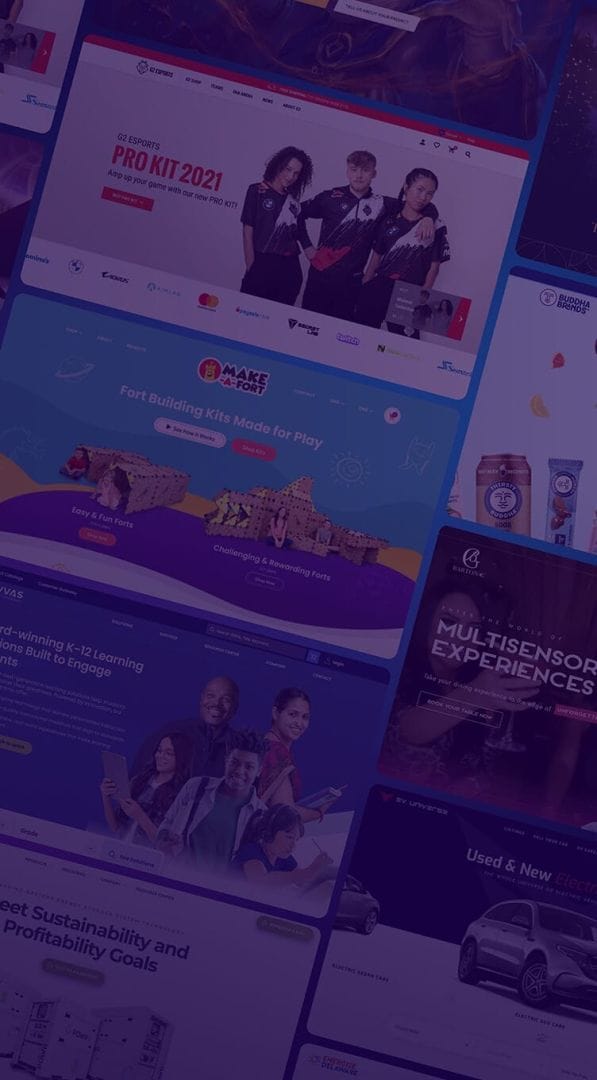
Our G2 Esports work is this problem stated plainly: a modular eCommerce and content ecosystem built to unite shopping and fandom into one destination.
Not a store attached to a brand site — one experience where following the team and buying from the team are the same behavior.
Brands that treat commerce as a separate track end up with a merchandise line that feels licensed rather than authentic, which fans detect immediately.
03
Your mark almost never appears alone.
A sports or entertainment identity operates in the most crowded co-branding environment in commercial design.
On a single kit: your mark, a manufacturer’s mark, a primary shirt sponsor, sometimes a sleeve sponsor and a league mark.
On broadcast: a network bug, a competition identity, sponsor bumpers. At a venue: a naming rights partner whose name may not be yours. In digital: platform constraints, partner lockups, talent likeness.
Most brand systems are designed for a world where the brand controls the frame. This one isn’t. An identity that only works in isolation will be diluted by its own commercial success — the more partners an organization signs, the more crowded its own brand becomes.
Designing for that means building co-branding architecture into the system from the start: clear space rules that survive a three-logo lockup, mark variants that hold at broadcast scale, a color system that stays recognizable next to a sponsor’s palette, and a hierarchy that determines what yields when space is short.
It’s unglamorous system design, and it’s the difference between a brand that compounds through partnership and one that erodes.
04
College sports became a brand market in July 2025.
The House v. NCAA settlement was approved on 6 June 2025, and direct payments from schools to athletes began on 1 July 2025.
The initial cap is $20 million per school for 2025-26, calculated as roughly 22% of Power Five average athletic revenues, rising to a projected $32.9 million by 2034-35.
Alongside it, third-party NIL deals worth $600 or more must be reported through the College Sports Commission’s NIL Go platform. Payments from booster collectives must serve a “valid business purpose” — promotion of actual goods or services at rates comparable to non-athlete endorsements.
Deals from ordinary commercial brands are reported but aren’t held to that fair-market-value test.
For branding this created a market that didn’t exist five years ago, with three distinct kinds of work.
Athletes as brands. Individual athletes now have commercial identities requiring positioning, visual identity and content strategy — at an age and scale where nobody involved has done this before.
Schools as co-brands. Institutions now navigate a relationship with athlete brands that is part employment, part partnership, part licensing. The brand architecture question — how a school’s identity and an athlete’s identity coexist — is live and unsettled.
Brands that need deals to survive review. A company doing NIL work with collectives now needs the deal to demonstrate genuine promotional value at fair market rates.
That’s a brief with a compliance test attached, which changes what “good” looks like.
This is early, competitive and unusually open. Agencies with sports brand credibility are well placed, and few have moved decisively.
05
Esports is a related discipline, not a subset.
G2 Esports is a global brand with no home city, an audience that is digital-native and international by default, and a community that governs the brand’s tone as actively as any marketing team.
Traditional sports branding leans on geography, heritage and continuity — the things a club has that a competitor can’t replicate.
Esports has almost none of that. Brands are young, mobile between titles, and compete for attention against individual creators who are often better at the thing that matters most: being present and personable at high frequency.
That produces a different brief. Personality outweighs heritage.
The brand has to be operable by a community team posting many times a day without degrading. And authenticity is enforced ruthlessly by an audience that can spot a marketing department from a long way off.
Treating esports as “sports branding but younger” is the standard mistake, and it’s visible in the work.
Take a look at some of our recent branding projects, each one built to drive traffic, engagement and conversions.
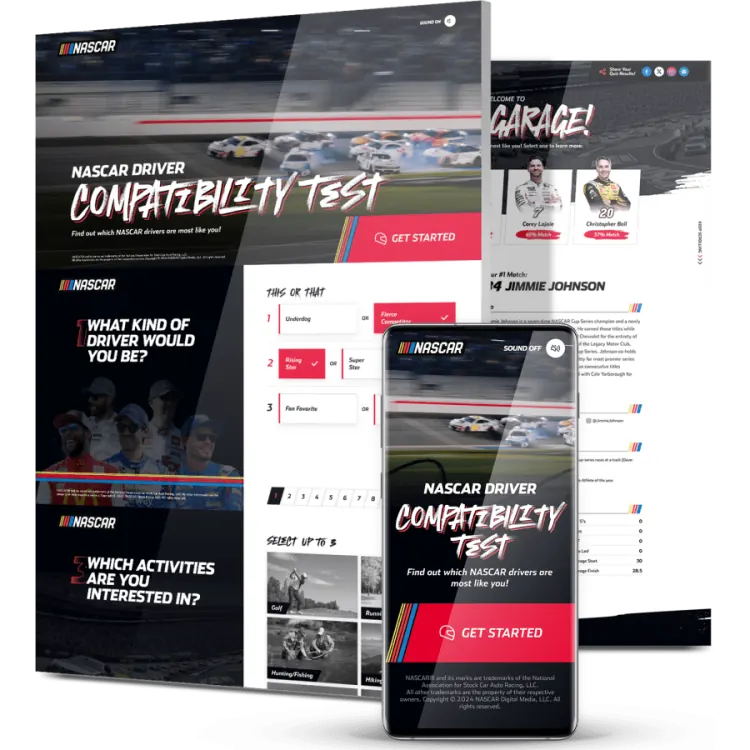
NASCAR – Attracting 36% New Fans Through An Interactive Digital Experience
NASCAR needed a fresh way to engage a younger, digitally native audience and expand its fan base beyond traditional marketing tactics.
We developed an interactive, motion-driven quiz that helped fans discover which Cup Series driver they’re most like, collecting over 80,000 emails and identifying thousands of new NASCAR fans.
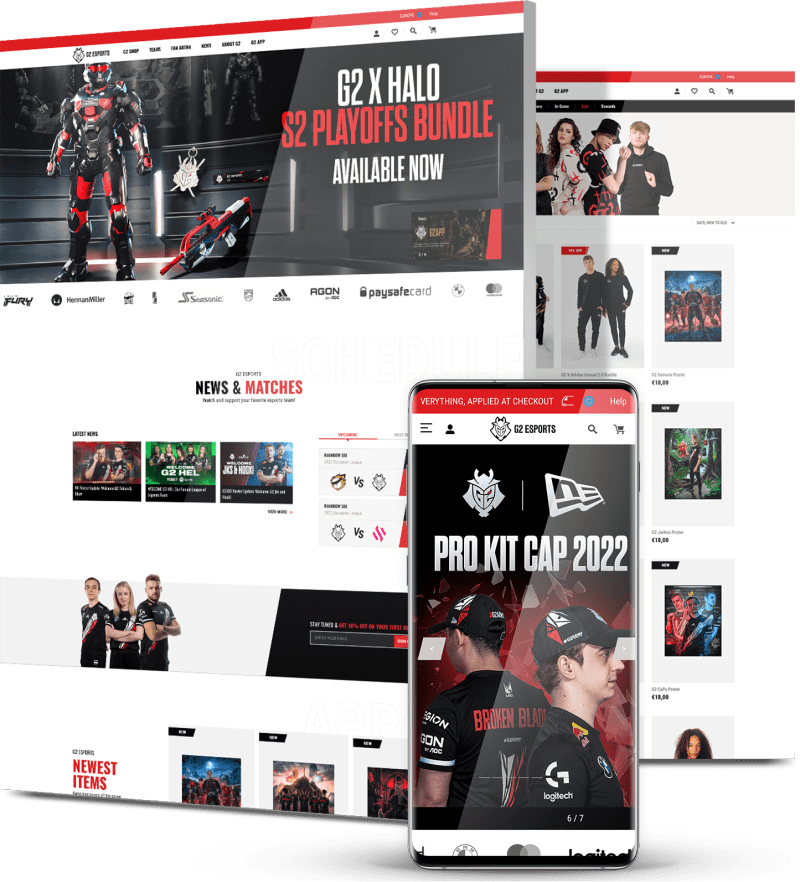
G2 Esports – One of gaming’s biggest names, with a store designed around its community
G2 Esports has established one of the most recognized names in competitive gaming, with 40 million fans worldwide and partnerships with brands like Logitech and Red Bull.
Digital Silk developed a platform built around G2’s community-driven identity, improving navigation across teams, collabs and the Performance Lab for a more intuitive experience.
The result was a platform built to increase both conversions and brand authority, aligned with G2’s scale and market position.
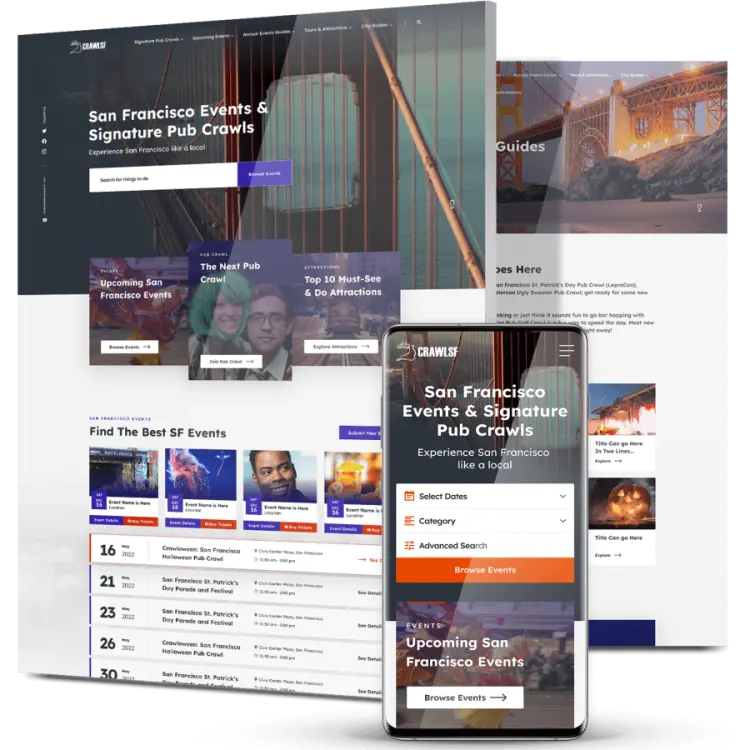
CrawlSF is the go-to resource for discovering events and activities in San Francisco.
We completely redesigned the site with carefully chosen typography, vibrant colors and custom visuals. We created an intuitive and engaging interface, with better site structure and improved navigation.
The results showed a 73% bump in the number of returning users and an almost 214% increase in the average session’s duration.
I would absolutely work with Digital Silk again on future projects and would recommend them to anyone looking for a team that knows what they are doing but is also made up of really good people.
77,000 signatures ended a Leeds crest. 23,000 ended Everton’s.
Research isn’t the stage you cut when the timeline slips.
Merch Is The Medium
Merch Is The Medium
Fans express membership through product.
An identity that can’t generate years of product without repeating itself isn’t finished.
You Share Every Surface
You Share Every Surface
Kit, broadcast, venue, digital — your mark appears beside sponsors, leagues and partners.
Systems designed for isolation get diluted by their own commercial success.
Heritage Is An Asset, Not A Problem
Heritage Is An Asset, Not A Problem
A mark that looks dated to a designer may be the most valuable thing the organization owns.
Evolution usually beats revolution here.
Our Branding Process
Brand Discovery
Brand Discovery
We get to know your business inside out — defining your audience, competitors, mission, vision and values to find your ideal market position.
Brand Strategy
Brand Strategy
Through in-depth research, we identify your opportunities and set your brand pillars, then build a positioning and messaging strategy that connects across every touchpoint.
Visual Identity
Visual Identity
We define your full visual identity and design your logo and supporting elements through brainstorming, sketching and multiple concepts.
Brand Book & Guidelines
Brand Book & Guidelines
We compile everything into a comprehensive brand book — typography, colour palettes, imagery, iconography and usage rules — so your brand stays consistent as you grow.
Why Sports & Entertainment Brands Work With Digital Silk
Fan-First Process
Research before direction, because in this category the audience decides whether the work survives.
Brand And Commerce Together
G2 Esports united shopping and fandom in one system rather than two.
Project Ownership
One team from research through rollout, including the digital platforms the brand lives on.
Scale Experience
From NASCAR and G2 Esports to Jackson Rancheria Casino Resort, we build digital experiences for brands with passionate audiences.
We want to rebrand, but our fans hate change. How do we approach it?
Carefully, and with research first. The cautionary examples are well documented — Leeds United’s redesigned crest drew more than 77,000 petition signatures and was scrapped; Everton’s 2013 badge drew 23,000 and lasted a season.
What separates successful evolutions from these is identifying which elements carry genuine meaning, testing directions with the people who’ll live with them, and being able to explain the reasoning publicly. Sometimes the honest answer is that a heritage mark shouldn’t change much at all.
How should merchandise factor into the identity work?
For most trades, yes — they appear above standard search ads, the map pack and From the start, not after. Merchandise is how fans express membership, so the identity needs to generate a system — variants, secondary marks, wordmarks, patterns — rich enough to sustain years of product while still reading as one brand.
Our G2 Esports work built shopping and fandom as a single experience for exactly this reason.
Our brand appears next to sponsors everywhere. How do we protect it?
With co-branding architecture designed into the system: clear space rules that survive multi-logo lockups, variants that hold at broadcast scale, and a defined hierarchy for what yields when space is tight.
Without it, every new partnership dilutes the identity slightly — so commercial success gradually erodes the brand.
We’re a college athletics department. What changed after the House settlement?
A great deal. Revenue sharing began on 1 July 2025 with an initial cap around $20 million per school, and third-party NIL deals of $600 or more now report through the College Sports Commission.
Brand-wise it created a live question most institutions haven’t resolved: how a school’s identity and an individual athlete’s identity coexist. It’s a brand architecture problem, and the schools thinking about it deliberately have an advantage over those improvising.
Is esports branding just sports branding for a younger audience?
No, and treating it that way shows. Esports brands generally lack geography, heritage and continuity — the assets traditional sports brands rely on — and compete against individual creators for the same attention.
Personality outweighs heritage, the brand has to be operable by a community team posting many times a day, and the audience detects inauthenticity immediately.
Do you build the digital side too?
Yes — see our sports and entertainment web design services.
In this category the brand mostly lives digitally, so keeping identity and platform with one team matters more than usual.
Meet With Our Sports & Entertainment Branding Team
Tell us who your audience is, what they already believe about you, and what’s forcing the timing. We’ll come back with an honest read on how much should change — including if the answer is less than you expected.