

TOHO INTERNATIONAL
A Corporate Home For The Studio Behind Godzilla
-
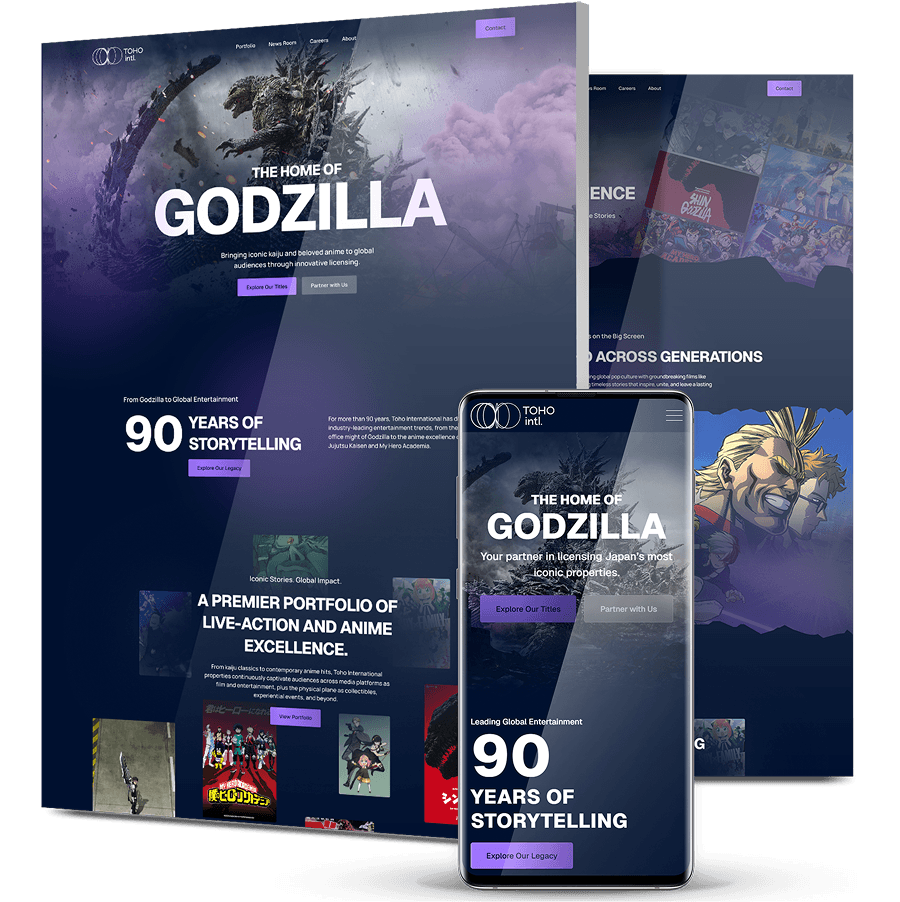
Toho International manages licensing, merchandising and fandom experiences for Godzilla and anime properties including Jujutsu Kaisen and My Hero Academia — and had no corporate website at all, leaving partners, vendors and job candidates nowhere to verify who the company was.
-
Digital Silk built the site from the ground up: discovery, digital strategy and site planning architecture first, with no prior site to migrate from and every element created around the goals confirmed in discovery.
-
The launched site runs seven core landing pages — Homepage, Portfolio, Newsroom, Careers, About, Contact and Compliance — unifying Toho’s IP catalog, routing partners to licensing inquiries and connecting fans to Godzilla.com and the anime merchandise store.

The Challenge
Toho International represents one of the most recognizable entertainment properties on earth. It had no website.
A Credibility Gap With No Way To Close It
Prospective vendors, licensing partners and job candidates had nowhere to verify the company’s legitimacy, leadership or scope of work. For a business whose entire model runs on partnerships, that absence wasn’t an oversight, it was a commercial liability.
Invisible In A Field Of Established Players
The competitive landscape is dominated by major studios and distributors with mature digital presences. Benchmarking showed the gap plainly: competitor sites were drawing tens of thousands of daily visits with multiple pages per session and meaningful organic search traffic. Toho International had none of that infrastructure needed to compete for attention or trust.
Consumer Touchpoints With Nothing Connecting Them
Toho’s eCommerce platforms operated independently of one another, with no central corporate presence to unify them, explain the Toho story, or route visitors toward licensing inquiries, partnership opportunities or careers.
No Newsroom, No Leadership, No Reason To Apply
Without press coverage, leadership profiles or any “why work with us” narrative, a rich legacy and a global fanbase weren’t translating into business development or recruiting outcomes.
A Legacy That Existed Everywhere Except Online
Ninety years of storytelling and a franchise with multi-generational global recognition had no single place that tied the historic catalog to the modern licensing and partnership opportunities built on it.

The Solution
With no prior site to migrate from, every element was created new around the goals confirmed in discovery: establishing credible brand presence, integrating Toho’s key IPs, and creating clear pathways for partners, vendors and prospective employees.
-
Discovery, Digital Strategy & Site Planning
We worked from discovery materials through digital strategy and into site planning architecture before design began. With nothing existing to react to, the architecture had to come from the business objectives rather than from an inherited structure. -
Seven Core Site Sections, Each With A Job
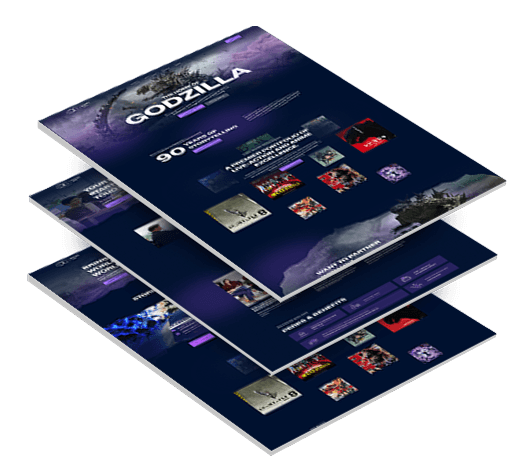
Site planning identified seven pages and gave each a distinct purpose: a Homepage anchored by a hero banner showcasing flagship properties; a Portfolio page presenting the full breadth of the IP catalog with direct links to official eCommerce destinations; a Newsroom for press releases and industry updates; a Careers page built around culture and growth; an About section covering the 90-year legacy and corporate philosophy; a Contact hub with dedicated licensing and business inquiry forms; and supporting Compliance pages. -
The IP Portfolio As The Centerpiece
Rather than describing the properties in prose, we built the Portfolio page to present the catalog itself, with direct routes to the official stores — connecting Godzilla.com and Toho’s anime merchandise store to a corporate platform for the first time. -
Messaging Built On 90 Years Of Storytelling
We anchored the site’s messaging in Toho’s storytelling legacy, tying the historic catalog to its modern licensing and partnership opportunities in a way no prior digital touchpoint had attempted. -
Mobile-First UX Against An Industry Weakness
Benchmarking surfaced a pattern worth capitalizing on: competitor sites skewed heavily toward mobile traffic without being optimized for it. We prioritized mobile-first design and fast load times so the site performs better on the devices the audience actually uses. -
Engagement & Lead Capture Built In
We added newsletter sign-up prompts, a cookie-compliant consent banner and streamlined navigation connecting both fans and partners to the right destination, so the site captures interest rather than only displaying information.
The Results
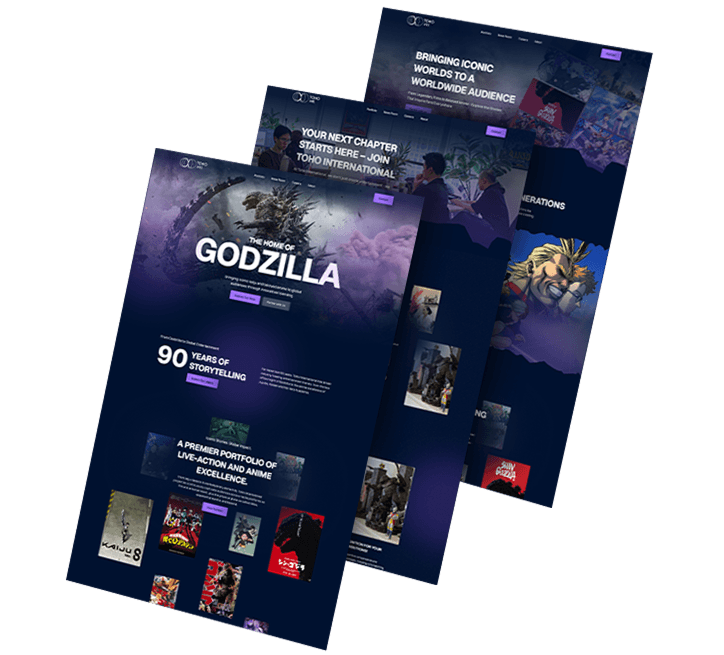
Toho International now has the corporate home it never had:
-
7 Core Pagesbuilt from nothing, each mapped to a specific business objective identified in discovery
-
One Unified Portfoliopresenting the full IP catalog with direct routes to Godzilla.com and the anime merchandise store
-
Dedicated B2B pathwaysrouting licensing and partnership inquiries through their own forms rather than a general contact box
-
A recruiting platformgiving candidates visibility into culture, growth and open roles for the first time
Our Custom Web Design Portfolio
1,000+ Completed Projects
Explore our case studies & see how we grow brands online.
Zorro Productions’ Licensing-First Rebuild
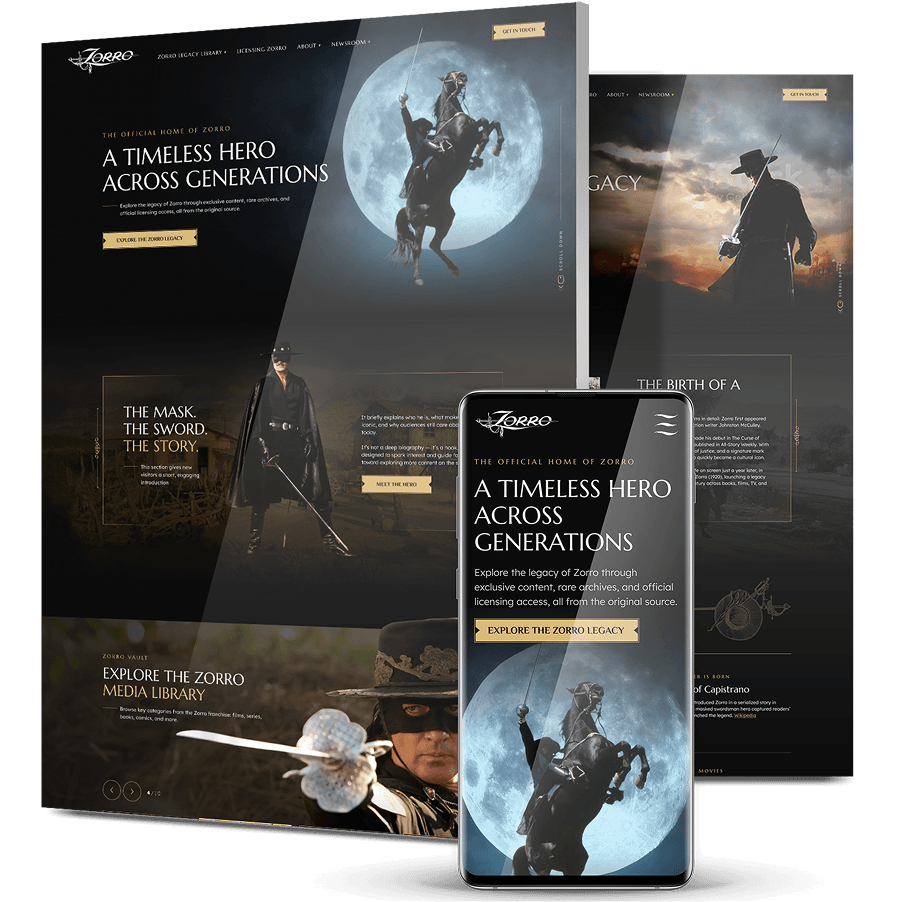
Few properties carry a century of recognition the way Zorro does — yet the company that owns its worldwide trademarks was running a site where a prospective licensee couldn’t find a single production page.
Our team mapped how licensees, press and fans each move through a franchise property, and let those flows dictate the architecture before a page was designed.
What launched turns a scattered back catalog into browsable proof: 20+ individual production pages spanning film, television, comics and stage, sorted into six navigable brand territories.
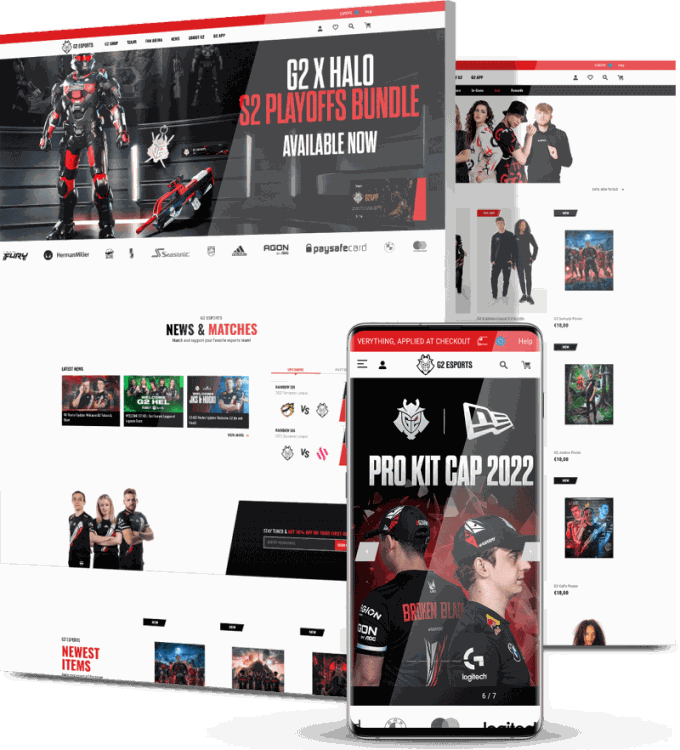
G2 Esports’ Modular Commerce & Content Ecosystem
One site was carrying two incompatible jobs at G2 Esports — merchandise sales and fan content — and doing neither well, with 6.23-second page loads, 0.65% conversion and cart abandonment at 70.58%.
Benchmarking against leading esports storefronts and building personas around the core 18–24 audience told us the fix was structural, not cosmetic: the sitemaps needed splitting.
G2 came away with a distinct storefront and a unified Teams, Fan Arena and News hub, plus filtering, wishlists and a template-driven CMS that grows as the roster does.
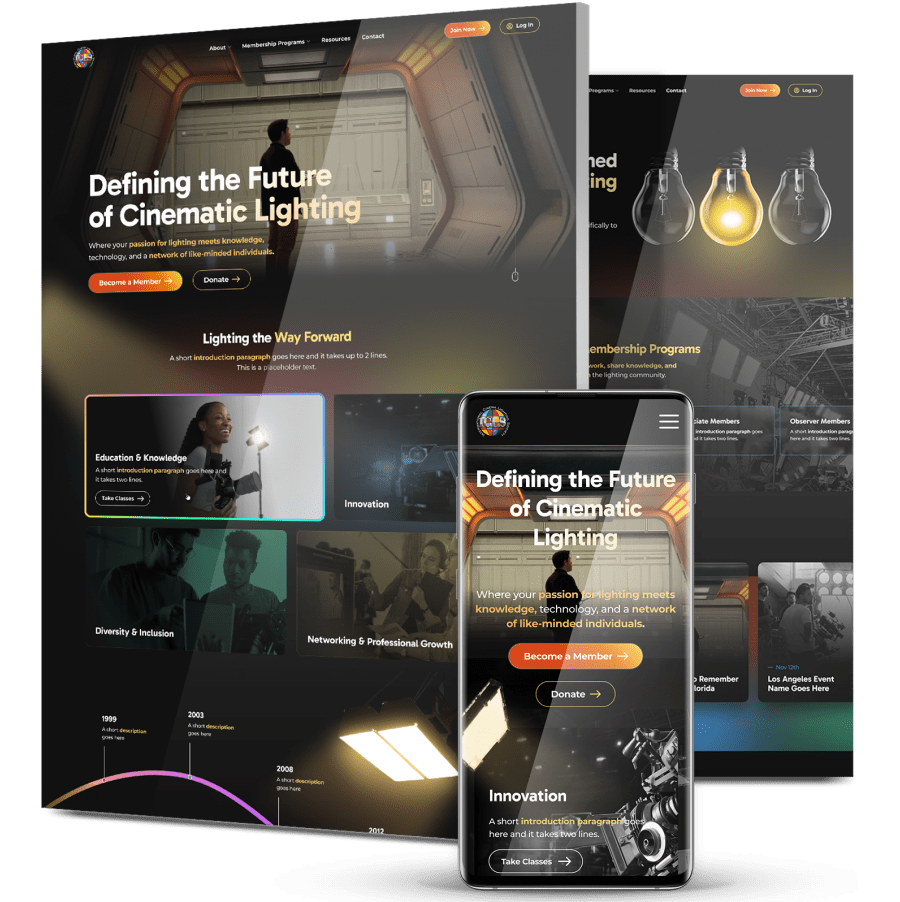
International Cinema Lighting Society’s Member Platform
Returning users climbed 41.6% and organic sessions 59% in ICLS’s first two months post-launch — a shift that came from making membership legible rather than from chasing traffic.
As the only international body representing cinematic lighting professionals, ICLS had global standing that its dated navigation actively obscured, with benefits buried and tiers unclear.
We rebuilt around defined membership levels and clear conversion funnels, then added a video library, educational resources and tools that let members share expertise with one another.
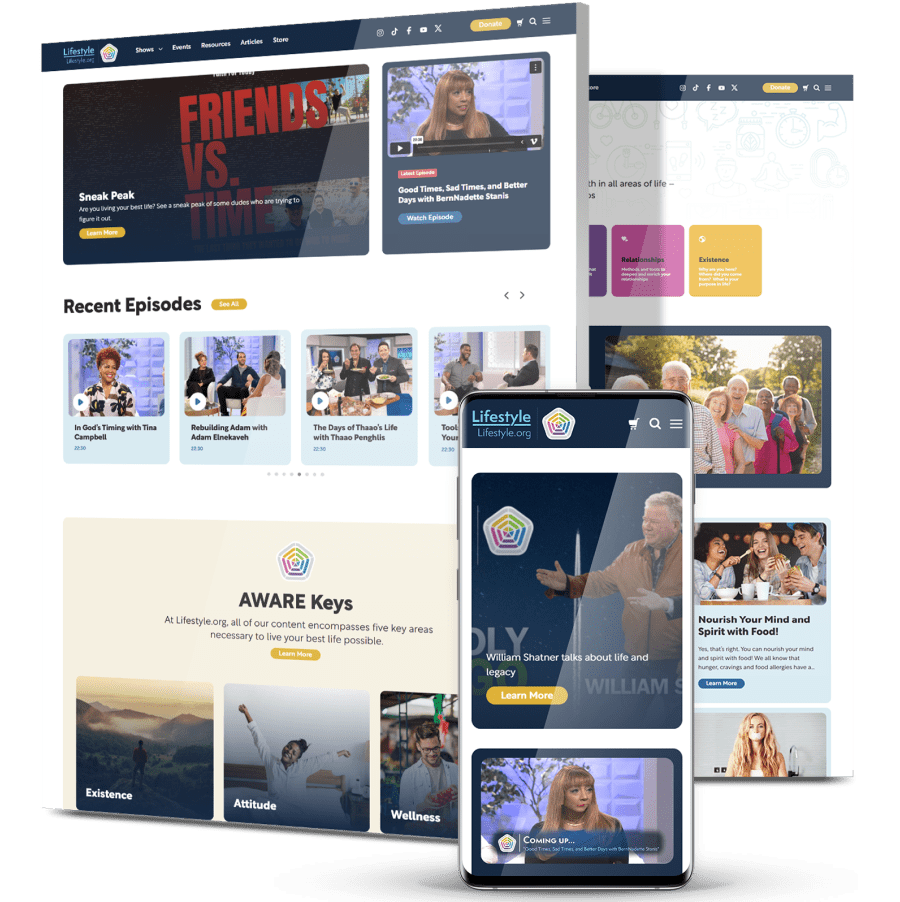
Lifestyle: 4M Weekly Viewers, Zero TikTok
An Emmy-winning production team can dominate broadcast and still be invisible where its next audience lives. That was the position Lifestyle was in — more than 4M weekly television viewers for Lifestyle with Roy Ice, no TikTok account at all, and Instagram going nowhere.
The raw material was already sitting in the archive. Our team mined 100+ long-form episodes for moments that work vertically, cutting them into hook-led, subtitled Reels and TikToks, then built the TikTok channel from zero alongside weekly trend direction, behind-the-scenes B-roll and Instagram Collabs with celebrity guests.
TikTok reach grew 654% within months, the account passed 21K followers, Instagram settled at a 4.2% engagement rate, and video views across the platforms cleared 1.2M.
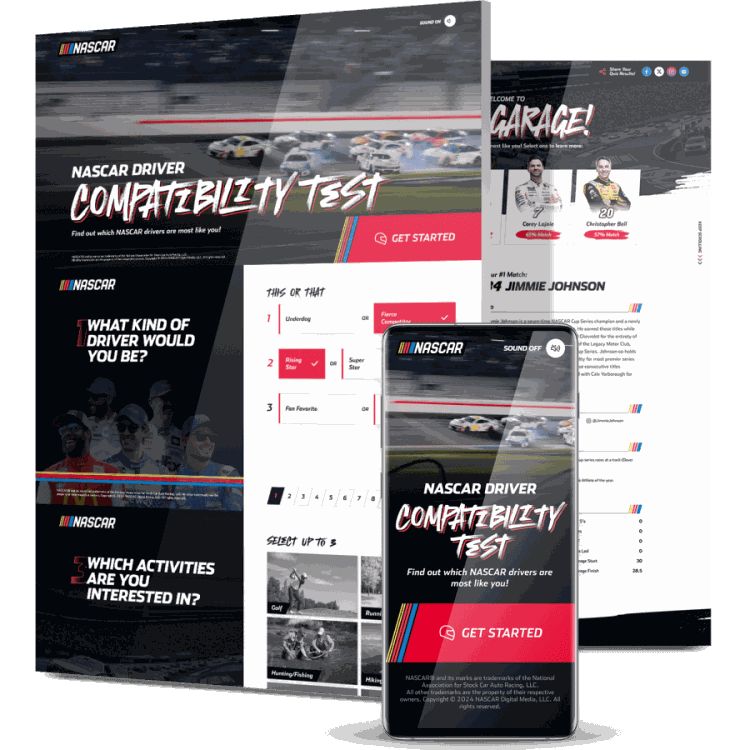
NASCAR’s Driver-Matching Quiz
Over a third of everyone who took NASCAR’s driver-matching quiz — 36% — told us they were new to the sport. That single number is why the format became a template for its other racing series.
The brief was to reach a younger, digitally native audience without it feeling like marketing. Our answer was a motion-led quiz that sorts participants as new, casual or avid, then serves each group different questions.
Results land in a personalized “garage” showing a fan’s top four driver matches, and the campaign captured more than 80,000 email addresses along the way.
Get The Latest Web Design
Insights Delivered To Your Inbox
Insights Delivered To Your Inbox
"*" indicates required fields
Take The Smart Road To
Digitizing Your Business Growth
Start a conversation with us
"*" indicates required fields