12 Types Of Branding Strategies & How To Choose One
The world's most valuable brands didn't get there by accident — they chose the right strategy. Explore 12 types of branding strategies and how to pick the one that fits your goals.


-
Brand perception shapes choice: Buyers often decide whether a company feels credible, relevant or trustworthy before they evaluate its features or pricing.
-
Consistency across touchpoints: Aligned voice, visuals and messaging reduce confusion across marketing, sales, onboarding and partnerships.
-
Operational guidance: A defined brand strategy acts as a reference point for content, design, digital channels and internal teams to maintain a unified position.
At the end of 2025, NVIDIA, Apple, Alphabet and Microsoft top the list of the world’s most valuable brands by market cap.
Nothing surprising there, but how does a brand earn this spot?
While there are many factors, a successful brand strategy is an important starting point because it determines long-term audience perception, market positioning and competitive differentiation.
Whether you’re creating a brand from the ground up or you’re embarking on a rebranding journey, we’ll share the main types of branding strategies and the factors to consider when creating your own.
12 Types Of Branding Strategies
Branding strategies influence buying decisions well before price or features come into play, with 76% of consumers saying they prefer brands they feel connected to over competing options.
However, they may fail because the choice doesn’t match scale, structure or business reality.
The strategies below outline not just what each approach is, but when it holds up, where it breaks down and how to think about alternatives as organizations grow.
The 12 strategies below outline different ways to build that preference, depending on how you want to be recognized, remembered and trusted.
1. Product Branding Strategy
A product branding strategy focuses on giving a single product its own identity, positioning and story that can stand on its own, even within a larger portfolio.
It’s often used when a product targets a distinct audience, solves a specific problem or needs to compete head-to-head without relying on the parent company’s reputation alone.
One famous example of product branding is Apple, especially with the new release of the MacBook Neo.
Another well-known example is Coca-Cola, which has repeatedly given different product lines their own distinct campaigns instead of forcing one message across the whole portfolio.
Its “For Everyone” branding positions a product as universally relevant, focusing on shared habits and everyday moments rather than niche identities.
It works when a product is woven into daily life across ages, lifestyles and price sensitivities, making familiarity and broad appeal more valuable than specialization.
Strategic Considerations
Product branding tends to perform best when a product has a clear role and a stable relationship to the broader portfolio.
This is why brands like Apple can evolve products such as the iPhone independently without confusing buyers about where each product fits.
The strategy starts to lose effectiveness when portfolios grow without a clear hierarchy. Yahoo is a commonly cited example of how individually branded products can fragment recognition when no unifying narrative exists.
In these situations, an endorsed or corporate branding model often provides better clarity. Brands such as Microsoft maintain strong product identities while keeping the parent brand visible, allowing new offerings to inherit trust rather than rebuild it from scratch.
From a business perspective, this choice influences how quickly new products gain traction, how easily sales teams explain the portfolio and whether brand equity compounds over time or gets divided across competing messages.
2. Service Branding Strategy
Service branding is defined by the experience a company delivers at every touchpoint, from first interaction to follow-through and support.
With 88% of customers saying the experience a company provides is just as important as its products or services, the way your service feels becomes inseparable from what you’re offering.
A variety of industries and businesses use service branding, including:
- Banks
- Insurance companies
- Airlines
- Law firms
- Consulting companies
For instance, auto insurance company Geico uses service branding to emphasize its brand promise of “15 minutes or less can save you 15% or more on car insurance.”
The company’s gecko mascot has captured hearts and provoked laughter around the country since the brand introduced him in 1999.
At that time, the lighthearted and comical approach was unusual for the auto insurance industry, allowing Geico to stand out significantly among the competition.
The humorous service branding ad was met with positive consumer feedback, and the gecko has been a staple ever since.
Another example of a perfectly executed service branding strategy?
Ritz-Carlton expresses its service branding through the Late Checkout collaboration, translating hospitality into cinematic storytelling and lifestyle products rather than traditional hotel advertising.
The short films and capsule collections highlight subtle service moments, unhurried time and the atmosphere of hotel living, reinforcing the idea that the experience itself is the luxury.
Strategic Considerations
Service branding works best when experience is the primary differentiator and delivery can be standardized across touchpoints. In these environments, consistency becomes more valuable than novelty.
The strategy breaks down when internal teams are misaligned or when service quality varies by channel, location or representative. Over time, even small inconsistencies can undermine credibility faster than weak messaging ever could.
When maintaining uniform service delivery is difficult, combining service branding with stronger corporate signals can help anchor expectations and reduce reliance on individual interactions.
Commercially, service branding affects retention, referrals and lifetime value, making operational discipline just as important as creative execution.
3. Corporate Branding Strategy
This strategy creates a persona for a company as a whole, instead of marketing the brand in separate identities. It defines how the company presents itself to consumers and even employees.
In the U.S., 86% of buyers say a brand’s reputation is highly important in what they choose to purchase, which is why corporate branding puts so much weight on what the company name signals at a glance.
From the charities the brand supports to the organizations they partner with, their stance on current events and more, organizations use corporate branding to shape their image for consumers, shareholders and employees alike.
For instance, Microsoft uses a corporate branding strategy by keeping the parent brand at the center of everything it offers, from cloud infrastructure to productivity software.
Products like Azure, Teams and Office reinforce the same promise around reliability, scale and enterprise readiness rather than competing for attention as separate brands.
This approach allows Microsoft to introduce new offerings without re-educating the market each time, because trust already sits with the company name.
Strategic Considerations
Corporate branding performs well when products and services share common standards, values and audience expectations. It allows trust to sit at the company level rather than being rebuilt with every offering.
The strategy loses effectiveness when the parent brand becomes too abstract or disconnected from real experiences. If offerings feel inconsistent, the umbrella brand can dilute rather than clarify perception.
In these cases, introducing endorsed or product-level branding often restores clarity without abandoning shared equity entirely.
From a leadership standpoint, corporate branding influences sales efficiency, partnership confidence and the ease of launching new initiatives.
4. Retail Branding Strategy
Retail branding aims to shape consumer perception, typically through physical elements like signage, décor, music, displays, flooring and light fixtures.
For brands that have both physical and digital storefronts, retail branding within eCommerce requires consistency in terms of branding elements, to ensure that the brick-and-mortar experience is as identical as possible to the digital one.
Retail branding is used by:
- Department stores
- Supermarkets
- Specialty stores
- Warehouses
- Discount stores
Ranking second among the world’s largest retailers, Walmart is a prime example of retail branding at work.
The company upped the ante by launching a store redesign in 2021, which ultimately saw eCommerce sales climb from $43 billion to $79.3 billion in 2025.
The redesign centered on the site’s navigation and layout to help customers quickly find what they were looking for.
The second phase of the redesign included improving the customer experience through dynamic displays, new lighting, digital screens and more.
Strategic Considerations
Retail branding is most effective when it reduces friction and guides decision-making in high-volume, repeat-purchase environments. Familiarity and ease tend to outperform novelty over time.
Problems arise when physical and digital experiences diverge. Inconsistent layouts, navigation or visual cues weaken recognition and frustrate omnichannel customers.
When physical presence is limited, a digital-first branding approach supported by selective experiential touchpoints often delivers better returns.
Business-wise, retail branding shapes dwell time, conversion behavior and repeat visits, directly impacting revenue efficiency.
5. Geographic Branding Strategy
Geographic branding highlights a certain area where a product or service is exclusively available.
Businesses that typically use geographic branding include:
- Local businesses
- Cities or countries
- Hotels
- Tourist attractions
For example, McDonald’s uses geographic branding across its 40,275 global locations, with each campaign informed by the cultural background and eating habits in the respective country or region.
While in the U.S. the fast-food chain offers the popular Big Mac and Quarter Pounder®, the menu in Japan includes the Samurai Mac, Rich Umami Beef Demi-Glace Gracol and other region-specific deals.
Strategic Considerations
Geographic branding works when location genuinely adds meaning, whether through culture, tradition or perceived expertise. In these cases, place acts as a credibility shortcut.
The strategy becomes restrictive as brands expand into new regions. Overemphasizing local identity can fragment recognition and slow scale.
A unified brand with localized expressions often balances relevance with consistency more effectively.
From a commercial perspective, geographic branding affects market entry speed and how quickly new audiences form trust.
6. Cultural Branding Strategy
Cultural branding aims to establish an emotional connection with a culture, lifestyle or target group.
Businesses that typically use cultural branding include:
- Tourism companies
- B2B innovators
- Various types of businesses that aim to build brand equity through emotional storytelling
An example of cultural branding is Harley-Davidson.
From the early logos containing an eagle with widespread wings to the various slogan modifications, “Live to ride, ride to live,” and “Screw it, let’s ride,” Harley Davidson has embodied a lifestyle of freedom, heritage, passion and strength, or the very American dream, offering a deep and direct connection to their target consumer.
Although the brand has shifted over the years to welcome a more diverse audience (women, for example!), Harley-Davidson’s vision remains unchanged: to sell a lifestyle experience to consumers who hold the same values near and dear.
Strategic Considerations
Cultural branding performs best when a brand authentically represents a shared identity or set of values that already exists within its audience.
It fails when values are adopted superficially or opportunistically. Audiences are quick to detect misalignment between messaging and behavior.
When emotional alignment is weak, functional or product-led branding typically delivers clearer positioning.
Strategically, cultural branding influences advocacy, emotional loyalty and long-term brand equity.
7. Personal Branding Strategy
Among the types of branding strategies, the personal one focuses on marketing yourself as a person, based on your capabilities or unique talent or perspective.
Personal branding is popular among:
- Professionals, such as lawyers, doctors or freelancers
- Celebrities
- Politicians
- Thought leaders
- Influencers
The example that immediately comes to mind in terms of personal branding is Elon Musk.
When you hear his name, the words “Tesla” and “Twitter” (now “X”) likely come to mind. But Elon Musk has built another brand that is all his own, and it revolves simply around his name.
Beyond starting Tesla, the next generation of cars, Musk’s unique and often controversial outlook has led to a cult-like following while also provoking heavily debated opinions that are never far from the limelight.
He’s known for his insatiable work ethic (often working more than 100 hours a week), along with his perseverance and his commitment to his vision, despite facing repeated failures.
Plus, he’s active on social media (particularly the platform he owns) and consistently engages his followers, so you bet he’s someone you can relate to.
Former school teacher turned entrepreneur, Melyssa Griffin, is another example of personal branding.
Using friendly and insightful blog posts within her content marketing strategy, she provides expert advice about how to grow your business through reprogramming internal beliefs.
Melyssa started with a blog and in three years, she managed to turn her hobby into a multimillion-dollar company. She has mentored over 20,000 people in online courses and mastermind classes.

Part of her personal branding is her conversational tone, which welcomes consumers and presents her as trustworthy, helpful and knowledgeable.
Strategic Considerations
Personal branding works when trust is closely tied to expertise, visibility or perspective. It is especially effective for founders, executives and professionals whose reputation influences buying decisions.
Risk emerges when organizations become overly dependent on a single individual. Changes in perception, availability or leadership can destabilize trust quickly.
As organizations mature, transitioning toward corporate branding often reduces exposure while preserving credibility.
From a business standpoint, personal branding shapes media presence, influence and initial trust formation.
8. Co-Branding Strategy
Co-branding combines the synergy between two or more popular brands to offer a new original product or service that brings value to consumers.
The new product or service could be a combination of both brands, or it could have an entirely new brand identity.
The goal of a co-branding strategy is typically to enhance brand awareness or reach new target groups.
An example of co-branding is the strategic partnership between Uber and Spotify, known as “a soundtrack for your ride.”
The co-branding strategy, which was initially introduced in 10 locations around the world, including Sydney, London, and Singapore, allowed Uber customers to select and play their own Spotify playlists while riding in an Uber.
Strategic Considerations
Co-branding succeeds when partner brands share overlapping audiences and complementary values. In these cases, collaboration enhances rather than distracts from the experience.
The approach breaks down when partnerships feel forced or misaligned, creating confusion about what each brand stands for.
When alignment is unclear, looser partnerships without shared branding often reduce risk.
Commercially, co-branding affects reach, relevance and how audiences interpret brand intent.
9. Activist Branding
Activist branding, also known as conscious branding, is when a company aims to brand their business based on their values.
Companies that seek to improve their brand sentiment, engagement and loyalty, typically among Gen Z and Millennial audiences, tend to incorporate their support for various environmental, social, community or economic causes into their branding strategy.
A well-known example? Sports retail giant Nike.
In the brand’s socially conscious campaign, “Let’s all be part of the change,” the company turned their iconic “Just do it” slogan into a “For once, don’t do it” anti-racism message.
Within three days after the ad was released on Twitter, it had 6.7 million views, 100,000 retweets and 210,000 likes. It also garnered 14 million views on Instagram.
Strategic Considerations
Activist branding works when values are deeply embedded in operations, not just messaging. Authentic alignment strengthens loyalty and advocacy.
It backfires when social positioning feels performative or inconsistent with company behavior, often triggering backlash rather than engagement.
When values are not core to the organization, neutral positioning usually preserves broader appeal.
From a business lens, activist branding shapes sentiment, trust and long-term brand resilience.
10. Ingredient Branding
Ingredient branding focuses on a definitive quality of a product that differentiates the product from its competitors.
One of the most popular ingredient branding examples is DuPont’s brand Teflon. In this case, the parent company used the name of the non-sticky chemical compound to create a brand all on its own.
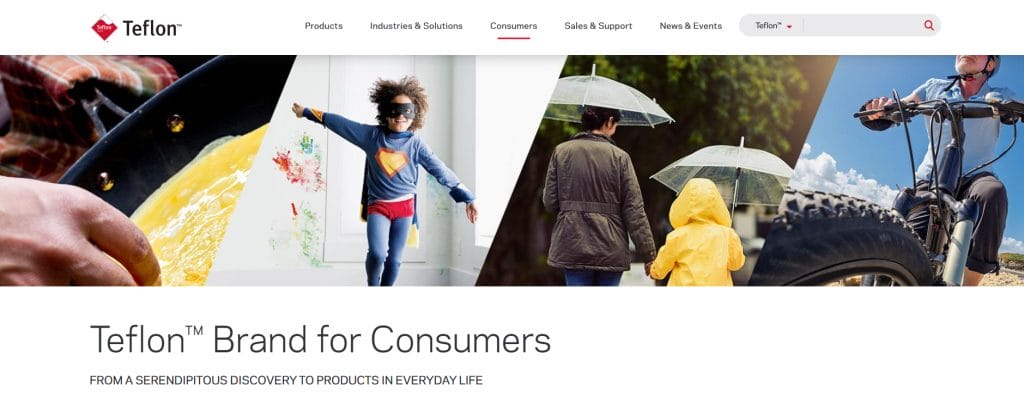
Today, Teflon is a multi-billion-dollar brand and the famous product is used in various industries, including automotive, industrial manufacturing, electronics, cabling and more.
Strategic Considerations
Ingredient branding is effective when a component delivers clear, defensible differentiation that audiences understand and value.
The strategy weakens when ingredients are easily replicated or fail to translate into tangible benefits for buyers.
In those cases, outcome-based positioning often communicates value more effectively.
Strategically, ingredient branding influences perceived quality, pricing power and category authority.
11. Online Branding Strategy
Online or internet branding uses online content, such as a website, blog, social media channels or ads to express a company’s personality, showcase its offering and strengthen its digital positioning.
Starbucks uses this type of branding strategy to ensure a consistent and visible digital presence across channels, relying on user-generated content to help consumers feel like they’re part of the brand.
Its seasonal drops and app-first habits turn everyday purchases into shareable moments, while the loyalty ecosystem keeps the relationship active between visits instead of only at the counter.
That mix of community, ritual and repeat touchpoints makes the brand feel familiar even when the customer is scrolling, not ordering.
Strategic Considerations
Online branding performs best when digital touchpoints reinforce familiarity and engagement beyond individual transactions.
It breaks down when execution varies across platforms or when presence becomes reactive rather than intentional.
When resources are limited, focusing on fewer channels with higher consistency often produces stronger results.
From a business perspective, online branding affects discoverability, engagement and customer retention.
12. Offline Branding Strategy
Offline branding aims to present a company’s mission, values or offering through physical interactions, such as trade shows and event booths, business lunches, vehicle wraps, billboards or print ads.
Though measuring offline branding performance is more difficult than measuring digital KPIs, an example is the Adidas billboard in Dubai that depicted Argentina’s team winning the FIFA World Cup.
Featuring a brilliant victory moment, Adidas combined the ad with its slogan “Impossible is nothing.”
The placement did more than celebrate a result, it tied Adidas to the emotion of the win and the pride that followed, creating a memory people carried with them long after they passed the billboard.
That’s the value of offline branding done well: one bold, well-timed message that reinforces what the brand wants to represent without asking for a click.
Strategic Considerations
Offline branding works when placement, timing and context amplify emotional impact. Strong execution creates memory rather than immediate response.
Its limitations emerge when measurement is weak or messaging lacks clarity, making ROI difficult to assess.
Integrated online–offline approaches often provide better balance between impact and accountability.
Commercially, offline branding influences recall, perception and long-term recognition rather than short-term conversion.
Which Type Of Branding Strategy Is Right For You?
There’s no one-size-fits-all branding strategy for a single industry. While personal branding might work best for a local attorney with one location, for example, corporate branding might be a better fit for a large-scale law firm with 100 locations around the country.
When choosing a strategy for your brand, consider:
- Your brand’s objectives: Define what you want to achieve, whether it’s raising awareness about your social responsibility, highlighting a special ingredient in your product or connecting with consumers based on shared cultural values.
- Your target audience: Who are you aiming to reach through your brand? Build user personas for each target group to determine their demographics, likes, dislikes, interests and other details. Based on this information, you can determine the tactics that will be most effective in reaching and engaging with them.
- Your brand identity: What strategy most aligns with your brand identity, and provides you with the best opportunity to present your identity to consumers?
- Your industry: Research your competitive landscape to see which strategies are working for your competitors, and determine how you can outperform them.
Key Elements Of A Branding Strategy
While there are many different types of branding strategies in marketing, they all share key elements that serve as the foundation for the strategy. These elements include:
- Brand purpose: The reason the company is in business and what the brand is trying to achieve
- Brand vision: The ideas and goals behind the brand, which serve as inspiration for growth
- Brand values: The company’s beliefs and what they stand for
- Target audience: The demographic(s) that the brand is aiming to reach
- Market analysis: An analysis of the marketplace that identifies gaps where the brand has an opportunity to position itself, based on its unique value proposition
- Awareness goals: The initiatives the brand will take to reach its target market
- Brand personality: The human-like attributes of the brand that will help it build relationships with consumers
- Brand voice: The language and tone the brand uses to communicate with consumers
- Brand tagline: A memorable slogan that sums up the brand and its offering in a few words
How To Use A Brand Strategy To Grow Your Brand
A cohesive brand strategy provides your business with message clarity, visual consistency and a well-defined, unique brand voice.
With this, your brand can successfully:
- Craft messaging for leads and prospects across the conversion funnel
- Communicate and present your business’ unique selling points to clients
- Onboard partner agencies and other service providers
- Onboard new employees, especially in the business development and marketing departments
- Create messaging and visuals for audiences on various digital channels, following brand guidelines
Let’s look at how to employ each of the points above in greater detail:
1. How To Communicate With Leads
Leads are more likely to trust a company in the future and become loyal customers if they know what to expect from the brand.
The process of lead onboarding begins from the first contact with the customer and continues until they can make an informed decision about your brand and its products or services.
This may consist of detailed step-by-step instructions, tutorials, guidance and support with the aim of helping leads understand how your brand solves their pain points.
Brand strategies for communicating with leads should consist of these steps:
- Educate your sales team on your brand values, including your mission and vision, brand positioning and messaging they can communicate to your leads through all available lead-capturing channels
- Ensure that external and lead-facing representatives understand and represent your brand identity
- “Train” your website chatbots to be consistent with your brand voice
Wondering how to train chatbots to use a consistent brand voice?
Check out these examples:
- Spotify: This streaming service’s Facebook Messenger bot uses a casual and friendly tone of voice to help users share music and recommend playlists based on their mood or general preferences.
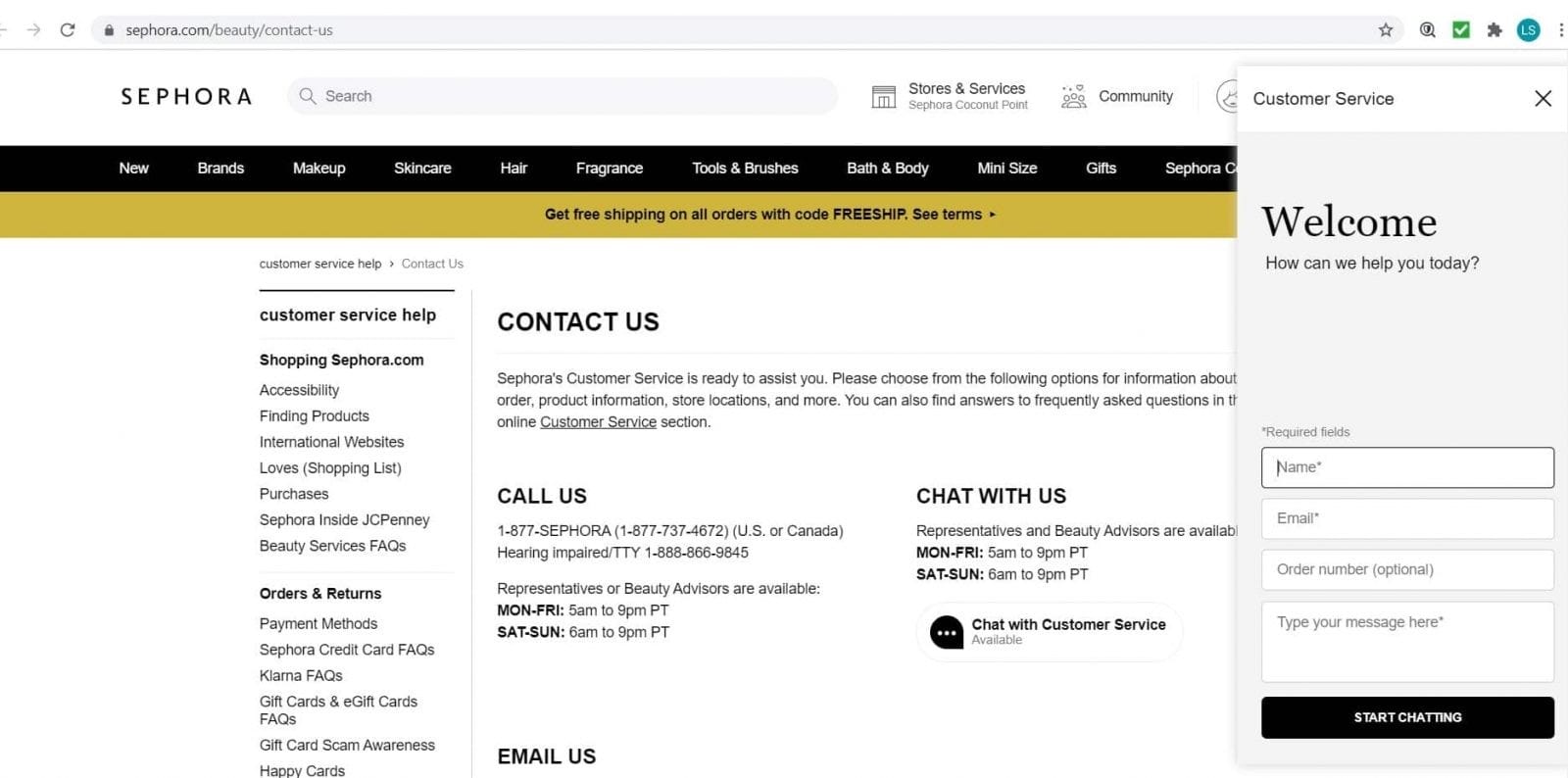
- Sephora: This beauty brand’s personal assistant chatbot complements the brand’s in-store services by using an affirming and supportive tone of voice to suggest makeup tutorials and products.
- Pizza Hut: Making it easy to order pizzas for delivery via Facebook Messenger or Twitter, this chatbot uses a conversational tone in line with the brand’s voice to provide users with current deals and ask questions about their order.
Here’s an overview of how Sephora communicates with its target audience:
2. How To Onboard Clients
Brand strategy and storytelling provide consistency in brand messaging.
That predictability is exactly what audiences prefer, with 92% of consumers saying they favor brands that deliver a consistent experience across interactions.
When messaging, tone and behavior align over time, people feel more comfortable engaging and committing.
When used correctly, a brand strategy is a tool that helps you create this environment and increase client trust in your brand.
To make sure your clients are on board with your brand mission, values and general capacities to deliver outstanding work:
- Use messaging consistent with your brand strategy: Messaging in your client presentation should not differ from what your prospects and clients can find on your website, as a discrepancy can cause confusion and suspicion
- Create branded promotional materials: On-brand materials like presentations and e-documents help to increase credibility and elevate the authority of your pitch.
- Leverage brand values: Honing in on well-researched brand values that you share with your audience will build an emotional connection
3. How To Onboard Agencies & Other Service Providers
Brand strategies serve as a set of strict guidelines that align marketing efforts among all stakeholders, including specialized agency partners.
A streamlined brand voice and consistent messaging help provide a character that your stakeholders, as well as your business partners, such as agencies, can relate to.
By establishing core values and building a brand identity around them, your business gains a basis for those values to shine in short-term and long-term partnerships.
Your brand’s personality, language and imagery will play a key role in allowing your agency partner to trust your ability to provide satisfactory deliverables that will improve your business performance.
To ensure this happens, the first steps to take are to:
- Schedule a dedicated kickoff call with every new service provider to guide them through your brand strategy
- Send them a copy of your brand strategy
- Monitor their output (such as their social media calendar, PPC ads, website messaging, etc.) against your brand strategy to ensure all pieces of the puzzle move in the same direction
4. How To Onboard Employees
Having a cohesive and well-defined company culture and business purpose helps retain employees and supports onboarding new hires so they can adapt to their roles.
A brand strategy explains what the company stands for and provides guidelines for how the employees should represent the brand.
Employees are often the best brand ambassadors for:
- Creating brand buzz and brand awareness
- Driving company culture
- Recruiting new talent
- Forming a public perception of your brand
To ensure your brand strategy results in a cohesive team that understands and applies the company values and mission to their work, be sure to do the following:
- In addition to training your sales team, present an employee version of your brand strategy and make it accessible to your entire workforce
- In this internal brand strategy presentation, outline your company’s:
- Brand and company values: Why does your brand exist?
- Brand vision and mission statement: What is your brand here to do? Where does your company see itself in the context of a market and what does its future look like?
- Brand culture that includes
- Brand descriptive adjectives: What buzzwords and phrases describe what your brand is and what it isn’t?
- Sales and customer relations etiquette: What are the best practices for professional communication?
- Resources and tools of the trade: What resources can your employees use in their day-to-day operations?
Below, you’ll find a visual representation of all the core components to look into during your brand strategy:
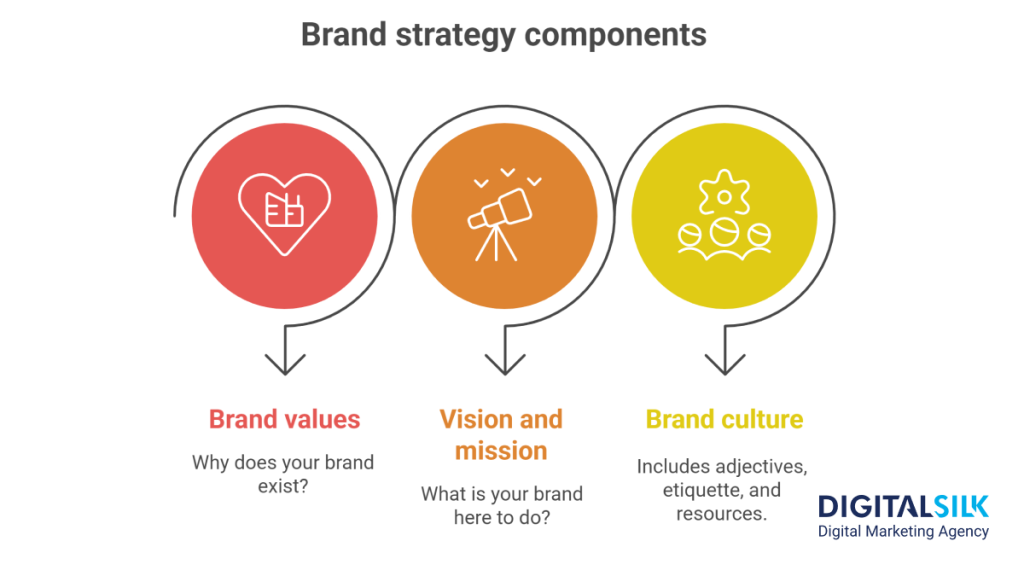
Be sure to incorporate your brand presentation into your employee onboarding process. This will help you create a uniform company culture and infuse your internal and external relationships with a consistency that Forbes’ research has proven to be the basis of trust.
5. How To Employ Brand-Building Strategies On Digital Channels
Gaining new customers and improving customer retention are the benefits of data-based design and effective messaging.
By defining your brand voice and positioning your brand in the market, your business can streamline communication via all digital channels.
In today’s digital networking environment, your brand can’t afford to ignore major networks like TikTok, Facebook or X.
Social media channels are an ideal solution for getting the word out about your products and services and generating brand awareness.
Let’s look at the numbers:
- 86% of businesses use Facebook for marketing purposes and the platform is the most popular social network with 3.070 billion users.
- The average user spends 143 minutes a day on social media, which opens up a window of opportunity.
- 77% of consumers are more likely to evaluate solutions from the brands they follow on social channels.
By creating a strong brand presence on social media, you can reach a much broader audience that resonates with your brand voice, imagery and offering.
A brand strategy document should provide a set of visual guidelines that include:
- Brand colors
- Imagery
- Typography
- Logotypes
- Context in which to use these elements to ensure visual consistency across all channels
Some of the best practices of using a brand strategy to solidify your digital presence include:
- Following the visual guidelines to a “T”
- Perpetuating the brand voice using recommended syntax, buzzwords, taglines, branded hashtags etc.
In the context of social media and platforms like Twitter and Instagram, branded hashtags can provide a unique element to your company.
They can be something simple like a hashtag version of your company name, your tagline, or the name of one of your products or campaigns. Branded hashtags may have nothing to do with your brand name but instead with your brand identity.
Work With Digital Silk To Build Your Branding Strategy
At Digital Silk, we choose and tailor the type of brand strategy to your unique goals, be they increasing visibility, improving recognition or growing loyalty.
As a basis for your strategy, we perform in-depth industry, competitor and audience research. We create user personas for your target market and determine the best approach to help you reach, engage and build long-lasting relationships with your target consumers.
As a professional branding agency, our services include:
Contact us online, call us at (800) 206-9413 or fill in the Request a Quote form below to schedule a consultation.
Tell us about your goals and let our experts give you recommendations and a custom proposal
"*" indicates required fields