



-
Performance sets the tone: Slow pages lose users early, limiting engagement and conversion potential.
-
Mobile drives decisions: Clear, responsive mobile experiences directly influence whether visitors stay and act.
-
Clarity beats complexity: Focused structure and obvious next steps build trust and improve conversions.
If your website doesn’t load quickly, feels clunky on a phone or leaves visitors guessing what to do next, you’re losing people before they even engage.
In 2025, more than 60% of global web traffic came from mobile devices and 53% of users will abandon a page that takes longer than three seconds to load.
Website improvements that address speed, usability and clarity are often the difference between a visitor staying or leaving within seconds.
And it’s not just speed. The average website experiences a bounce rate approaching 47% for organic search visitors, meaning almost half of people leave after one page, often because they didn’t find what they expected, navigation was confusing or the experience felt awkward.
For businesses that depend on digital interactions, these numbers show how quickly visitors judge a site and decide whether it’s worth their time.
In this post, we go straight into what commonly goes wrong with performance and user experience, real data that shows the impact and the focused website improvements that make measurable differences.
7 Website Issues That Might Be Affecting Your Site Performance & Conversions
The problems below are common across growing websites, especially as content, features and traffic increase.
While each may seem minor in isolation, together they can create friction that slows performance, weakens trust and limits conversion potential.

1. Slow-Loading Pages
Page speed rarely fails loudly.
It gradually affects results by reducing the number of users who make it far enough to act.
Google’s research around Core Web Vitals shows that pages delivering a poor experience see lower engagement and reduced visibility in search, even when content relevance is strong.
Speed is now evaluated as part of overall page usefulness.
From a commercial perspective, the impact compounds quickly.
The exits happen before users reach pricing pages, product details or contact forms.
Consumer behavior trends reinforce why this matters now. McKinsey’s State of the Consumer 2025 reports that more than 90% of consumers across major markets shopped with online-only retailers in the prior month, while expectations for convenience continue to rise and tolerance for friction declines.
For leadership teams, the implications are familiar:
- Fewer qualified sessions reaching high-intent pages
- Declining conversion efficiency across channels
- Rising acquisition costs as more traffic drops out early
Speed directly affects revenue flow, discoverability and brand perception.
To identify where speed issues actually occur, teams need data grounded in real user behavior.
Google PageSpeed Insights surfaces both lab data and field data from the Chrome User Experience Report, showing how pages perform for real visitors across devices and networks.
When used correctly, it helps teams separate cosmetic warnings from issues that genuinely affect engagement, search visibility and conversions, making performance improvement a measurable business decision rather than a guessing game.

2. Mobile Experiences That Break Momentum
Most discovery now starts on a phone, but many websites still treat mobile as a compressed version of desktop rather than a primary experience.
The result is a rocky experience at the exact moment users are deciding whether to continue.
Pages with poor mobile interaction patterns see lower engagement and weaker performance in search, even when content is relevant.
Issues such as tap targets placed too close together, unreadable text and layout shifts interrupt how users move through a page.
Mobile users behave differently.
They’re less likely to continue navigating a site if basic actions feel difficult or slow, especially when forms, menus or checkout steps are involved.
Real world performance confirms this pattern.
When Digital Silk rebuilt ZipTie’s website with a mobile-first focus, the results were dramatic: within 30 days of launching the new experience, sessions increased 381%, conversion rate jumped 353%, and cart abandonment dropped by more than half, driven in large part by improved navigation and responsiveness on mobile devices.

In practical terms, weak mobile experience tends to show up as:
- Strong mobile traffic but weaker engagement
- Lower conversion rates on mobile entry pages
- Paid campaigns underperforming on mobile devices
Improving mobile experience goes beyond responsive design.
In fact, it requires prioritizing clarity, readability and interaction flow so users can move through key paths without hesitation and ZipTie’s results prove that point.
3. Visual Clutter That Forces Visitors To Work
Clutter doesn’t mean “ugly.” It means the page asks people to sort through competing signals before they understand what you do and why it matters.
That’s a bigger problem in B2B than most teams admit, because buyers are already tired of noise.
73% of B2B buyers actively avoid suppliers who send irrelevant outreach and 61% prefer an overall rep-free buying experience, which means your website often has to do the heavcy lifting before anyone is willing to talk.
When a page tries to say everything at once, it usually lands as “nothing is clear.”
At the executive level, this often shows up as:
- High bounce rates despite strong traffic
- Key offerings being overlooked or misunderstood
- Engagement metrics that don’t reflect marketing investment
The fix isn’t stripping personality out of the design.
It’s making choices: one primary message, one obvious next step and a layout that guides scanning instead of fighting it.
When Digital Silk redesigned the Devensoft website, the team simplified complex product messaging and reduced visual clutter across key pages.
The result? Engagement metrics improved significantly. User interactions on target CTAs increased nearly 50% post-launch even though overall traffic stayed flat.

4. Broken Links That Break Confidence
Broken links signal neglect.
A single dead end can stop a user from completing a task.
A pattern of them suggests the site isn’t actively maintained and that doubt carries weight.
Broken links can seriously affect:
- SEO: 411 or 404 pages restrict the flow of link equity throughout your website. Once Google’s crawlers track them, it may negatively impact your rankings because the search engine doesn’t want to send users to sites that may provide them with a poor user experience.
- Reputation: Running into a broken link is a frustrating experience. These links prevent users from completing some desired tasks and accessing the information they need. This pushes visitors away and damages your business’ reputation.
- Revenue: Broken pages are roadblocks to the conversion process. Consumers don’t trust companies that provide them with poor experience and they wouldn’t buy from an untrustworthy brand.
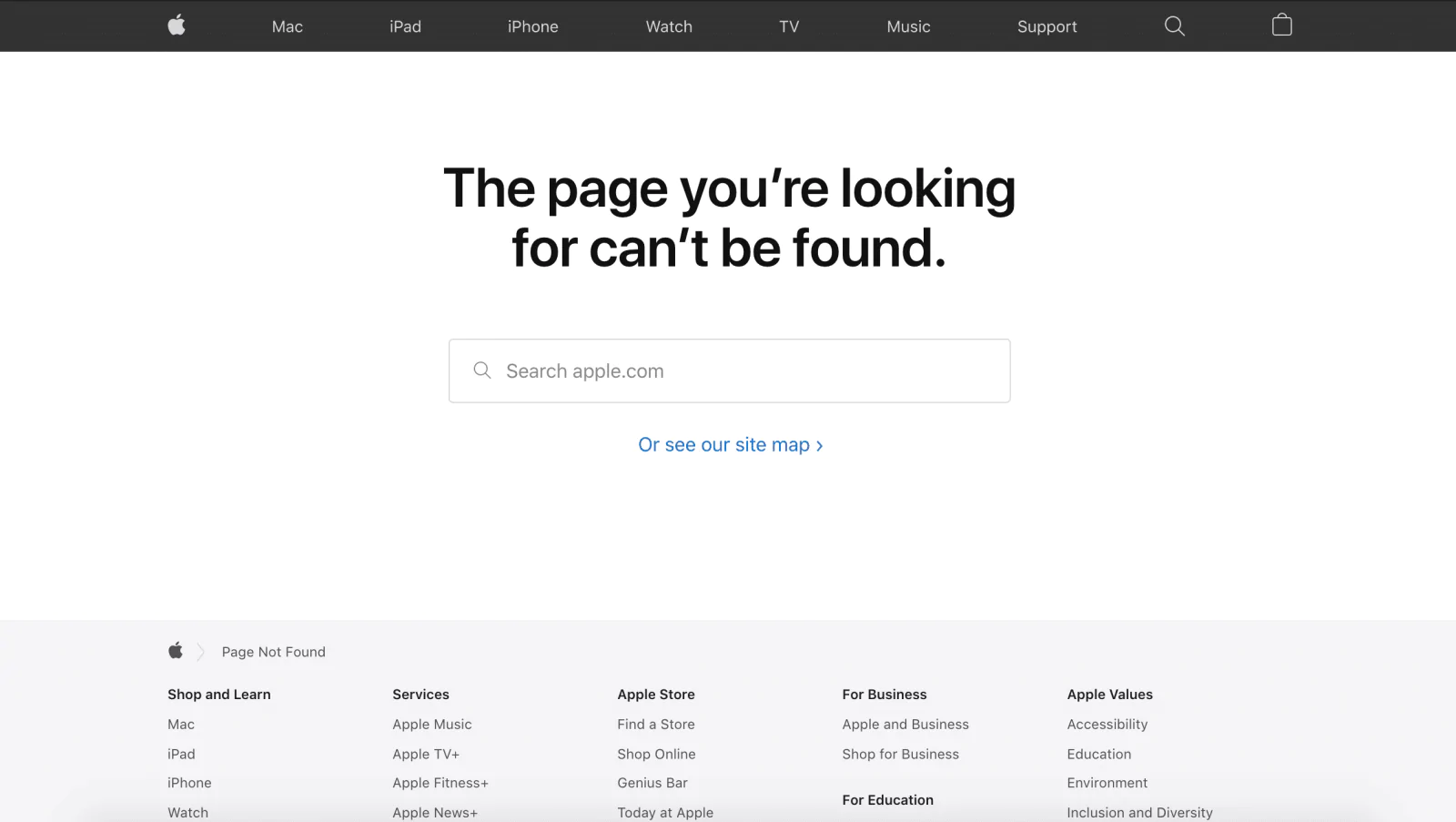
Reliability is part of brand perception.
Broken links rarely generate complaints, but they steadily erode confidence and performance.
5. Contact Details That Are Hard to Find
Users are more cautious than they were a few years ago.
Fake sites, impersonation scams and copycat brands have trained people to look for clear signals that a business is legitimate before they engage.
When contact details are buried, incomplete or inconsistent, confidence drops quickly.
In practice, this creates familiar problems:
- Interest that fails to turn into inquiries
- Lower form completion rates
- Longer sales cycles driven by trust gaps
For B2B and high-consideration purchases, contact visibility matters even more.
Decision-makers want reassurance that there’s a real team, a real location and a clear path to follow up if questions arise.
Clear, consistent contact information removes doubt. And removing doubt is often what keeps a session alive long enough to matter.

6. Pages With No Clear Next Step
Content without direction wastes attention.
When visitors reach the end of a page and aren’t sure what to do next, most don’t make a wrong choice. They make no choice at all. The session ends quietly.
Usability research from Nielsen Norman Group shows that clear microcopy and action cues help users understand what will happen next and reduce hesitation at decision points.
When CTAs are vague or missing, users are more likely to stop progressing, even if the content itself is relevant and engaging.
The business impact is usually clear:
- Growing traffic without proportional lead growth
- Content that performs well but drives little action
- Campaigns that generate awareness without momentum
Effective CTAs clarify intent, set expectations and give people a simple way to continue when interest is already there.
Even subtle prompts, placed at the right moment, can meaningfully change how users move through a site.
7. Complex Navigation
Navigation should feel invisible.
When users have to stop and think about where to go next, something is already wrong.
Overloaded menus, unclear labels and buried pages slow people down at the exact moment they’re trying to orient themselves. Instead of moving forward, visitors hesitate, backtrack or abandon the session altogether.
Navigation is less about listing everything a company offers and more about helping users find what matters most, fast.
Menus that mirror internal structures or product catalogs may feel complete, but they rarely feel intuitive to someone arriving with a specific goal.
For leadership teams, the implications are familiar:
- Users struggle to reach high-value pages despite healthy traffic
- Key offerings get buried under secondary content
- Conversion paths become longer and less predictable
Strong navigation reflects business priorities.
That clarity helps users scan, decide and act without friction.
Simple menus focus attention, reduce hesitation and make it easier for visitors to move through the site with confidence.

Why Website Improvement Should Be A Constant Part Of Your Web Maintenance Strategy
Website improvement is all about keeping a business-critical system aligned with how people find, evaluate and trust brands today.
From following trends to boosting your sales, these are the top five reasons why website improvement should be an integral part of your web maintenance strategy:
1. Staying Relevant As Expectations Shift
Websites don’t become ineffective overnight.
They slowly fall out of step with how users browse, compare and decide.
Design patterns evolve. Devices change. Search systems adjust how they evaluate usefulness.
When a site doesn’t keep pace, it starts to feel dated even if nothing is technically broken.
Regular audits and updates help ensure your site continues to reflect how people expect to interact with modern brands, not how they did a few years ago.
2. Improving User Experience Based On Real Behavior
User experience doesn’t stand still.
As devices, interfaces and browsing habits evolve, patterns that once worked can quietly lose effectiveness.
Regular analysis of on-site behavior shows where visitors pause, hesitate or exit before completing key actions.
Those signals reveal whether pages are helping users move forward or asking too much of them at the wrong moment.
Testing and iteration help ensure changes actually improve clarity and flow.
When updates are guided by real behavior, user experience evolves in a way that supports both engagement and business goals, rather than disrupting them.
3. Maintaining Search Visibility Over Time
Search systems continue to evolve how they interpret quality, usability and relevance.
Technical health, content structure and experience signals all influence whether pages continue to perform or slowly lose ground.
Regular attention to technical and on-page SEO helps ensure your site remains discoverable as algorithms and competitive landscapes shift.
4. Gaining A Competitive Advantage
Strong website performance is the result of consistent maintenance.
Page speed, navigation clarity and updated content all affect how long users stay and how confident they feel engaging with your brand.
When these elements slip, competitors with cleaner, faster experiences gain an edge without saying a word.
Ongoing improvement keeps your site from becoming the weak link in an otherwise strong digital strategy.
5. Boosting Sales
Your website plays a direct role in revenue generation, whether through lead capture, product discovery or brand validation.
Small issues, such as slow pages, broken paths and confusing layouts can quietly reduce conversion efficiency long before anyone flags a problem. Over time, those losses compound.
Continuous website improvement helps reduce avoidable drop-offs, protect conversion rates and ensure traffic investments translate into real business outcomes.
6 Website Improvements A Web Consultant Can Help You With
A web consultant works closely with your in-house team, helps you discover website issues and assists you in fixing them.
Here are five ways a web consultant can help you make the necessary website improvements:
1. Website Audit
A website audit helps you analyze the current state of your site, find out what’s working and what’s not and helps you discover discrepancies in data and compatibility.
It is an inevitable process for website improvement that will provide you with key data on:
- Content quality
- Responsiveness
- Loading times
- Optimization
A web consultant brings to the table the expertise and experience you need to:
- Identify the right data to analyze and track
- Assess the current metrics
- Ask the right questions
- Set realistic goals
- Identify impediments to performance
- Identify untapped opportunity
At Digital Silk, our experts use a comprehensive website audit to determine your website’s strengths and weaknesses, and identify areas for improvement. For example, check out our CEO’s website evaluation of two major streaming networks – Netflix and Hulu.
2. Web Design & User Experience
Web design and user experience go hand in hand. As we’ve seen by now, these are strongly correlated with how users perceive the brand, influencing their decision to trust and engage with it.
From details like the psychology of color and font + browser compatibility, to more complex elements like wireframes and responsiveness, a web consultant will help you optimize your design for user engagement and conversions.
Counting on the help of expert advice, you will be able to enhance:
- Usability
- Aesthetics
- Visibility
- Interaction
3. Web Development
Your website’s backend is as important as your site’s frontend. It contributes to a user-friendly content management system, easy navigation and site compatibility with various devices.
When it comes to backend development, a web consultant can help you with:
- Creating and managing the database
- Choosing the right server technologies
- Integrating cloud computing
- Developing and managing a content management system
- Managing APIs resources
- Organizing backup files
4. Search Engine Optimization & Content Strategy
There are three tactics that stand out for an effective organic search strategy:
- On-page SEO: This includes optimizing your content to allow search engines to understand its topic. Key factors to consider are keyword optimization, quality content and interlinking, among others.
- Technical SEO: The strategies around technical SEO are not content-related and their aim is to improve the website’s backend structure and foundation. They relate to mobile-friendliness, site speed, security and more.
- Off-Site SEO: While not a website improvement tactic, per se, off-page SEO strategy contributes to website performance in search. It incorporates tactics that improve a website’s domain authority and strengthens the relationship with other sites and brands. This strategy includes, but is not limited to, gaining quality backlinks, guest blogging and influencer marketing.
5. Data-Driven Marketing
Web consultants can help you improve your marketing strategies by collecting and making sense of deep data on every aspect of target user behavior.
The data they collect is both on and off-site, procured by high-end tools that rely on cookies.
This then feeds back into the website improvement plan, as well as beyond, including remarketing, digital marketing campaign strategies, business opportunities and more.
6. Conversion Funnel
A sales or conversion funnel is the user journey that a website visitor goes through from their first interaction with your business until they convert and become a client or a customer.
Optimizing the conversion funnel is vital for gaining qualified prospects and:
- Increasing sales thanks to a bigger number of prospects going through all the stages of the funnel
- Giving you an edge over your competitors that do not optimize their funnel
- Identifying the right marketing strategy through targeting the right audience in particular stages of their user journey
Website consultants take these steps to optimize your conversion funnel:
- Research your target audience and market to know your ideal customer profile
- Create a content strategy that prospects will find educational and helpful
- Use the right content and media at every stage of the funnel that supports corresponding stages of users’ journey
- Capture prospects’ email addresses
- Include case studies, review and client testimonials as social proof
- Include enticing calls-to-action
- Simplify checkout forms
| AREA OF IMPROVEMENT | WHAT GETS FIXED | BUSINESS IMPACT |
| Website Audit | Uncovers performance gaps, usability issues and technical debt | Clear prioritization, reduced waste and faster ROI |
| Web Design & UX | Simplifies layouts, messaging and interaction paths | Higher engagement and improved conversion efficiency |
| Web Development | Strengthens backend performance, scalability and stability | Faster load times, fewer errors and easier future updates |
| SEO & Content Strategy | Aligns structure, content and technical foundations | Sustained organic visibility and lower acquisition costs |
| Data-Driven Marketing | Connects behavior data to decisions | Smarter campaigns and better allocation of budget |
| Conversion Funnel Optimization | Improves flow from entry to action | More qualified leads and higher revenue per visitor |
How To Define Website Goals & Keep Them On Track
A website is a system built to support specific business outcomes.
Whether the priority is lead quality, pipeline velocity, brand positioning or client retention, performance only improves when goals are clear, limited and enforced over time.
Vague objectives lead to vague results.
Effective website goals share a few traits. They describe a specific outcome, are tied to measurable signals and have a defined window for evaluation.
Without those constraints, priorities blur and performance stalls.
Rather than setting broad ambitions, strong teams focus on what the website must do right now and what can wait.
In practice, that means:
- Choosing one or two primary objectives per phase
- Aligning design, content, and development decisions to those objectives
- Resisting the urge to optimize everything at once
Progress also depends on ownership.
Goals without accountability tend to drift as new requests, campaigns and opinions enter the process.
Clear ownership keeps decisions grounded in data instead of preference.
Tracking performance closes the loop.
Regular review of conversion paths, engagement patterns and drop-off points shows whether changes are working or simply adding noise.
Those insights guide what to refine next and what to leave alone.
The websites that perform best are the ones with the clearest priorities and the discipline to stick to them.

Improve Website Performance With Digital Silk
Websites that aren’t actively maintained tend to lose ground quietly.
Small issues compound, clarity fades and performance slips long before teams notice a problem.
Digital Silk helps organizations improve website performance through strategic design, thoughtful development and data-driven optimization.
Our approach focuses on removing barriers, clarifying user paths and aligning websites with real business objectives, not surface-level updates.
As a full-service digital agency, our services include:
- Unique website design and redesign
- Custom web development
- User experience and conversion optimization
- Technical and on-page SEO
- Digital marketing and performance strategy
Contact our team, call us at (800) 206-9413 or fill in the Request a Quote form below to schedule a consultation.
"*" indicates required fields
