We Don’t Just Scale Campaigns. We Scale Execution.
Enterprise marketing gets harder as more markets, stakeholders and approval layers enter the picture. We build the systems, governance and localized execution that let distributed teams move consistently at scale.
Enterprise digital marketing services involve local teams, approval chains, legal, brand governance, agencies and data owners.
At this scale, the challenge is getting everyone to execute consistently, not simply reaching more markets.
Compliance Scales Too
A national program already crosses multiple jurisdictions, with differences in privacy and accessibility requirements.
Shared components can multiply both the efficiency and the exposure, making compliance something to build into the system rather than check page by page.
Measurement Must Reconcile
Enterprise reporting has to connect with CRM, ERP, data warehouses and regional P&Ls.
It also needs to account for long, multi-touch buying cycles and distinguish genuine contribution from simplistic attribution.
How We Work At Enterprise Scale
01
Coordinate The System
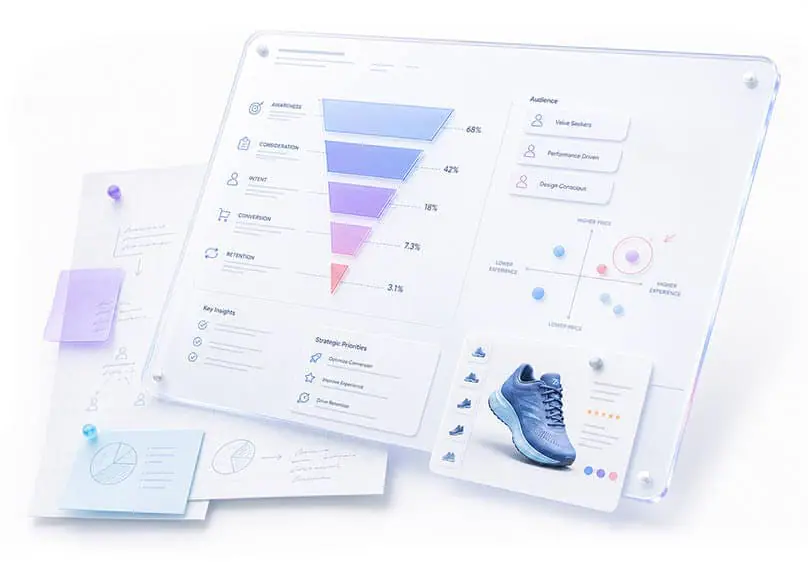
We map stakeholders, decision rights and dependencies before execution begins, so distributed teams can move without creating approval bottlenecks.
02
Build For Consistency
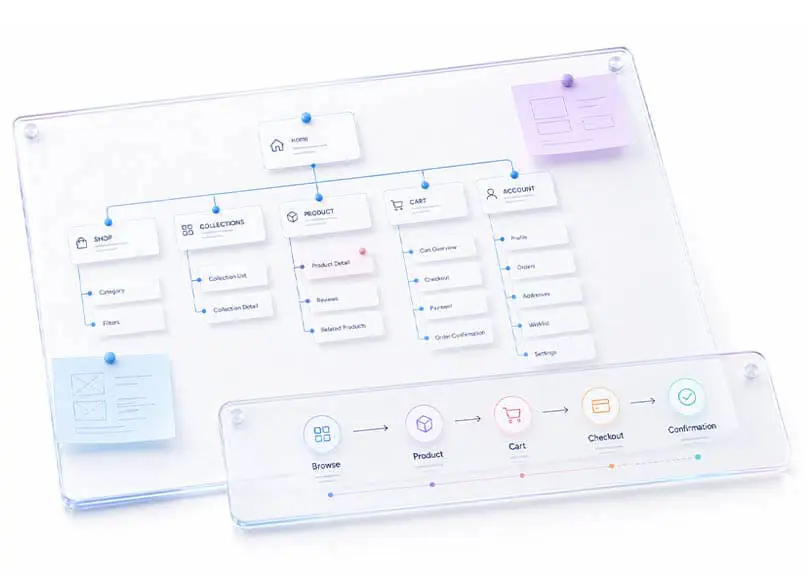
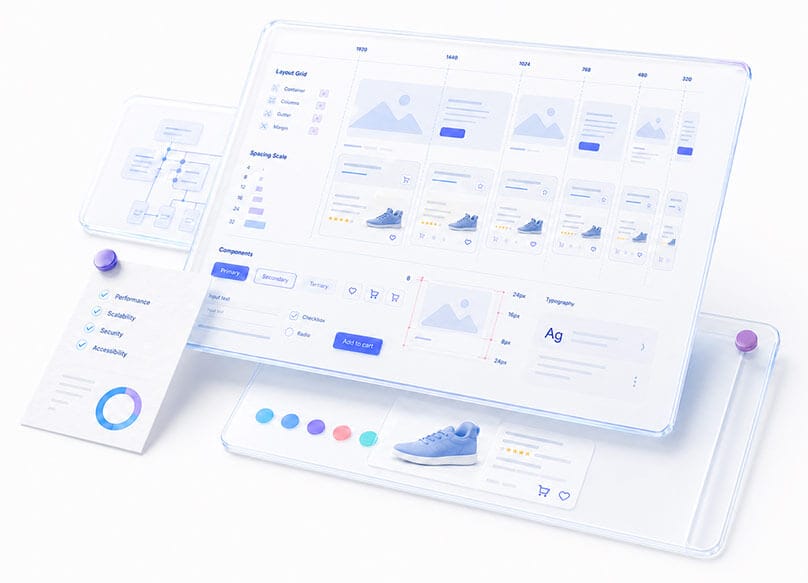
We create templates, components and governance rules that give local teams room to adapt without breaking what needs to stay consistent.
03
Plot Before Scaling
We test the system in one or two markets first, identify what breaks, fix it, then scale. It’s cheaper to find a flaw twice than 21 times.
04
Measure The Business
We connect marketing performance to CRM, financial and regional data, measuring contribution against business outcomes rather than relying on platform metrics alone.
Built For Enterprise Reality
Enterprise engagements come with constraints that most agency briefs leave out. We plan around the systems, people and processes already in place rather than expecting the organization to adapt to us.
Procurement: We account for security reviews, data agreements and vendor onboarding before kickoff, not after.
Technology: We work within your existing CMS, CRM, DAM, CDP and consent stack alongside the teams and vendors that own them.
Delivery: The team that sells the engagement stays involved in delivering it, with clear roles and senior ownership.
Alignment: We establish decision rights and escalation paths so internal disagreements don’t stall execution.
Pilots: We start with a market, product line or defined phase, prove the model and scale from there.
our work
Enterprise Marketing Results
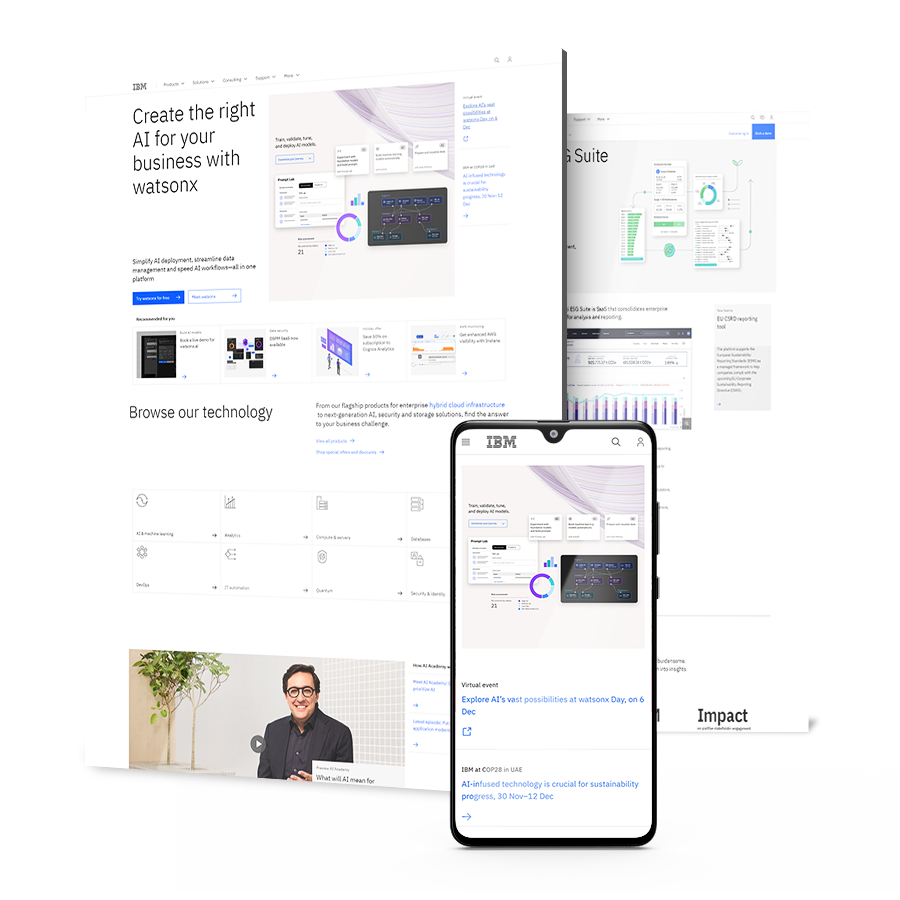
IBM – 47 localized microsites delivered across 21 countries
IBM needed to adapt industry-specific marketing communications for European markets, with more than 200 webpages requiring localization across different countries and languages.
Digital Silk assigned 12+ digital strategists across regional projects, creating localized guidelines and processes that helped IBM’s teams adopt and manage the new microsites more efficiently.
Within five months, 47 microsites launched across 21 countries, with 200+ localized webpages in 11 languages and 100+ stakeholders coordinated through the project.
HP – A global rewards program that reached 40K active members
HP wanted to launch a global rewards program that could connect its retail and online channels while giving customers a reason to engage with the brand beyond individual purchases.
Digital Silk built a custom rewards portal where customers could submit purchases, track points and access benefits, then supported the program with retargeting, retailer communications and automated email campaigns.
Within six months, the program reached 40K active members, while repeat customers grew to 56% of total customers, strengthening loyalty across HP’s customer base.
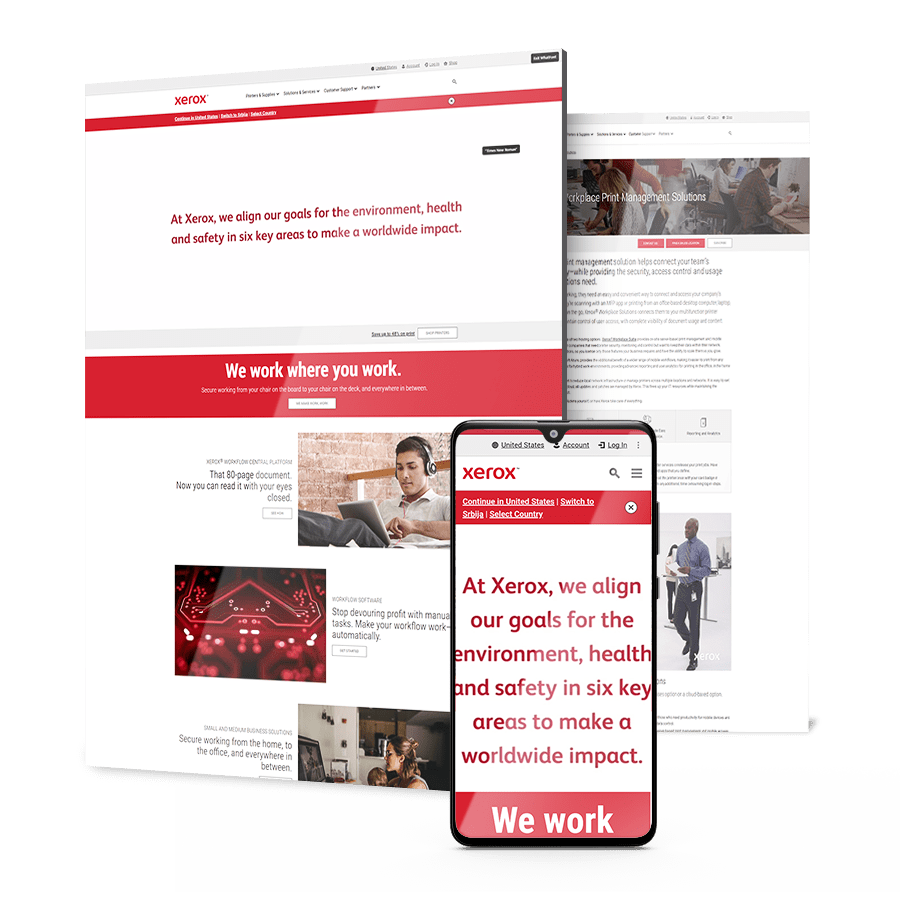
Xerox – A B2B lead generation campaign that increased sales by 20%
Xerox needed a stronger way to generate and nurture B2B demand for its new printer technologies, with its existing digital experience failing to turn interest into qualified leads.
Digital Silk built a new landing page around key buying triggers and supported it with Google Search and Display campaigns, retargeting and email nurturing for prospects who needed more time to decide.
Within six months, Xerox Versalink sales increased 20%, while nurtured leads reached a 43% conversion rate.
Templates, component libraries, brand governance and decision frameworks that keep multi-market programs consistent while giving local teams room to adapt.
02
Multi-state And Multi-market Execution
Localized campaigns built around market-specific search behavior, channel mix and messaging, with privacy and accessibility requirements incorporated into the shared system.
03
Enterprise Paid Media
Search, display, paid social and retargeting structured by market and product line, with clear governance over budgets, audiences and execution.
04
Lifecycle, Loyalty and CRM Programs
Retention and repeat-purchase programs built around the CRM and platforms you already own, from segmentation and nurture to loyalty campaigns.
05
Demand Generation And Lead Nurture
Pipeline-focused B2B lead generation programs for long, multi-stakeholder buying cycles, with nurture built to move prospects who aren’t ready to buy.
06
Measurement, Attribution And Reporting
Reporting that connects marketing performance to CRM and financial data, measures contribution honestly and accounts for differences in market maturity.
07
Marketing Operations And Platform Integration
Execution within your existing CMS, CRM, DAM, CDP, tag management and consent platforms, alongside the internal teams and vendors that manage them.
08
Governance, Enablement And Handover
Documentation, templates and training that give internal and local teams the ability to operate and scale the system independently.
Our EnterpriseDigital Marketing Process
See how we plan, test and scale digital marketing programs for enterprise organizations.
Pre-Kickoff & Strategy
We start the operational work alongside scoping, not after it.
Procurement, security review and data processing agreements begin in parallel so predictable enterprise requirements don’t become a bottleneck later. We establish the business objectives, markets, channels, data requirements and technical constraints that will shape the program.
Stakeholder & Audience Discovery
Before defining audiences, we map the people who have a say in the program.
We identify who makes decisions, who needs to be consulted, who can block a change and who owns each market or channel.
We then map audiences, buying journeys, regional differences and existing performance data to determine where the opportunity actually sits.
Pilot Planning & Execution
We start with one or two markets rather than rolling an untested strategy across the organization.
We define the campaign structure, messaging, targeting, creative, measurement and reporting framework, then use the pilot to identify what needs to change before scaling.
Once the model works, we document the repeatable processes needed to expand it across additional markets.
Performance Monitoring & Optimization
We monitor performance against the business outcomes established at the start, not just surface-level campaign metrics.
We evaluate lead quality, conversion behavior, acquisition costs, revenue contribution and market-level performance to identify what should be scaled, adjusted or stopped.
Findings from the pilot and subsequent markets feed back into the program so improvements are made before they become expensive at scale.
Scale & Handover
Once the program has proven itself, we expand the framework across markets while maintaining the governance, measurement and brand standards established during the pilot.
We document campaign structures, workflows, reporting and decision rules and train your internal teams to manage the program independently.
The engagement is not finished when campaigns launch. It’s finished when your teams can run them without us.
Enterprise Digital Marketing FAQs
What actually makes enterprise marketing different?
It’s the number of stakeholders, markets, languages and systems involved. IBM needed 100+ stakeholders to coordinate 47 sites across 21 countries in five months. That’s a different discipline, not simply a bigger campaign.
How do you handle procurement and security review?
As part of the project, not as a hurdle before it. We plan for security reviews, data agreements, insurance requirements and vendor onboarding from the start, typically allowing six to twelve weeks.
How do we keep the brand consistent across markets without stifling local teams?
We define what’s fixed and what’s local, then build that distinction into the system. Templates protect consistency while giving local teams room to adapt.
Who owns privacy and accessibility on the marketing side?
Your legal team determines the requirements; we handle implementation. We build consent and accessibility into shared components so they can scale across the program, rather than fixing issues page by page.
How do you measure marketing across a long, multi-stakeholder cycle?
We measure contribution and influence against a stated methodology, connected to CRM and financial data. Markets are evaluated against their own maturity rather than a single platform metric.
Can we start with one market or one product line?
Yes, and we usually recommend it. A pilot reduces risk, produces evidence and surfaces problems while they’re still inexpensive to fix.
Who works on our account?
The people named in the proposal, with clear roles and involvement. We also plan for continuity if team members change.
Do you replace our in-house team or work with it?
We work with your team and aim to make it more capable. Documentation, training and templates help your teams eventually run the program without us.
Talk To Our Enterprise Team
Tell us how many markets, how many stakeholders and which platforms you’re committed to. Those three answers tell us whether the hard part is the strategy or the execution — and it’s usually the execution.