We Don’t Chase More Leads. We Chase Better Enrollment.
The student pool is shrinking. We build education marketing around the audiences, intent and enrollment stages that actually move students from interest to enrollment.
WICHE projects U.S. high school graduates will decline roughly 13% from their 2025 peak through 2041, with some regions declining much faster than others.
That makes yield, positioning and retention more important than simply generating more leads. Growth now means winning students who would otherwise choose somewhere else.
Different Decision Makers
Parents choose K-12 schools, students choose colleges and employers may pay for professional training.
Each audience has different motivations, intent and conversion paths. ISP cut cost per lead by 40.37% while increasing total leads by 73.76% by segmenting campaigns around grade level and local needs.
Multiple Audience Conflicts
Universities often market to prospective students, parents, current students, alumni and donors through the same digital ecosystem.
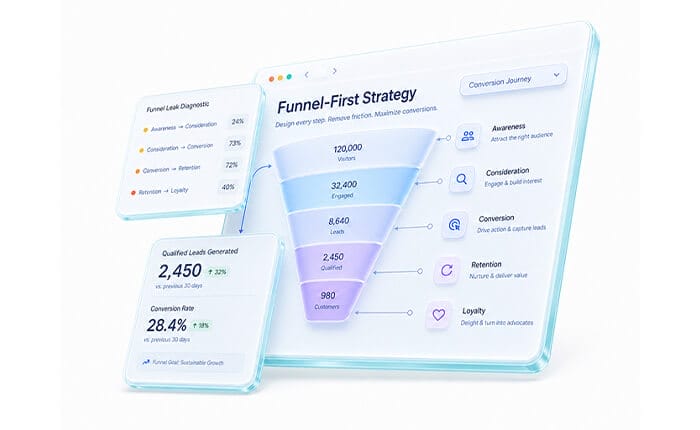
The answer isn’t more content. It’s deciding which audiences matter most, giving them dedicated paths and measuring the stage that actually counts: inquiry, application, deposit or enrollment.
How We Approach Education Marketing
Our education digital marketing services focus on the decisions that move prospective students from interest to enrollment and beyond.
01
Segment Around The Decision
We identify who actually influences the decision, from grade level and program to funding source and payer. Campaigns are built around those decision dynamics rather than broad demographic categories.
02
Qualify Intent Before Spending
We separate commercially different searches before they consume budget. Academic intent, childcare searches and program-specific research may look similar to an ad platform but require completely different campaigns.
03
Optimize For Yield, Not Just Leads
We look beyond the initial inquiry to what happens next. The goal is to move qualified prospects through the enrollment journey, not inflate lead volume with people unlikely to convert.
04
Treat Retention As Marketing
We extend performance thinking beyond acquisition into re-enrollment, persistence and advancement. Keeping an existing student engaged can be more valuable than paying to acquire a replacement.
Different Institutions, Different Strategies
Education marketing can’t be standardized across institution types.
We adapt the channel mix, buying model and measurement to how each organization actually generates revenue.
K-12: Localized acquisition built around enrollment gaps, entry grades and admissions calendars.
Higher education: Yield-focused campaigns tied to program demand, application stages and enrollment.
Professional training: B2B demand generation and partner channels built around identifiable buyers and business needs.
Edtech: Enterprise campaigns designed around institutional buyers, pilots and procurement.
Nonprofits: Separate acquisition strategies for participants and the donors who fund them.
our work
Education Marketing Results
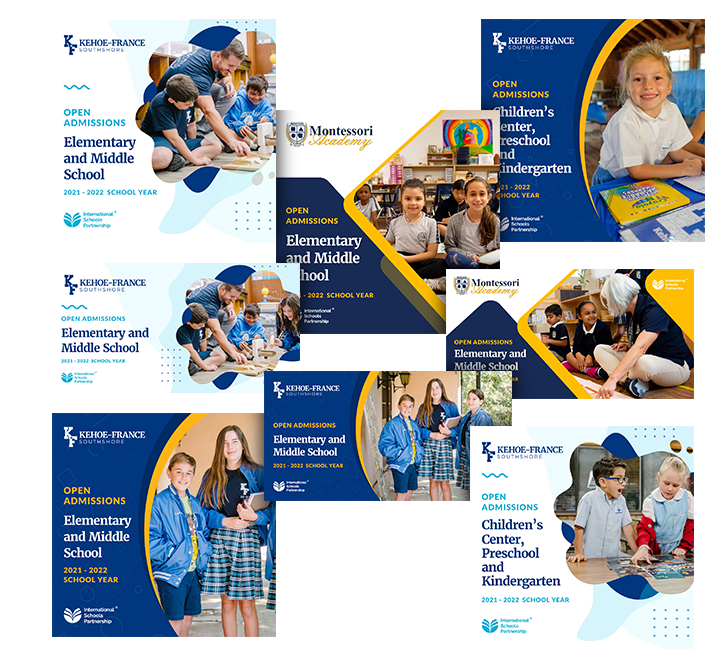
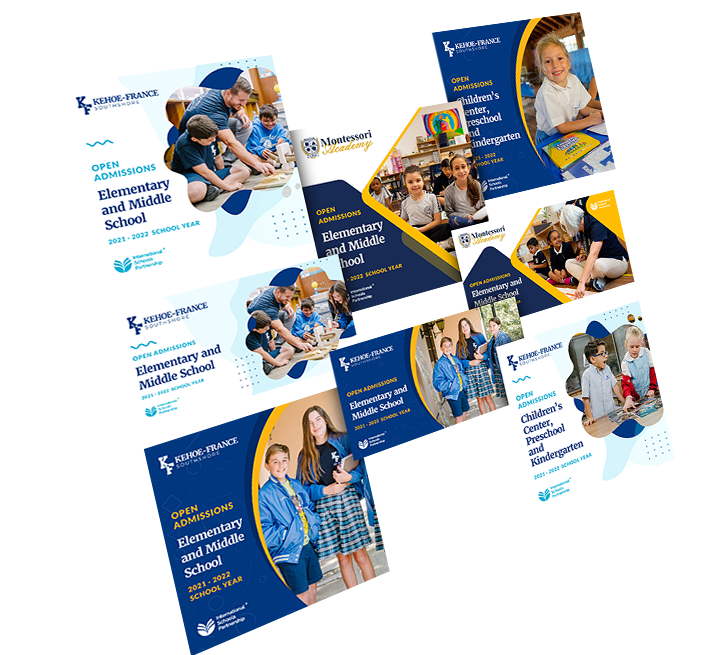
International Schools Partnership – 74% more leads at 40% lower cost
International Schools Partnership needed to generate better-quality leads for its network of independent private schools across the U.S. and Canada, where enrollment needs varied by school and grade level.
Digital Silk built localized advertising campaigns around each school, segmenting audiences by grade level, refining keywords and Meta lead forms, tailoring messaging to regional markets and fixing inconsistent conversion tracking across the network.
The campaigns increased total leads by 73.76% while reducing cost per lead by 40.37%, including an $88 reduction in CPL on Meta.
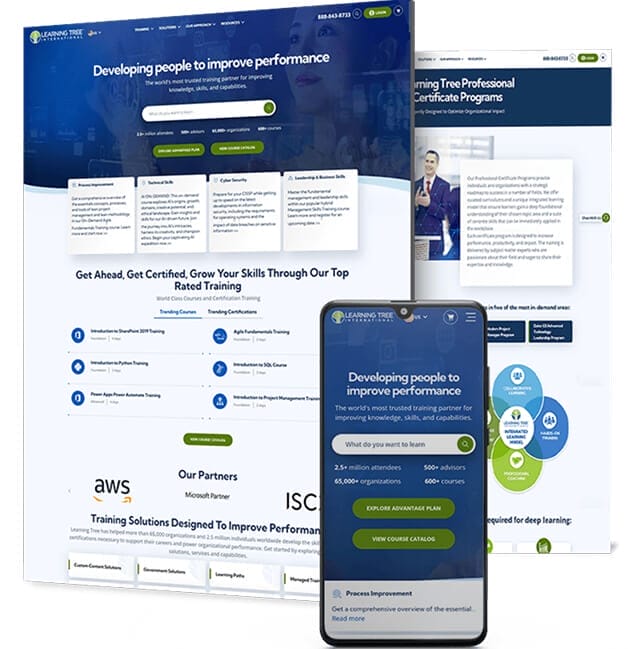
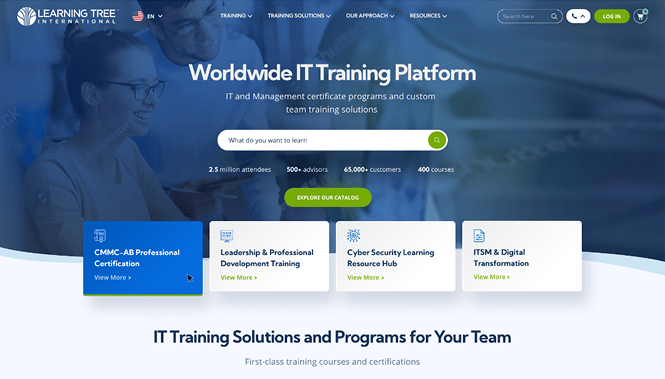
Learning Tree – 1,300% more revenue through affiliate marketing
Learning Tree, an IT training provider, wanted to diversify its traffic and revenue sources by expanding into affiliate marketing.
Digital Silk developed an affiliate strategy focused on finding relevant publishers, strengthening publisher relationships and optimizing the channel based on performance data.
Over one year, affiliate marketing drove a 1,300% increase in revenue, alongside 1,400% growth in unique purchases and a 193% increase in publishers.
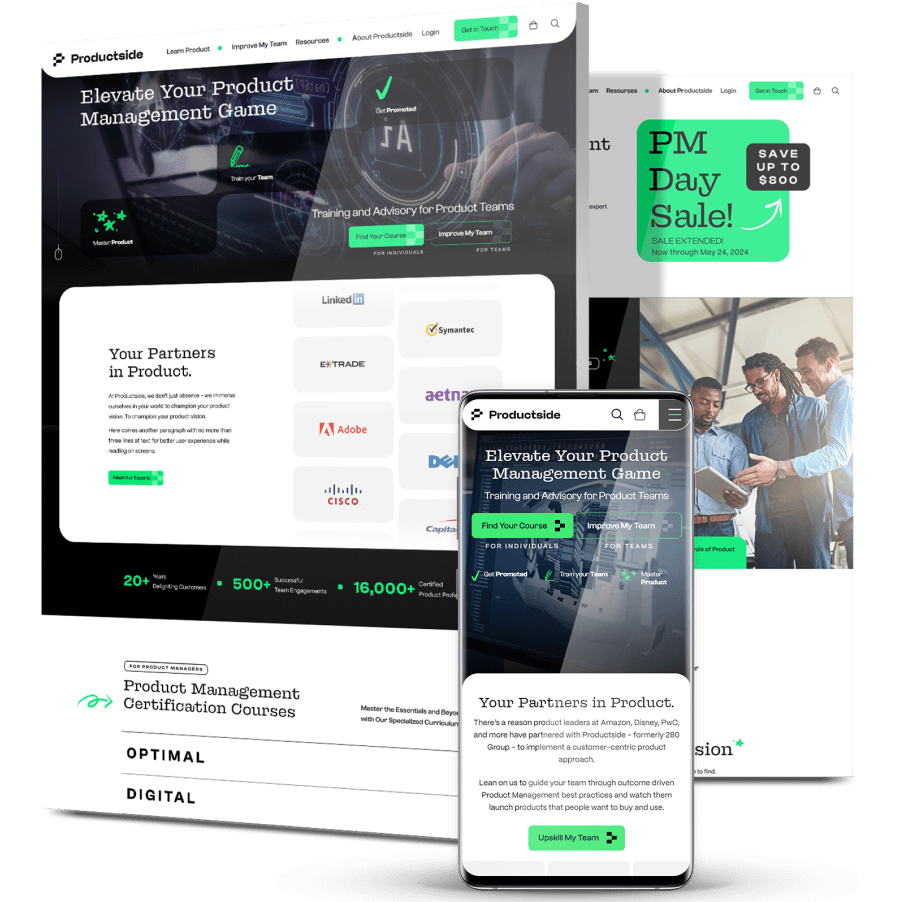
Productside – A website rebuild that sold 160+ courses in three months
Productside, a product management training and consulting provider, needed a stronger digital experience to attract new students and make its courses easier to evaluate and purchase.
Digital Silk redesigned the website around a clearer course-selection and sign-up journey, removing friction from the conversion path while strengthening Productside’s brand positioning and competitive identity.
Within three months, the new website generated 160+ course sales, reached 100K first-time visitors and drove an 18% traffic increase on launch day.
Paid search and paid social built around grade, program and entry point, with intent filtering built into the campaign structure.
02
Multi-school And Multi-campus Programs
Shared infrastructure with local execution, so budget can move toward the schools and campuses with the greatest enrollment gaps.
03
SEO and Content For Education
Program pages, outcome-focused content and search strategies built around the questions prospective students and families actually ask.
04
Yield And Middle-Funnel Marketing
Nurture from inquiry through application and deposit, with campaigns designed to convert existing interest rather than simply generate more leads.
05
Retention, Re-enrollment And Persistence
Lifecycle marketing that keeps current students and families engaged, supports re-enrollment and reduces reliance on new-student acquisition.
06
Advancement, Alumni And Donor Marketing
Segmented, lifecycle-driven campaigns that treat donor acquisition, engagement and retention as measurable performance programs.
07
Affiliate And Partner Marketing
Publisher and partner programs for training and professional education, where third-party channels can create demand beyond the direct funnel.
08
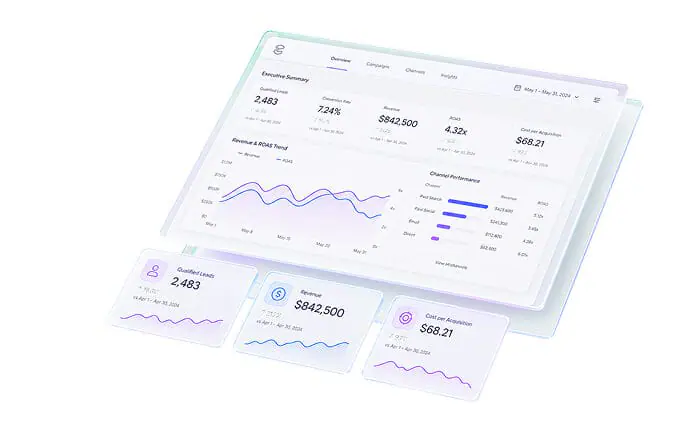
Analytics And Attribution
Measurement built around long enrollment cycles and multiple decision-makers, connecting marketing activity to the outcomes that actually matter.
Our EducationDigital Marketing Process
Take a look at our education digital marketing process.
Strategy & Discovery
We start by understanding the institution, its enrollment goals, programs and the markets it actually serves.
We review regional graduate projections for your specific catchment area, rather than relying on national trends that can mask major differences between states and local markets. We use that outlook, along with enrollment history and competitive conditions, to establish realistic targets.
We also identify the audiences, programs and geographic markets that should shape the marketing strategy before deciding where to spend.
Audience & Channel Strategy
We map every audience the current website and marketing program is trying to reach, including prospective students, parents, working professionals and other decision-makers where relevant.
If multiple audiences are competing for the same campaigns, landing pages or budget, we identify where their needs and intent diverge and build separate paths where necessary.
From there, we determine which channels and campaign structures make sense for each audience, program and stage of the enrollment journey.
Campaign Development
We turn the strategy into campaigns built around the programs and audiences that matter most.
This can include paid search, paid social, remarketing, landing pages, creative development, email and other acquisition channels, with messaging adapted to the intent behind each search or interaction.
We build the campaigns to move prospects toward the next meaningful enrollment action rather than simply generating more traffic or leads.
Measurement & Optimization
Before campaigns launch, we establish exactly what counts as a successful outcome: inquiry, application, deposit or enrollment.
We connect those stages to the appropriate tracking and reporting so performance can be evaluated against the outcome the institution actually cares about.
We then monitor campaign performance, audience quality, cost and progression through the funnel, adjusting targeting, creative and spend based on what produces meaningful results.
Reporting & Refinement
Once the program has proven itself, we expand the framework across markets while maintaining the governance, measurement and brand standards established during the pilot.
We report performance against the agreed enrollment outcomes, not just surface-level metrics such as clicks or lead volume.
We identify which programs, audiences, markets and channels are producing the strongest downstream results and where prospects are dropping out of the journey.
Those findings feed the next round of campaign decisions, allowing the strategy to adapt as enrollment demand, market conditions and program priorities change.
Education Digital Marketing FAQs
Is the enrollment cliff really going to affect us?
Regionally, almost certainly, but not uniformly. WICHE projects U.S. high school graduates to peak in 2025 and fall about 13% through 2041, but the decline varies significantly by state. Use the projection for your actual draw area, not the national figure.
We’re a private school. Isn’t this just local advertising?
It is local advertising with a significant intent problem. School and childcare searches can look nearly identical to ad platforms, so campaigns need to separate those audiences before spending begins.
How long is the sales cycle?
It varies significantly by segment. K-12 follows an annual admissions cycle, undergraduate recruitment can take 12–18 months, while graduate, professional and corporate training programs can move faster. Your measurement window should reflect the actual decision cycle.
Should we be marketing to students or parents?
In K-12, both, but with different messages. In higher education, the student usually decides but parents or employers may influence or fund the decision. The better question is who decides, who pays and who can veto.
We spend everything on new inquiries. Is that wrong?
Usually. In a shrinking market, retention and yield can be more valuable than generating additional inquiries because keeping an existing student avoids having to replace them.
Our website serves everyone — applicants, current students, alumni, donors, faculty. Is that a problem?
It can be. When one site tries to serve too many audiences, prospective applicants can struggle to find a clear path to conversion. Decide which audiences are commercially primary and give them dedicated journeys.
Do you work with training providers and edtech, or only schools?
Both, but they’re different disciplines and we’d resource them differently. Training and edtech require business-to-business lead generation for education products, with committee buying, procurement cycles and an identifiable payer.
Talk To Our Education Marketing Team
Tell us three things: who you’re trying to enroll, who pays and what your regional graduate projection looks like. Those three answers decide whether the work is acquisition, yield or retention.