
Digital Silk Web Design Pricing: What a Custom Website Really Costs in 2026
How much does a website cost? Standard informational sites built by Digital Silk start at $5,000. See what drives web design pricing and what to ask any agency.


-
Websites cost anywhere from $25 a month to six figures, depending on whether you’re buying a template or a team.
-
Three things set the price of a custom site: unique landing pages, features and integrations.
-
Digital Silk websites start at $5,000 for standard informational sites, $10,000 for eCommerce and professional custom sites optimized for SEO, and $25,000 for more complex sites.
-
A professional 5-page site optimized for SEO takes 80 to 150 hours of expert work at $125 an hour.
-
The costliest mistake is going cheap on your site and then spending a fortune on marketing that sends people to it.
If you’ve been shopping for web design services, you’ve probably noticed that the quotes are all over the place.

“When you go out into the wilderness of the online world, you will get prices to create a site anywhere from $25 to six figures.”
Gabriel Shaoolian, Founder and CEO, Digital Silk
One company quotes $1,000. The next says $10,000. Another comes back at $100,000. None of those numbers are necessarily wrong. They’re just prices for very different things.
Gabriel says the easiest way to make sense of those prices is to think like you’re hiring an architect:
“Going to an agency and saying ‘I need a website’ is very similar to going to an architect and saying ‘I need you to design a four-bedroom home.’
I could design you a four-bedroom home for $100,000. I could design you a four-bedroom home that costs $15 million. You tell me what your needs are and what your budget is, and that’s how we design it.”
This guide breaks down Digital Silk web design pricing: what drives the cost of a custom website, what you actually get for your money, where our packages start and the questions you should ask any agency before you sign.
Pricing a Website Is Like Pricing a 4-Bedroom Home
That architect analogy is the key to reading any website quote.
Both homes have four bedrooms. What’s different is everything else: the layout, the materials, the finishes and the systems running behind the walls. One might come with a swimming pool, a private tennis court and a helipad. Websites work exactly the same way, and “I need a 5-page site” tells an agency about as much as “I need 4 bedrooms” tells an architect.
| In a Home | In a Website |
|---|---|
| Floor plan and number of rooms | Sitemap and unique landing pages |
| Fixtures, finishes and custom carpentry | Features like motion graphics and custom modules |
| Plumbing, electrical and HVAC | Integrations with your CRM, ERP, payments and marketing tools |
| Architect, engineers and builders | Strategist, designers, developers, QA and DevOps |
So the real question isn’t “How much is a website?” It’s “What does my website need to do for my business?”
The #1 Mistake: Going Cheap on Your Best Salesperson
The most common budgeting mistake is simple. A business nickel-and-dimes its website, then turns around and spends a fortune on marketing.
“The biggest mistake you could make if you’re making a website for your business is to compromise on the quality of the site and then go spend a lot of money on marketing. Your website is your number one sales representative. A good website will drive conversions every single day, 365 days a year. A better website will drive you more conversions and give you a higher ROI.”
Gabriel Shaoolian, Founder and CEO, Digital Silk
Here’s why that matters. Your marketing drives traffic to your site, but your site has to convert that traffic. If it can’t, every ad dollar you spend leaks out the bottom of the funnel.
The numbers below are an illustrative example, not client data, but they show how fast the gap adds up:
| Underbuilt Site | High-Converting Site | |
|---|---|---|
| Monthly ad spend | $5,000 | $5,000 |
| Visitors per month | 2,000 | 2,000 |
| Conversion rate | 1% | 3% |
| Leads per month | 20 | 60 |
| Cost per lead | $250 | About $83 |
| Leads per year | 240 | 720 |
Same budget, same traffic and three times the leads. Investing in your site rewards every dollar of marketing you put behind it.
That’s exactly what happened for RE/MAX We Sell Paradise, a B2C brokerage helping international buyers find homes, land and farms on Costa Rica’s southern Pacific coast.
Its listings ran through third-party software the team couldn’t edit, so we built a custom platform with 1,000+ listings managed in-house, a 7-criteria property search and a broker tool that turns any listing into a client-ready PDF in one click. The new site brought 41% more organic traffic and a 120% lift in form conversions.
What a Website Costs in 2026: 3 Very Different Options
That $25 to six-figure spread makes sense once you see there are really 3 ways to get a website built. Each one is a different product, not a cheaper or pricier version of the same thing.
| DIY Website Builder | Template Agency or Freelancer | Custom Web Design Agency | |
|---|---|---|---|
| Typical price | About $25 a month | Up to about $1,000 | $5,000 to six figures |
| Who builds it | You | Usually 1 person | A team of 6+ specialists |
| Design | A ready-made template | Your content dropped into their template | Designed from scratch for your brand |
| Strategy and research | None | Rarely | Business, competitor and keyword research |
| Built for SEO and conversions | Basic settings only | Hit or miss | Yes, from day 1 |
| Best for | Hobbies and side projects | Getting something online fast | Businesses that need leads and sales |
There’s nothing wrong with the first two options. If you have a hobby, a Squarespace template is a perfectly good choice. But if your website needs to compete, rank and sell, you’re looking at the third column, and that takes more time.
Tell us about your goals and we’ll come up with a plan together.
What About eCommerce and Shopify Templates?
An online store raises the stakes. Even if you start with a Shopify template and customize it, you still need a strategy, SEO research and time spent going back and forth with someone who understands your business. That’s real work, and it takes real hours, which is why eCommerce websites at Digital Silk start at $10,000.
A store built to perform needs to do 4 things:
- Rank organically. It has to show up for the products and keywords your buyers actually search.
- Say the right things. Its messaging needs to resonate with the customers you’ve researched.
- Convert first-time visitors. Every product page and checkout step should move a new visitor toward a purchase.
- Bring customers back. It should be built for repeat purchases and long-term brand loyalty.
So is a store template ever enough? Gabriel’s answer is simple:
“This is your business. If you want it to succeed, put real effort and investment into it.”
Gabriel Shaoolian, Founder and CEO, Digital Silk
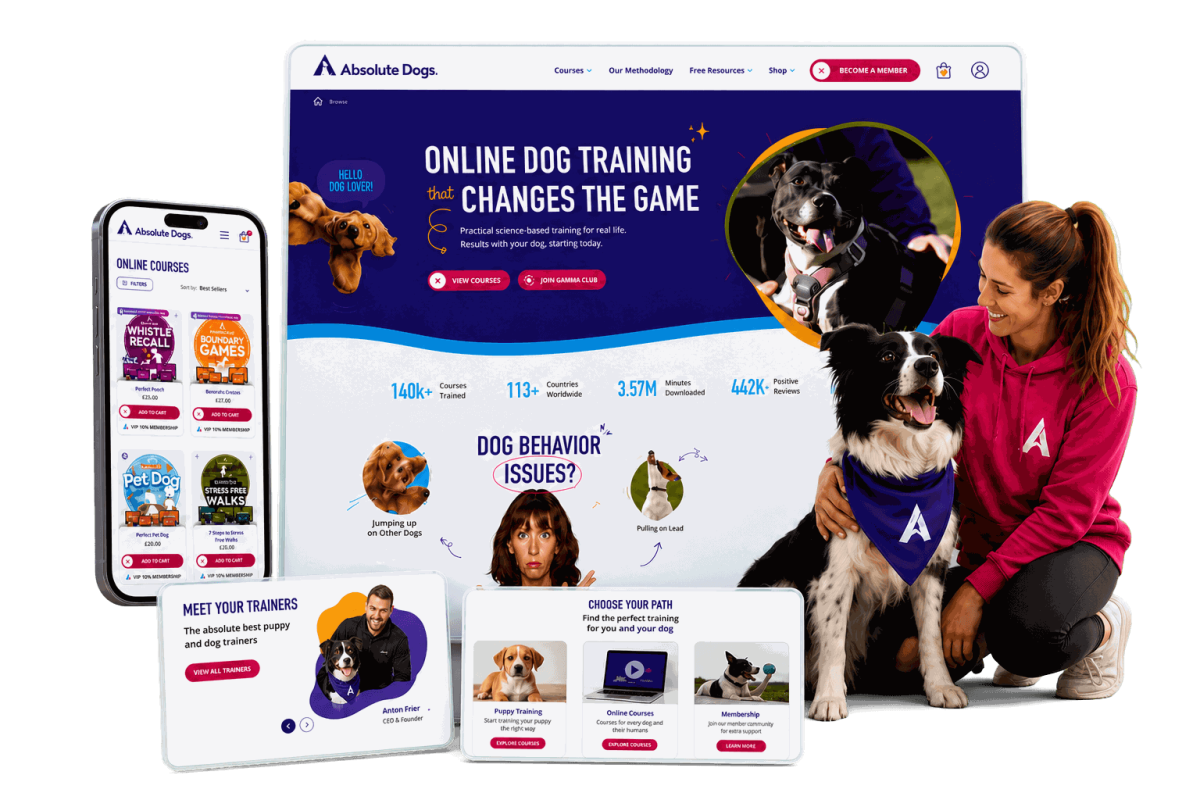
Shopify can be exactly the right platform when the work behind it is done properly. When Absolute Dogs, an eCommerce brand selling dog training courses and memberships, relaunched on Shopify with us, we restructured its conversion funnels and reorganized how courses and memberships are presented.
Add-to-cart actions rose 77.8%, organic search sessions grew 32.4% and completed purchases climbed 35.6%.
The 3 Factors That Set the Price of a Custom Website
If you remember one thing from this article, make it this. Every custom quote comes down to the same 3 factors, and each one changes how many hours your site takes to build.
1. Unique Landing Pages
This is the number of distinct page layouts your site needs, not the total page count. A blog with 200 posts might use 1 template, while a homepage, service page and case study page each need their own design.
2. Features
Features are what your site does beyond displaying content. Think motion graphics, custom modules, calculators, member logins or a job board where users create profiles and apply. A recruitment startup with logins and listings needs far more build time than a startup that just needs to explain its services.
3. Integrations
Integrations connect your site to the rest of your business. Your CRM, ERP, payment gateway, inventory system and marketing tools all need to talk to your website, and every connection takes planning, development and testing.
Put it together and the formula is straightforward:
Website price = (hours for pages + features + integrations) × hourly rate
| Factor | Simpler Build | More Complex Build |
|---|---|---|
| Unique landing pages | Home, About, Services, Contact | Dozens of product, location and resource layouts |
| Features | Contact form, custom animations | Logins, profiles, dashboards, configurators |
| Integrations | Email marketing tool | CRM, ERP, payments and inventory sync |
The 6 Experts Behind Every Custom Website
A freelancer can drop your content into a template on their own. A custom site takes a team, and that’s a big part of why the price tags look so different.
| # | Expert | What They Do | What Happens Without Them |
|---|---|---|---|
| 1 | Business strategist | Learns your business, competitors, value proposition and keywords | A pretty site that doesn’t say why anyone should buy from you |
| 2 | UI/UX designer | Plans user journeys, wireframes and the visual design | Confusing layouts that lose visitors before they convert |
| 3 | Front-end developer | Builds everything visitors see and interact with | Slow pages that break on mobile |
| 4 | Back-end developer | Builds the content management system, custom features and integrations | A site your team can’t update or connect to anything |
| 5 | QA specialist | Tests every page, feature and form so the site works and is safe | Bugs and security gaps discovered by your customers |
| 6 | DevOps engineer | Sets up the server, deployment and hosting environment | Downtime, slow load times and risky launches |
Every one of these people is billing for real hours. That’s the honest answer to why a custom site costs what it does: you’re paying for a group of experts working together to make your site optimized for SEO, built for conversions and true to your brand.
Digital Silk Web Design Pricing: 4 Starting Points
Digital Silk websites start at $5,000. We offer 4 starting points, and every one of them is built to speak to your business, not a template with your logo swapped in.
- Standard informational websites start at $5,000
- eCommerce websites start at $10,000
- Professional custom websites optimized for SEO start at $10,000
- More complex sites start at $25,000
Where your project lands depends on those same 3 factors: unique landing pages, features and integrations. What doesn’t change between these starting points is the strategy, the team and the standard of work. We’ll get to why in a minute.
The Math Behind a 5-Page Website: 80 to 150 Hours
A professional custom 5-page website optimized for SEO takes 80 to 150 hours of expert work at Digital Silk, billed at $125 an hour. That’s why these sites start at $10,000. Here’s what each end of that range works out to:
| Scope | Hours | Cost at $125/Hour |
|---|---|---|
| Low end of the range | 80 | $10,000 |
| High end of the range | 150 | $18,750 |
Now flip the math around. A $500 website quote buys about 4 hours of work at that same rate. Four hours won’t cover a strategy session, let alone design, development, testing and launch.
“If someone says they’ll do a site for $500, it doesn’t mean they’re gonna work nonstop for you. Ask them: what is your hourly rate? What is your process?”
Gabriel Shaoolian, Founder and CEO, Digital Silk
That’s why the hourly rate is the first question every buyer should ask. A low quote either means very few hours, a template doing most of the work or both.
Our 8-Step Website Process
Every Digital Silk website goes through the same 8 steps. We do it from scratch, we do it thoroughly and we do it to a professional level. There are no shortcuts hiding in the middle.
- Site strategy. We dig into your business, audience, competitors and keywords so the site speaks to your unique value proposition.
- Site planning. We map the sitemap, navigation and user flows so every page has a job.
- UI/UX wireframes. We lay out each unique page around how visitors read, scroll and convert.
- Design and style guide. We bring your brand to life and document it so it stays consistent as you grow.
- Front-end development. We build the pages, animations and responsive layouts your visitors see.
- Back-end development. We build your content management system, custom features and integrations.
- Quality assurance. We test functionality, speed and security across devices before anything goes live.
- DevOps setup and launch. We configure your server and deployment so launch day is smooth and your site stays fast.
When you compare quotes, ask whether the agency does steps 1 through 3 at all, or whether it starts by dropping your content into a template. Strategy, planning and wireframes are the steps that turn a website into a sales tool.
For VigilantIoE, a B2B technology company, that early planning made the difference. We restructured the site’s navigation so real-time monitoring, predictive insights, managed operations and custom development could be understood at a glance. The redesigned site delivered 60% more leads and 35x pipeline growth.
Same Michelin Kitchen, Whether You Order 1 Course or 9
Digital Silk works with startups, B2B companies, eCommerce brands and Fortune 500 enterprises. The process and the quality are the same for all of them. Think of it like a Michelin-star restaurant:
“You might go there and order a nine-course meal, or you might just order a snack. It’s the same kitchen, the same style, the same silverware. That little appetizer gets the same high-quality touch as the nine courses.”
Gabriel Shaoolian, Founder and CEO, Digital Silk
A smaller company doesn’t need 9 courses. It needs something effective. Larger companies simply have more unique landing pages, more features and more integrations, so their sites take more time and cost more.
You can see both ends of the menu in our work. Sorellis is the brand we created for a female-led data center advisory firm entering its market with no name, no logo and no messaging. We built the brand from the ground up and launched it with a focused, high-trust landing page that routes each type of visitor to the right inquiry.
At the other end, Puma Energy, a global energy enterprise serving drivers and commercial operations across dozens of markets, needed two distinct website experiences, one for consumers and one for B2B, under one consistent brand. The result was a 63% rise in user engagement and 27% more website visitors.
| Startups and Small Businesses | Enterprise and Fortune 500 | |
|---|---|---|
| Unique landing pages | Fewer | Many |
| Features and integrations | Focused on the essentials | Advanced and deeply connected |
| Strategy and research | Included | Included |
| Team and process | Same 6 experts, same 8 steps | Same 6 experts, same 8 steps |
| Quality standard | Same | Same |
6 Questions To Ask Any Web Design Agency Before You Sign
Got a cheaper quote from another agency? The first thing to figure out is what you’re actually comparing. These 6 questions will tell you, whether you hire us or not.
- What’s your hourly rate? Divide the quote by the rate and you’ll know how many hours you’re really getting.
- What’s your process? If there’s no strategy, planning or QA step, you’re buying a template.
- Who’s actually working on my site? One generalist and a team of 6 specialists won’t produce the same result.
- Is this a template or a custom build? Many low quotes simply drop your content into a site someone else designed.
- Will you research my business, competitors and keywords? That research is what makes your site stand up to the competition.
- How often will I get updates, and who will I talk to? A cheap price rarely comes with responsive service or someone who picks up the phone.
Don’t line up a $1,000 quote next to a $50,000 quote and pick the smaller number. Compare the hours, the people and the process behind each one.
Who Digital Silk Is (and Isn’t) the Right Fit For
We’re the right fit for companies that treat their website as a core part of their marketing. If you just need a site up and don’t care how it performs, there are faster and cheaper options out there.
You can usually tell the difference from the first questions a company asks. Businesses with real budgets want to know about the process and what they’re actually getting. Companies that only ask about price usually just want something online.
| A Great Fit | Probably Not the Right Fit |
|---|---|
| You want your site to generate leads and sales | You just need something online |
| You’re investing in marketing and need it to convert | Price is the only factor in the decision |
| You want strategy, research and a real process | You’d rather build it yourself this weekend |
| You see your site as a long-term growth tool | You want to “get it over with” |
That focus is deliberate. Digital Silk isn’t only a web design company. We’re also a digital marketing agency, and we market our clients. When we’re the ones driving traffic, we need the site converting it.
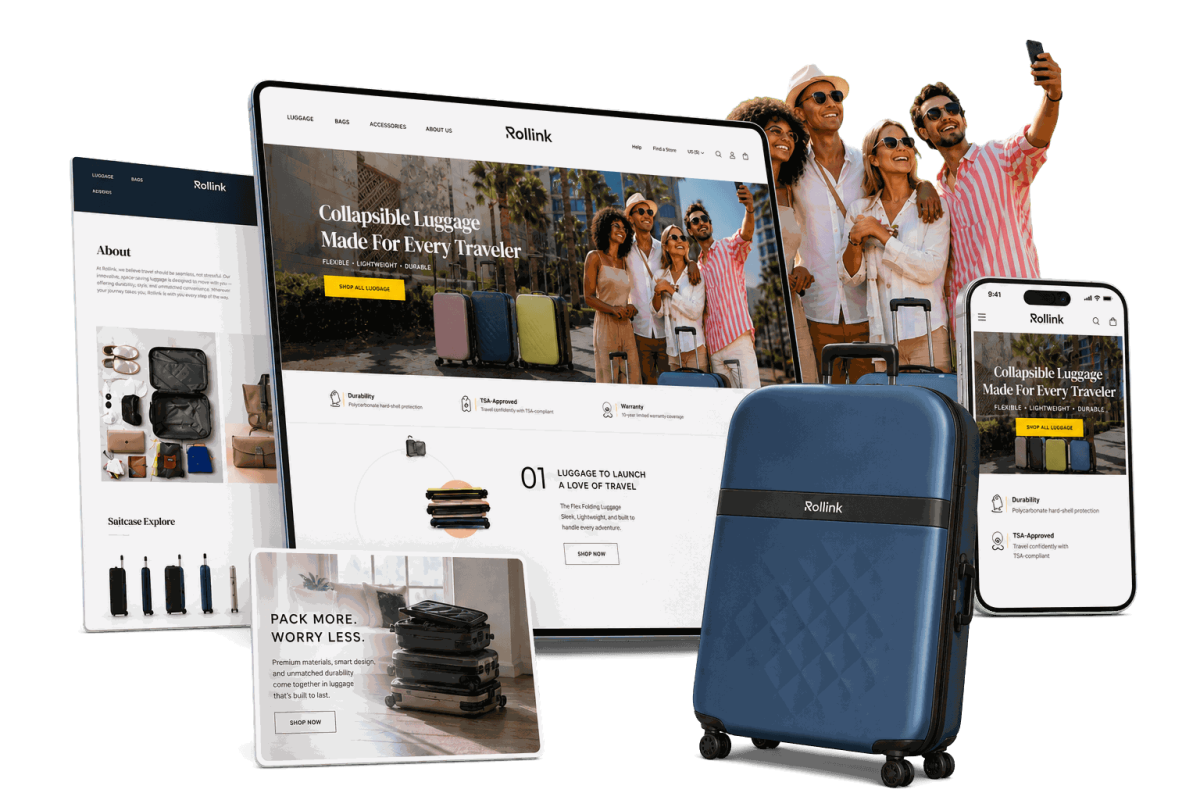
Rollink, a travel brand offering several different products, shows what that looks like. The company set its sights on the U.S. market, and we delivered a custom eCommerce store along with the marketing strategy and SEO to reach American travelers. The result was a fivefold increase in revenue and 700,000 new customers.
What Sets Digital Silk Apart
Here’s what you get when you build with us, at every price point:
- Built from scratch. Your site is designed around your brand and your customers, never a recycled template.
- Strategy first. We research your market, competitors and keywords before a single pixel gets designed.
- A full team of specialists. Strategy, UI/UX, front end, back end, QA and DevOps all work on your project together.
- Web design and marketing under one roof. We build sites to perform because we know what it takes to market them.
- A 98% client retention rate. Our clients stay with us because the work keeps paying off.
Your website is the last piece of your marketing puzzle, and it’s the piece that turns traffic into revenue. If you want yours to drive leads and sales every day of the year, let’s talk.
Ready to build a site that sells? Request a quote and tell us about your project and goals.
Web Design Pricing FAQs
How Much Does a Website Cost With Digital Silk?
Digital Silk websites start at $5,000 for standard informational sites, $10,000 for eCommerce websites, $10,000 for professional custom websites optimized for SEO and $25,000 for more complex sites. Your final price depends on 3 factors: how many unique landing pages you need, which features your site includes and which systems it integrates with.
How Much Does a 5-Page Website Cost?
A professional custom 5-page website optimized for SEO typically takes 80 to 150 hours of expert work, billed at Digital Silk’s rate of $125 an hour, which is why these sites start at $10,000. A standard informational site starts at $5,000. Extra features like custom animations or integrations push a project toward the higher end of the range.
Why Do Website Quotes Vary So Much?
Website quotes vary because they’re often for completely different products. A $25-a-month builder, a $1,000 template and a $25,000 custom build differ in hours, people and process. Ask every agency for its hourly rate and process so you’re comparing like with like.
What’s the Difference Between a Template and a Custom Website?
A template site drops your content into a design someone else already made. A custom website is designed and built from scratch around your brand, audience and goals. It takes more time, but it’s built to rank, convert and stand apart from competitors using the same templates.
Is a Website Template Ever Enough?
Yes, a template can be enough for a hobby, side project or very early idea. If your website needs to generate leads, rank in search and support paid marketing, it’s worth investing in a custom build. If you want your business to succeed, it deserves real investment.
Does Digital Silk Work With Startups and Small Businesses?
Yes, Digital Silk works with startups and small businesses as well as B2B companies, eCommerce brands and Fortune 500 enterprises. Smaller companies usually need fewer pages and features, so their sites cost less, but they get the same strategy, team and quality standard.
What’s the Biggest Website Budgeting Mistake?
The biggest mistake is spending as little as possible on your website, then spending heavily on marketing. Marketing drives traffic, but your site has to convert it. An underbuilt site wastes ad spend every day, while a strong site raises the return on every marketing dollar.
What Should I Ask an Agency Before Hiring Them?
Ask for the agency’s hourly rate, its process, who’ll work on your site and whether you’re getting a template or a custom build. Also ask whether they’ll research your business, competitors and keywords, and how often you’ll get updates. Those answers reveal what a quote actually includes.
About this guide: Pricing reflects Digital Silk’s starting rates at the time of publication; final quotes depend on each project’s scope.
Tell us about your website goals and let our experts give you a custom proposal
"*" indicates required fields