

Bringing Three Decades Of Japanese Culture To A Modern Audience
-
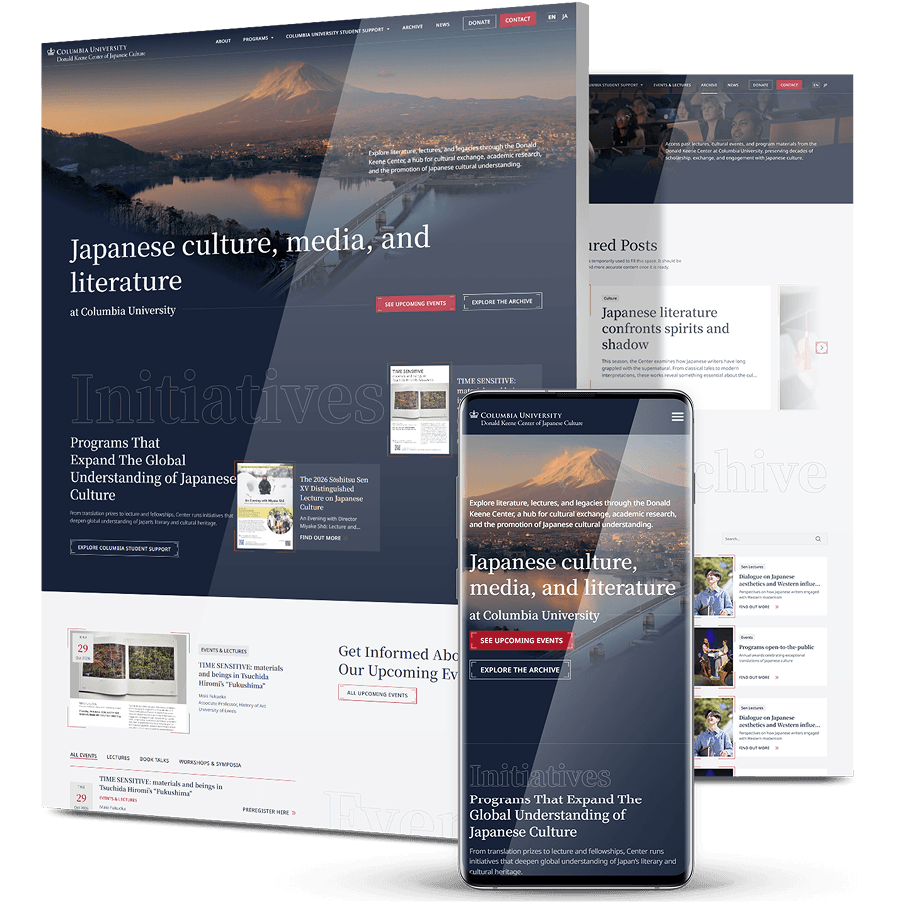
The Donald Keene Center of Japanese Culture at Columbia University has spent more than three decades hosting lectures, events and programs, but its desktop-era website was hard to use on mobile and kept that history difficult to explore.
-
Digital Silk designed and built a contemporary, editorial-style website in English and Japanese, balancing academic credibility with a more engaging experience and organizing decades of material into a browsable archive.
-
The new site launched on October 13, 2026, presenting more than 540 events and 26 Sen Lectures across two languages, with layouts that work on every device.


The Challenge
Built For Desktop In A Mobile World
The previous website was designed around desktop browsing and was difficult to navigate on a phone, which made it harder for students and the wider public to engage with the Center’s programs.
More Than 30 Years Of Material To Organize
Three decades of lectures, events and programs had built up on the old site with no clear way to browse them. The Center’s history was its greatest asset, and much of it was effectively out of sight.
Known For Literature, Doing Much More
The Center was mainly seen as a literary institution, while its programming reaches across Japanese culture, film and the arts. That wider work needed to be easier for students and the general public to find.
Two Languages, Two Typographic Systems
The site had to serve English and Japanese-speaking audiences equally well, and the two languages have very different typography and layout needs.
A Small Team Running The Site
Updates and ongoing digital communications largely fell to one person. The new site needed to give the Center a stronger base for reaching audiences without adding to that workload.

The Solution
-
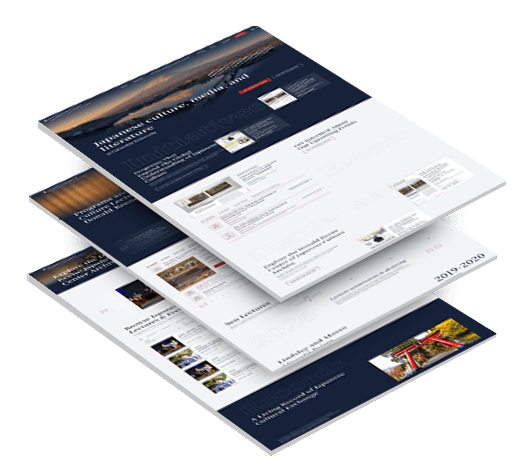
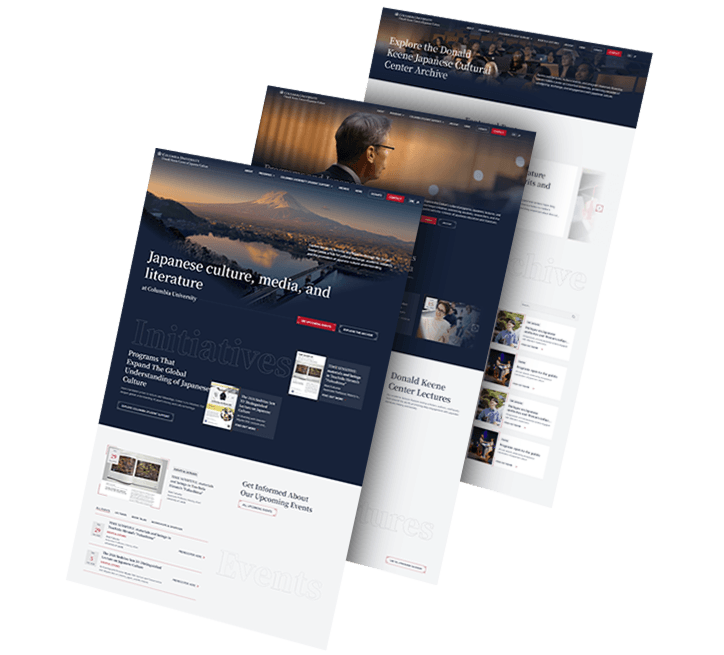
A Contemporary Editorial Design
We started with little more than a logo and Columbia’s brand guidelines, and a request for a conservative academic look. The design answers that with a clear editorial hierarchy and a few quiet video moments, so the site feels scholarly and trustworthy while still feeling warm and alive. -
A Clearer Hierarchy And Navigation
We restructured the site around how visitors explore: About, Programs, Events and Lectures, the Archive and News. Programs such as the Sen Lectures, the Translation Prize and Columbia student support each have their own home, and events can be filtered by lectures, book talks, and workshops and symposia. -
A Browsable Archive Of The Center’s Legacy
We migrated and organized more than 30 years of historical content into a dedicated archive, turning decades of lectures, events and translated works into a living history visitors can actually explore. -
Built For English And Japanese
We designed typography and layouts that work equally well in both languages, with a full Japanese version of the site and language signals set up so search engines send each audience to the right version. -
Structured Pages For Every Program
Programs, lectures, events and resources now follow consistent page structures, so the Center can present its wider cultural programming as clearly as its literary work. -
Responsive Layouts And A Foundation For Outreach
Every layout is designed to work across devices. Contact and newsletter sign-up forms give the Center a direct line to its audiences, and SEO optimization on the main pages lays groundwork for future search visibility.
The Results
-
30+ Years Of Contentbrought together in a browsable archive of lectures, events and programs
-
540+ Events And 26 Sen Lecturespublished at launch, each on a structured, consistent page
-
2 LanguagesEnglish and Japanese, with typography and layouts designed for both
-
One Responsive Experiencethat works on every device, replacing a desktop-era site
1,000+ Completed Projects
Miami Country Day School: A Website For Every Family
A PreK3–12 school has to serve families at very different stages, from parents of three-year-olds to students choosing colleges, plus Online School families who may live far from Miami.
For this second redesign with the school, we built personas for Lower School, Middle and Upper School, and Online School families, then rebuilt the navigation so each group, along with current parents, faculty and alumni, reaches what it needs without wading through content meant for someone else.
Inquiry, application, tuition and campus tour paths now sit together in one streamlined enrollment journey.

Northwestern Medill: Keeping Visitors Past The First Page
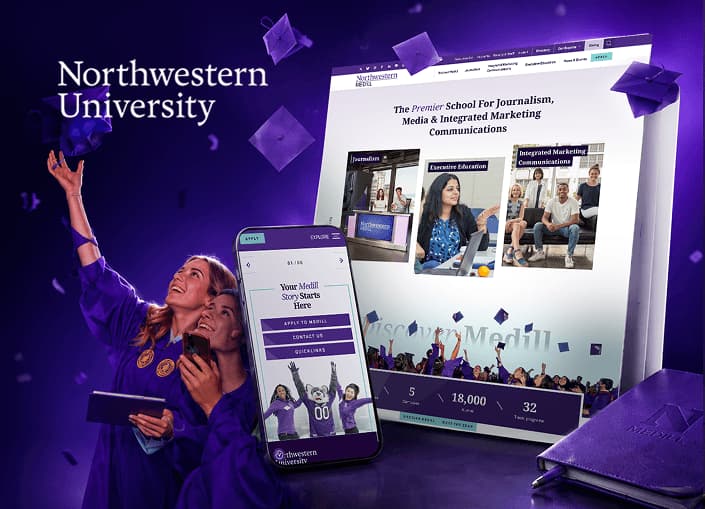
Six in ten visitors to Northwestern Medill’s website left after viewing a single page, a 61.98% bounce rate for one of the best-known journalism and marketing schools in the country.
We gave visitors reasons to stay: a value proposition for the school as a whole and one for each program, 10 landing page designs, and a sitemap rebuilt around how prospective students actually search and apply.
Medill’s five audiences now each follow their own journey, starting from a homepage that leads with the school’s numbers.
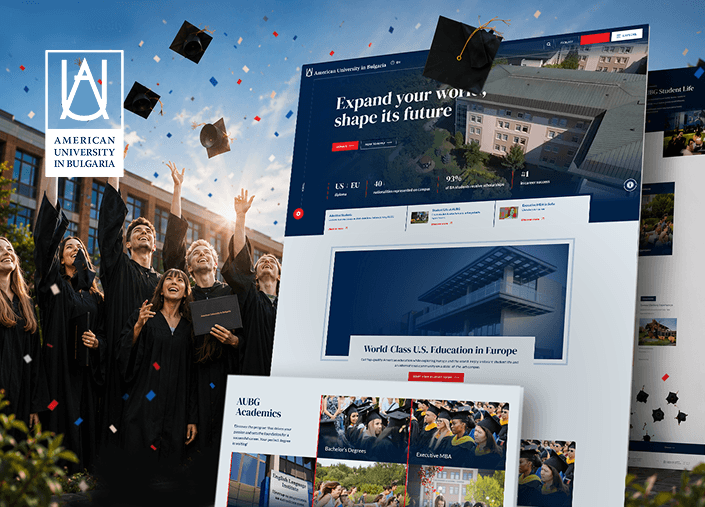
AUBG: A Multilingual Site For An International University
The American University in Bulgaria draws students from across the region, but its 2014 website ran on outdated technology that couldn’t keep up with an audience that was more than 70% mobile.
We built a custom multilingual WordPress site with an accessibility toolbar and Technolutions Slate CRM integration, benchmarked against peer universities and rebuilt on a clean SEO foundation.
Since launch, keywords ranking in the top three are up 197% and estimated organic traffic value is up 79%.
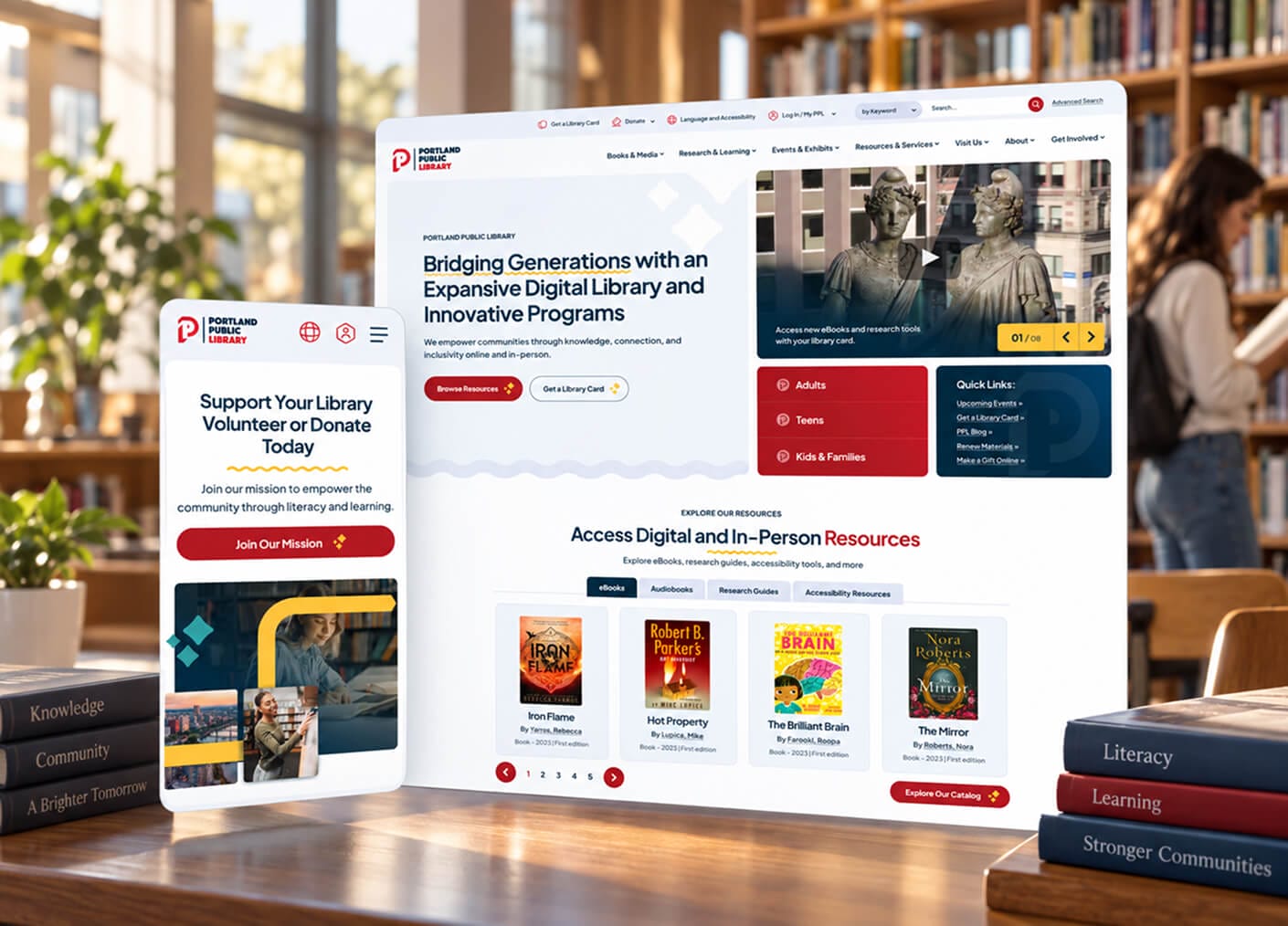
Portland Public Library: Making Programs Easy To Find
Programs and events are among the main reasons people visit a public library’s website, and Portland Public Library’s were hard to surface under years of inconsistently organized navigation.
We restructured the information architecture around how visitors search, built clear paths to event registration and program participation, and designed accessibility in from the start.
Comparing the five weeks after the February 2026 launch with the previous period, engagement time per session rose 18.38% and engagement time per active user rose 47.82%.
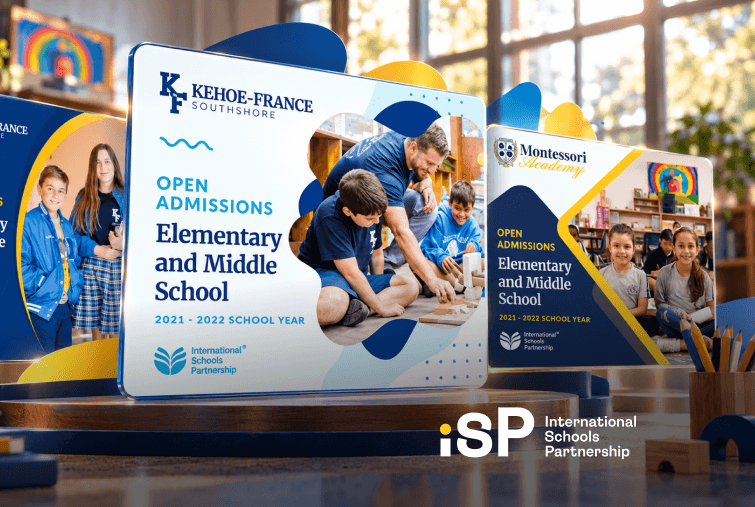
ISP: Leads From Families Ready To Enroll
The International Schools Partnership needed advertising across its network of private schools to bring in families who were ready to enroll, not just clicks.
We set up Meta in-app lead forms with qualifying questions, geo-targeting and copy tailored to each region, and unified tracking across the network, including a HubSpot integration to capture one school’s off-site form.
Total leads rose more than 70%, cost per lead fell 40%, and cost per lead on Meta dropped by $88.
"*" indicates required fields