
Dark Mode
Explore the future of web design until 2030. Learn how to create a modern website that sells and elevates your brand to the next level.

Updated: February 9, 2026
Future Of Web Design: Key Highlights
-
Design longevity matters: With rapid technology changes and market volatility, sites must be planned to stay effective years ahead, not just at launch.
-
Motion supports customer journeys: Animation can highlight hierarchy, confirm actions and guide users through content without adding extra copy.
-
Personalization raises relevance expectations: Adaptive navigation, content and CTAs matter most for logged-in, repeat-use and account-based experiences.
If you fast-forward four years from now, will your website still be competitive in the market? Have you actively taken steps to future-proof your business and become a front-runner in your industry?
With the web design industry expected to grow at a CAGR of 8.50% to reach $92.06 billion by 2030, enterprise websites have moved far beyond brand expression into a direct driver of revenue, trust and exposure to risk.
Modern technological advancements and consistent market fluctuations dictate how users interact with content online, which leaves little room for complacency.
In this post, we’ll explore the trends and predictions that shape the future of web design and offer practical tips for businesses to outpace the competition.
15 Emerging Web Design Trends Until 2030
With approximately 252,000 new websites launching daily, the competition for user attantion is fierce and relentless.
As technology pushes designers’ creative boundaries, customer expectations and market demands continuously change. Businesses must anticipate these changes to stay competitive.
Below, we’ve outlined 15 promising website design predictions based on their current trajectory, future potential and long-term industry impact:
1. Automated Web Design
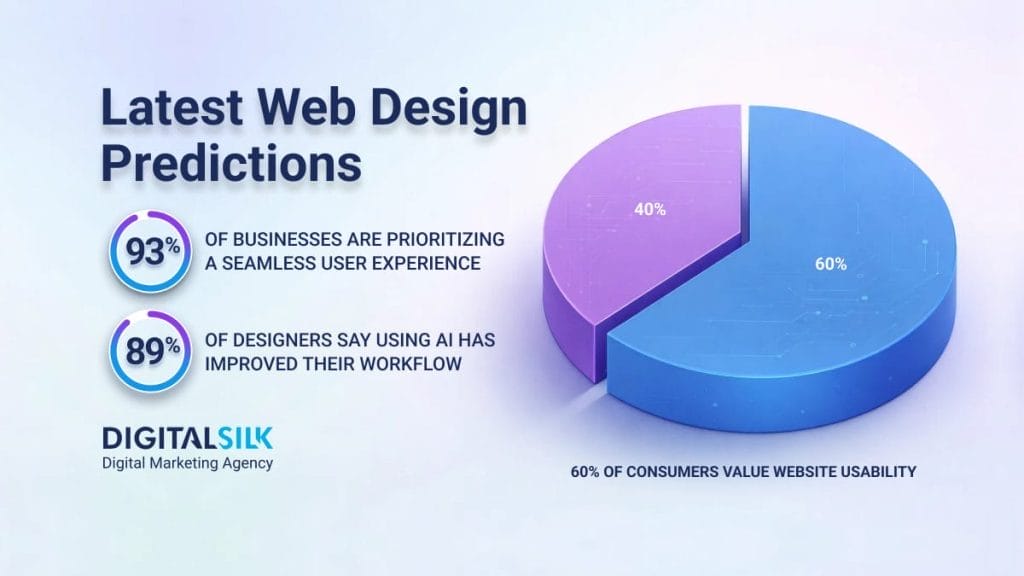
AI is already seeing widespread adoption in web design, with 89% of designers saying it has improved their workflow in meaningful ways and 84% using it for research, ideation and early strategy.
As we look ahead into 2030, AI tools are expected to automate both the creative and technical processes of website design.
Instead of relying solely on manual input, Artificial Design Intelligence (ADI) can analyze user data and behavior to automatically select color schemes, determine website layout and structure, and arrange visual elements along with content hierarchy.
Some of the notable benefits of using AI for web design include:
- Personalization at scale: AI can analyze user patterns across geolocation, browsing behavior and intent signals to shape experiences that feel tailored without relying on manual segmentation.
- Faster validation and quality control: Automated scans could surface usability gaps, broken links, accessibility issues and SEO weaknesses in seconds, reducing exposure to avoidable performance risks.
- More adaptive user support: AI-powered chat interfaces can deliver contextual, human-like responses that reflect user intent instead of relying on pre-programmed replies.
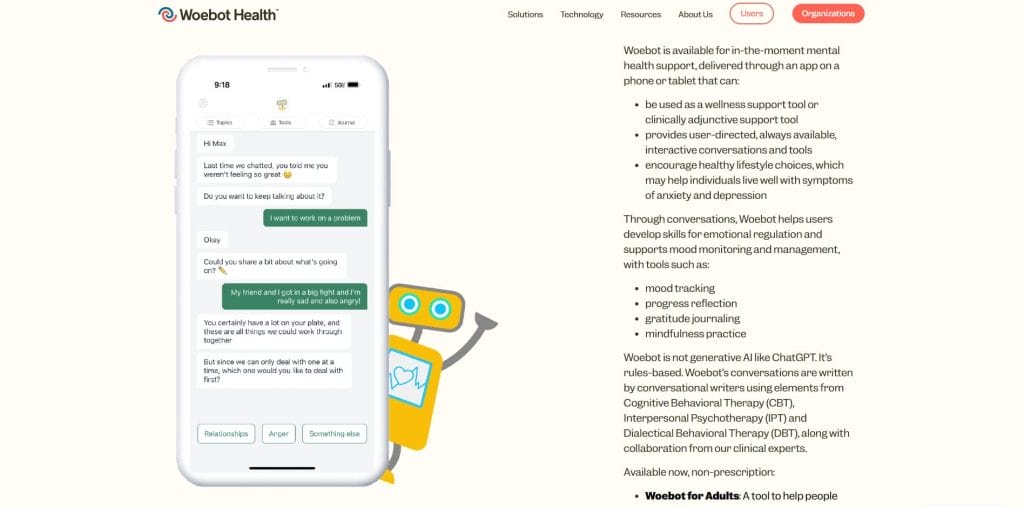
For instance, Woebot‘s AI-powered chatbot merely scratches the surface of Natural Language Processing (NLP) to provide tailored digital therapy sessions for people struggling with mental health issues.
When This Could Be Useful
High-growth businesses managing complex user journeys across regions, industries or offerings benefit from faster experimentation without constant redesign cycles.
When This Could Backfire
Poorly governed AI systems can dilute brand intent and introduce misleading personalization when data quality, oversight or context are weak.
How This Shapes The Future Of Web Design
AI-driven design accelerates production while narrowing creative variance, forcing businesses to decide where automation ends and human judgment begins.
The most effective implementations will pair AI with clearly defined brand systems, ongoing data hygiene and selective human review to support revenue, trust and compliance.
Want to use the latest web design trends on your site?
2. Voice User Interface (VUI) Design
162.7 million Americans are expected to use voice assistants by 2027, as speech-activated technologies gain momentum and a stronger foothold in contemporary society.
Voice User Interface (VUI) involves designing intuitive and conversational interfaces that allow users to interact with technology through simple voice commands.
Some of the principles of this design trend include:
- Speech recognition: Automatic Speech Recognition (ASR) converts users’ spoken words into text, which is then interpreted by the system to understand the user’s intent and respond accordingly.
- Contextual understanding: Interprets the user’s intent based on the context, previous interactions and user’s profile to provide more accurate and personalized responses.
- Conversational flow: Helps users hold dialogues instead of giving single commands to humanize and simplify interactions.
As one of the most promising website trends for the future, VUI can replace traditional type-to-search commands with hands-free navigation, relevant and personalized search results and more efficient customer service.
Amazon’s Alexa, Google Assistant and Apple’s Siri are just some of the stepping stones towards a more natural, conversational and accessible user journey.
When This Could Be Useful
VUI supports businesses with repeat actions, large content libraries or service-heavy workflows where typing slows search, support and customer actions like booking, account access and order tracking.
When This Could Backfire
Poor intent mapping and limited contextual understanding lead to misinterpreted commands, circular responses and rapid abandonment.
How This Shapes The Future Of Web Design
Voice-first interaction reduces reliance on traditional page navigation and requires content to be structured around clear user intents like searching, requesting support or completing account actions.
You should define a limited set of voice commands tied to high-value customer actions, align content to spoken language patterns and continuously refine intent logic using query data.
3. Virtual And Augmented Realities Integration
Virtual and Augmented Realities are usually associated with gaming where they allow players to immerse themselves in digital environments fully. However, their potential extends far beyond this.
The future of web design holds exciting developments that bridge the gap between the physical and digital worlds, enhancing product visualizations, immersive experiences and educational or training content.
These technologies can generate realistic three-dimensional representations of products, rooms or landscapes.
As a result, you can develop interactive walkthroughs for architecture or furniture websites, 360-views of hotels or holiday resorts and even virtual try-ons for online clothing stores.
In the eLearning sector, AR/VR integration can create engaging and realistic simulations for hands-on training in various fields such as medicine, engineering or aviation.
Take Scientific American’s interactive demonstration of the Coronavirus for example, where users can explore and understand the structure of the virus through 3D models and animations.
When This Could Be Useful
AR and VR support businesses selling complex, high-consideration products or experiences where static images fail to communicate scale, fit or functionality, such as real estate, travel, manufacturing and education.
When This Could Backfire
Poorly optimized immersive features increase load times, exclude users on older devices and turn exploration into abandonment when novelty outweighs usability.
How This Shapes The Future Of Web Design
Immersive design adds spatial context and depth to the web while increasing pressure on performance, accessibility and build quality.
AR and VR make sense where visual accuracy directly affects understanding or buying intent, with web-first delivery, strict performance budgets and success measured through task completion and conversion behavior rather than time spent exploring.
4. Liquid Animations And Motion UI
Liquid or Motion UIs are exactly what they sound like: fluid, transitional and intentional animations that guide users from one section to another and optimize visual flow.
With 93% of businesses prioritizing a seamless UX, these subtle yet effective animations create an illusion of depth, highlight important information through visual cues and enhance your website’s aesthetic appeal.
Instead of static loading screens and flat graphics, liquid animations and motion UI can help you design a website that coverts through signature animations and storytelling techniques.
You can use micro-interactions like on-hover or scroll-triggered effects, shaky log-in forms to indicate errors, animated icons to draw attention or animated transitions between pages.
Apple’s MacBook Air page uses scroll-in animations to demonstrate product features and encourage both new and existing customers to explore the product further.
When This Could Be Useful
Motion UI helps communicate hierarchy and progression on sites with layered information or longer buying cycles, using visual cues to guide users without adding explanatory copy.
When This Could Backfire
Excessive animation increases load times, distracts from primary actions and creates accessibility issues for users sensitive to motion or browsing on lower-powered devices.
How This Shapes The Future Of Web Design
Motion becomes part of the interface structure, directing attention and reinforcing hierarchy instead of serving as decoration.
Long-term effectiveness depends on using animation to signal user actions, system responses and transitions between sections, while enforcing performance and accessibility limits from the start.
5. Retro-Modern Mashups
This approach combines nostalgic visuals and vintage animations with contemporary elements to evoke familiarity and sentimentality while expediting page load times and responsiveness.
You can use arcade-style graphics with neon colors, analog effects, pixelated or grainy textures and vintage fonts to merge the old and new.
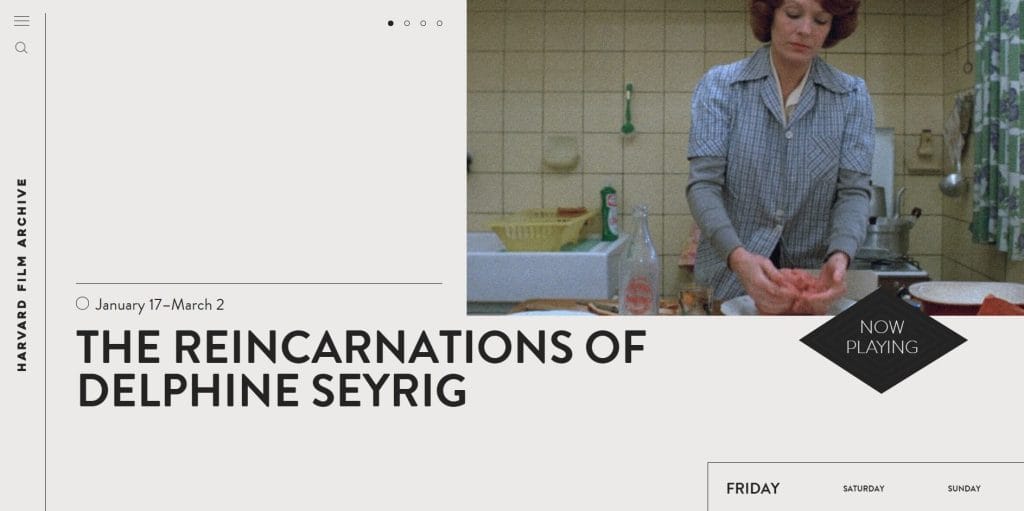
Harvard’s Film Archive pulls this off brilliantly by using pastel colors, textured backgrounds and retro-style fonts to present its motion picture collections.
When This Could Be Useful
Nostalgic visual cues resonate when familiarity, cultural memory or emotional connection play a role in how audiences engage with a brand, particularly in media, education, lifestyle and entertainment.
When This Could Backfire
Poor execution makes the styling feel gimmicky, where dated aesthetics undermine usability, credibility or modern performance expectations.
How This Shapes The Future Of Web Design
Retro-modern styling pushes back against visual uniformity by reintroducing distinct visual cues that set one interface apart from another.
Long-term value depends on treating nostalgia as a layer, not a foundation, preserving modern layout systems, accessibility standards and performance benchmarks beneath the aesthetic.
6. Personalization And User-Centric Designs
89% of companies say personalization is invaluable to their business success, a trend that is likely to grow in the years to come.
Personalization goes hand-in-hand with user-centric designs to prioritize individual experiences, create lasting consumer connections and foster long-term brand loyalty.
You can implement customized pop-ups and CTAs based on user behavior and preferences, dynamic search bars and navigational menus and tailored on-page content based on user demographics to open the door towards more inclusive, personal experiences.
Netflix is a masterclass in recommendation algorithms by offering personalized suggestions based on viewing history.
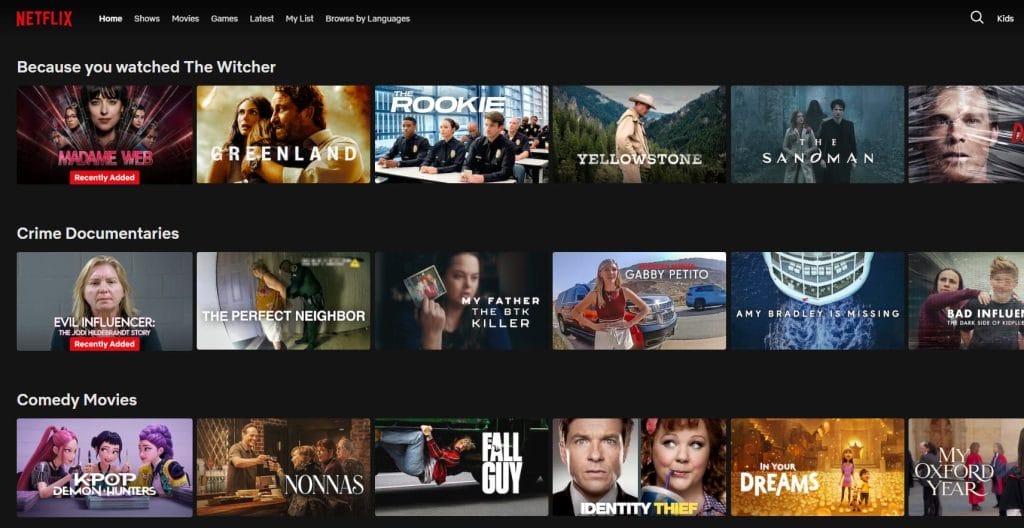
The platform’s user-centric design extends to customizable watchlists and intuitive search filters that adapt to individual preferences.
When This Could Be Useful
This adds value on sites where users log in, return frequently or interact with saved content, such as portals, platforms, learning environments or account-based services.
When This Could Backfire
Over-personalization crosses the line when assumptions replace signals, leading to irrelevant messaging, privacy concerns or experiences that feel intrusive instead of helpful.
How This Shapes The Future Of Web Design
User-centric design treats the website as a system that adapts to behavior over time, increasing relevance while reducing predictability.
Narrow it down to high-impact areas like navigation, content sequencing and calls to action, supported by transparent data use and clear opt-outs to maintain trust.

Create impactful and user-centric designs with Digital Silk.
7. Accessibility Features
Currently, 94.8% of homepages show errors in complying with Web Content Accessibility Guidelines (WCAG), with low-contrast text ranking first for 79.1% of those issues.
This means that only about 5% of pages meet these requirements.
As society becomes more accepting, mutually respectful and inclusive, you should adapt web designs to meet the needs of users with disabilities.
This includes meticulous alt-text optimization, high-contrast color schemes, keyboard navigation compatibility and screen reader accessibility.
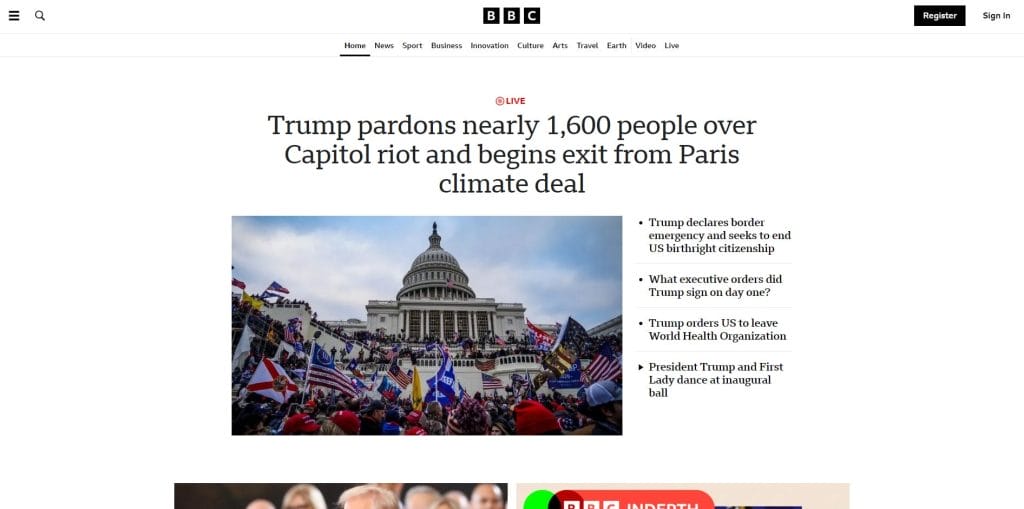
The BBC makes strides in this area by adopting an accessibility-first approach through video subtitles and transcripts, clear color contrasting and labels, text-to-speech options and a screen reader-friendly layout.
When This Could Be Useful
Prioritize accessibility when your website supports public-facing services, regulated industries or large, diverse audiences where exclusion creates legal exposure and reputational drag.
When This Could Backfire
Treating accessibility as a surface-level checklist leads to inconsistent experiences, missed compliance gaps and retroactive fixes that cost more than building it in from the start.
How This Shapes The Future Of Web Design
Accessibility reframes web design around usability under real-world constraints, including low vision, assistive technology and non-visual navigation.
Designing layouts, components and content models with accessibility requirements in place from the outset reduces retrofits, limits legal risk and keeps complex sites manageable as they scale.
8. Sustainable Designs
Sustainable website trends focus on minimizing the internet’s environmental impact, which surprisingly contributes to 1.5-4% of global greenhouse gas emissions.
This sustainable switch includes optimizing image sizes, using clean code and hosting your website on green servers.
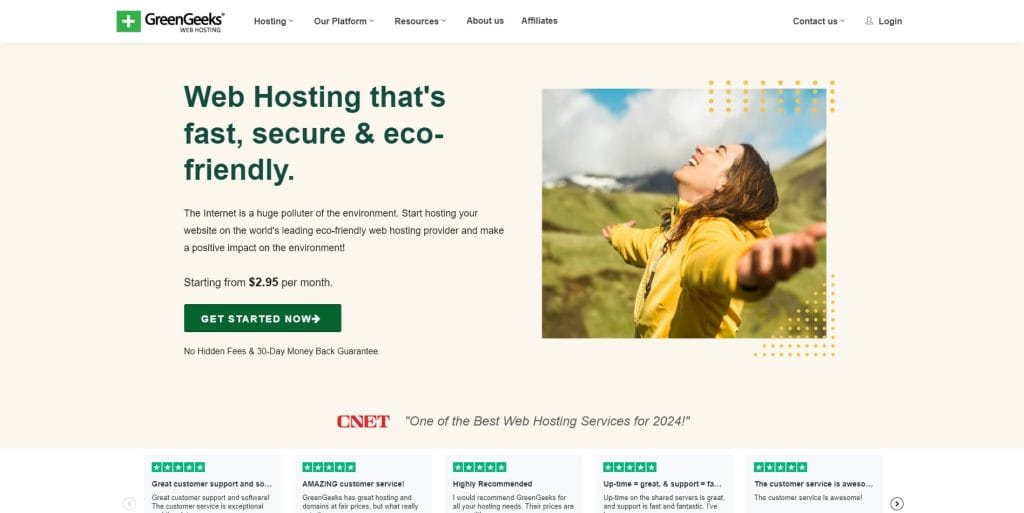
Companies like GreenGeeks offer web hosting services powered by renewable energy and help create a more sustainable web environment.
When This Could Be Useful
Reduce environmental impact when your website handles high traffic, media-heavy content or global reach where inefficient assets increase hosting costs, load times and energy use at scale.
When This Could Backfire
Surface-level sustainability efforts fall apart when performance claims outpace technical changes, exposing greenwashing risks and offering little measurable improvement.
How This Shapes The Future Of Web Design
Sustainable design limits heavy visuals, third-party scripts and complex frameworks, which can constrain creative freedom while improving load performance and long-term maintainability.
Define limits for image weight, animation use and third-party scripts during design, then enforce them throughout development to keep sites efficient as they scale.
9. Responsive And Cross-Device Performance
Mobile devices account for 51.76% of global internet traffic, and this number is likely to rise as users become more tech-savvy and remote work becomes increasingly common.
You should focus on high-performing, responsive and engaging user experiences on all screen sizes, including tiny smartwatches and ultra-wide monitors.
This includes adopting flexible grid systems, CSS media queries, real-time data syncing or session management and optimized visual and graphic assets to optimize load times and performance.
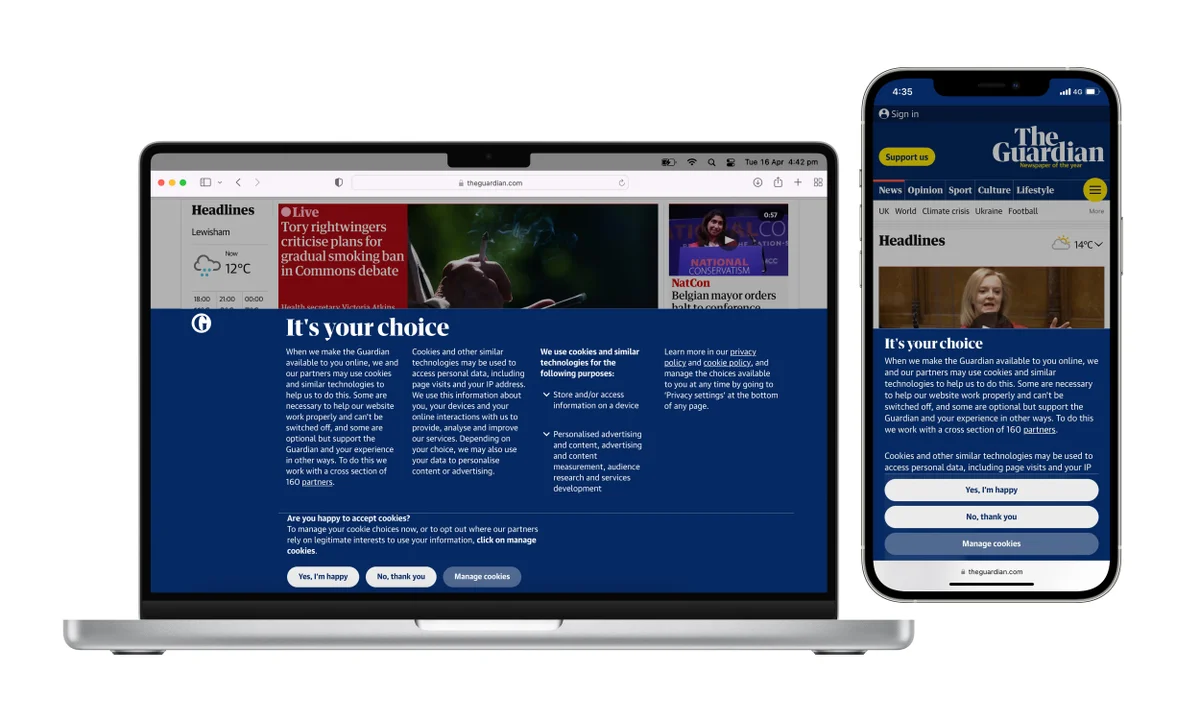
While The Guardian‘s cross-device design isn’t overly flashy or dynamic, it performs well on all devices and maintains a consistent visual and user experience across platforms.
When This Could Be Useful
Cross-device performance matters when users switch between mobile, desktop and secondary screens within the same journey, such as early research on a phone followed by deeper evaluation on a larger display.
When This Could Backfire
Inconsistent breakpoints, poorly prioritized content or device-specific features that don’t translate well can fragment the experience and erode trust across platforms.
How This Shapes The Future Of Web Design
Responsive design puts continuity across devices ahead of pixel-perfect layouts, with context, state and performance carrying more weight than exact visuals.
Start by locking content priorities and interaction patterns, then scale them across screen sizes using flexible grids, shared components and session-aware behavior for a consistent experience.
10. Enhanced Security Protocols And Blockchain
By 2029, the estimated annual cost of cybercrime is expected to reach $15.63 trillion, so enhanced security protocols and blockchain integration should be a core priority for your business.
Website security isn’t just a development concern since your design should also reflect the latest security protocols and plugins.
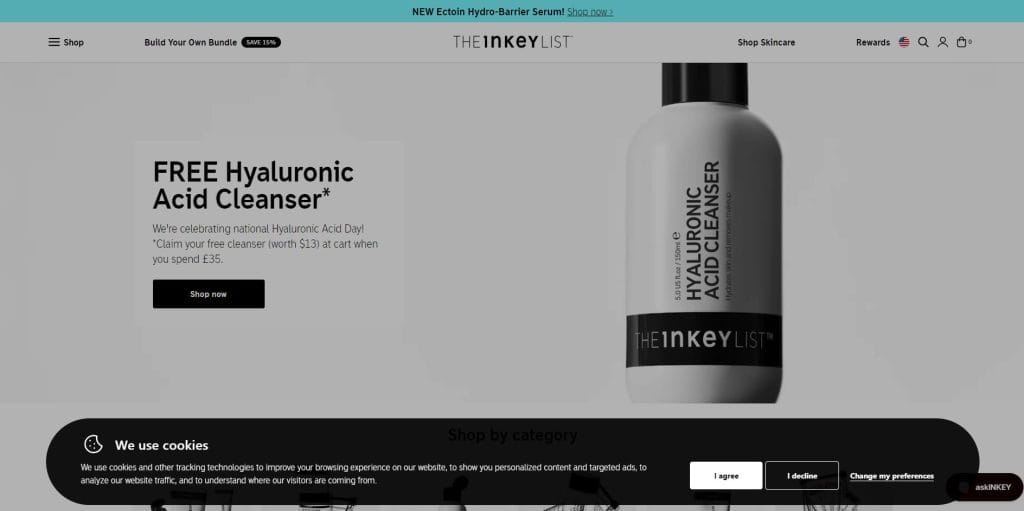
Cookie consent banners are the most common way to display compliance with GDPR and CCPA regulations and allow users to control what information they want to share.
For instance, The Inkey List displays a cookie consent banner at the bottom of their website to inform users about their data usage policies and offer customization options.
Moreover, the decentralized and encrypted framework of blockchain can provide tamper-resistant protocols for data storage and transactions.
This web design innovation could optimize authentication, authorization and auditing processes, enhance user privacy and diminish the risk of data breaches.
When This Could Be Useful
Build security cues into key screens like login, checkout and account settings when your website handles personal data, payments or user accounts and trust affects conversion.
When This Could Backfire
Security elements that interrupt flows or overwhelm users with dense legal language can reduce engagement and encourage workarounds that undermine protection.
How This Shapes The Future Of Web Design
Greater emphasis on security changes how websites collect, store and present data to users.
Consent, authentication and data controls should be built into core user flows, keeping protection visible without slowing down primary actions or adding unnecessary complexity.

Generate more leads through your website today.
11. Evolution Of Minimalist Design
The future of web design could embrace a less-is-more approach through clever use of white space, straightforward layouts, purposeful typography and more restrained color palettes.
Since 60% of consumers value website usability, this stripped-down aesthetic can optimize performance and remove visual clutter and distractions.
While futuristic features like parallax scrolling and on-click animations can enhance user experience, minimalist design could help you convey your message more effectively.
Minimalism can strengthen your visual brand language through consistent, easily recognizable and memorable elements, which increases brand recognition and recall.
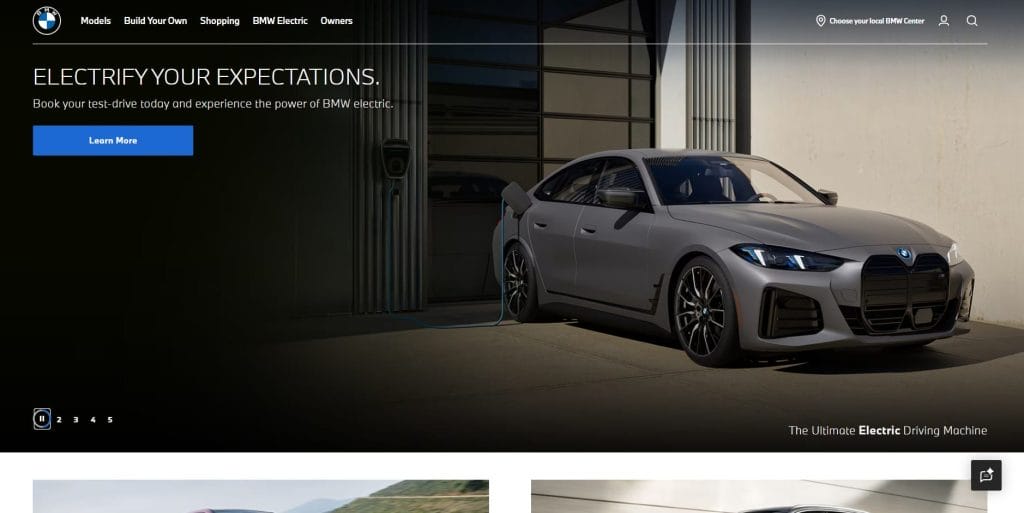
For instance, BMW’s USA website uses clean lines, generous whitespace, a simple color scheme and impactful imagery to convey its luxury and performance-focused products.
When This Could Be Useful
Simplify visual structure when your site supports high-value messaging, complex offerings or premium positioning where distraction weakens comprehension and intent.
When This Could Backfire
Over-minimalism strips away helpful navigational cues and visual hierarchy, making progression less obvious and slowing user flow.
How This Shapes The Future Of Web Design
Minimalist design reduces visual noise while placing greater weight on typography, spacing and content order to convey meaning.
Effective execution requires disciplined prioritization of messaging and interactions, ensuring simplicity improves understanding without removing guidance.
12. 3D Elements
3D depth and realism are no longer limited to gaming or animation, as they’ve slowly become a mainstream design feature that improves functionality and storytelling.
You can control visitors’ perception of on-page elements by applying different effects, such as parallax scrolling, hover animations and depth-based transitions.
Postevand showcases its Unique Value Proposition (UVP) through a 3D carton packaging animation that reflects the brand’s signature product.
When This Could Be Useful
Use 3D elements when visual explanation affects understanding, such as showcasing physical products, spatial relationships or design details that flat imagery can’t convey.
When This Could Backfire
Heavy 3D assets increase load times and overwhelm lower-powered devices when performance limits are ignored, turning visual interest into latency and drop-off.
How This Shapes The Future Of Web Design
This web design trend introduces depth and motion as functional tools, influencing how users perceive hierarchy, importance and flow across a page.
Limit 3D to focal elements tied to messaging or product differentiation, optimize assets aggressively and provide lightweight fallbacks to maintain performance across devices.
13. Dark Mode
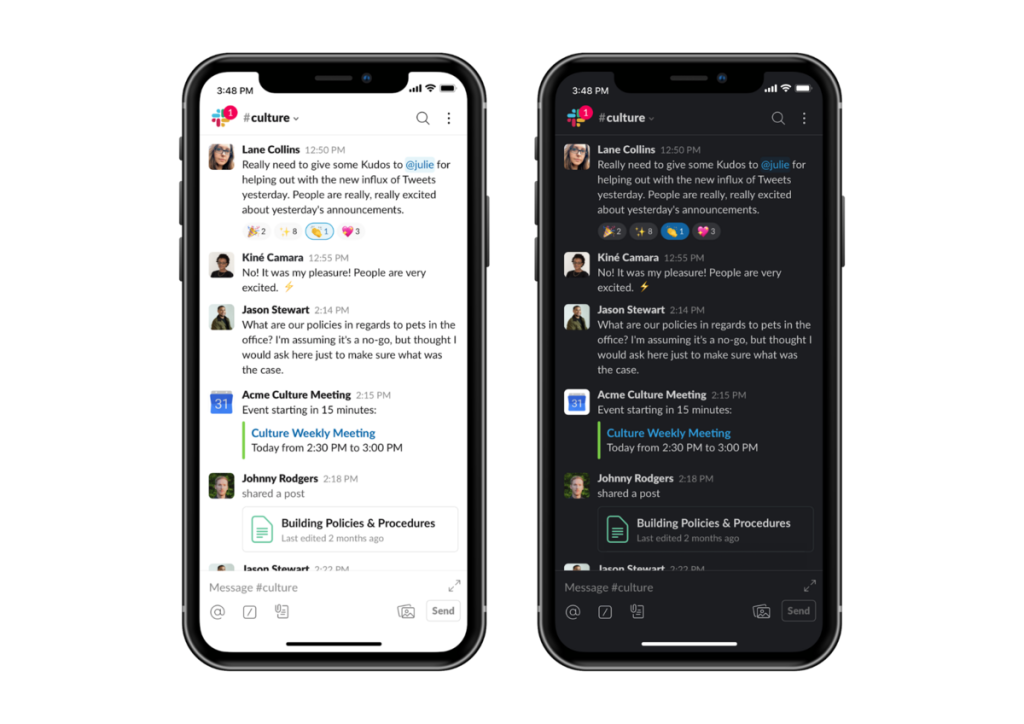
82.7% of users opt for dark mode on their devices, so your web design should closely follow suit.
This trend highlights visual content such as images, videos and graphic elements across a more muted background, which reduces eye strain and battery consumption.
Slack follows in the footsteps of other major brands by giving users the option to switch between dark and light interfaces on desktop and mobile.
When This Could Be Useful
Offer dark mode when users spend extended time reading, browsing dashboards or using logged-in areas like portals, platforms or account tools, where visual comfort and reduced glare affect engagement and retention.
When This Could Backfire
Poorly implemented dark themes reduce readability, distort brand colors or create contrast issues that make content harder to scan instead of easier.
How This Shapes The Future Of Web Design
Dark mode adds a parallel visual system that increases design and maintenance complexity while improving comfort for a large share of users.
Treat light and dark themes as equal design states, validate contrast and imagery in both and define brand-safe color rules that hold up across environments without visual drift.
14. Behavioral Design Principles
Immersive and goal-oriented user interfaces can influence future web design trends through behavioral, persuasive and gamified experiences that encourage users to take desired actions.
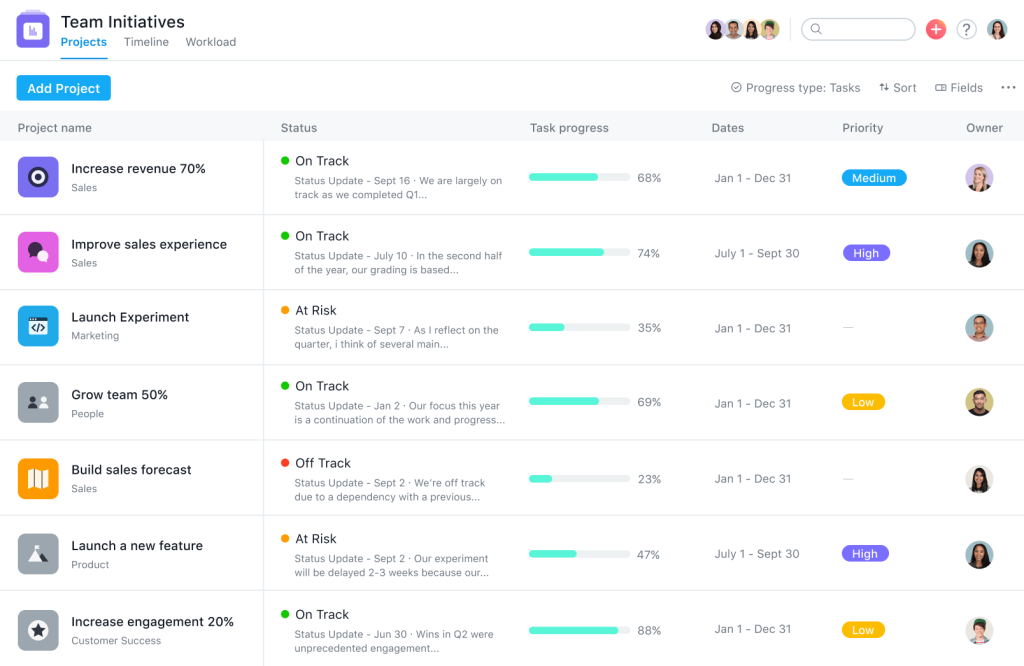
This includes progress bars to set expectations and motivate completion, interactive diagrams to communicate complex information or curated content queues to reduce cognitive load.
Asana includes a percentage-based progress bar to show the completion status of tasks, while Spotify uses gamification elements in its yearly “Wrapped” campaign to maintain user engagement and encourage sharing.
When This Could Be Useful
Apply this strategy when your website guides users through multi-step actions like onboarding, configuration or conversion paths where momentum and completion rates matter.
When This Could Backfire
Manipulative patterns or excessive gamification erode trust when users feel pushed, distracted or rewarded for actions that don’t serve their intent.
How This Shapes The Future Of Web Design
This trend increases effectiveness by aligning interface structure with how people process information, motivation and progress, while raising expectations for transparency and user control.
Use behavioral cues to clarify next steps and reduce cognitive load, document intent behind each mechanism and review performance against completion quality rather than raw engagement.
15. Internet Of Things (IoT) Integration
Internet of Things (IoT) refers to the network of connected devices that collect and exchange data, such as smart home tools, wearables and industrial sensors.
As this trend starts to accelerate, the total number of IoT devices is expected to reach 39 billion by 2030.
This interconnected system can influence the future of web design through multi-device synchronization, real-time data visualization and automated user actions.
When This Could Be Useful
Connect web experiences to IoT data when users rely on live status, alerts or device control, such as dashboards for operations, monitoring systems or connected consumer products.
When This Could Backfire
Poor synchronization, latency or unclear data presentation can overwhelm users and reduce trust in both the interface and the underlying devices.
How This Shapes The Future Of Web Design
IoT integration expands the role of websites from static touchpoints to real-time control and visibility layers.
Your design should prioritize data hierarchy, update frequency and fail-safe states, ensuring users understand what’s happening across devices without being flooded with raw signals.

Digital Silk designs websites that grow with your business.
The Importance Of Keeping Up With Website Trends
Websites may no longer serve as static digital assets by 2030, but evolve into dynamic representations of brands’ values, goals and audiences.
Falling behind on the latest web design trends is more than just an aesthetic oversight, as it can easily become a missed opportunity for you to remain competitive and maximize on-site conversions.
Keeping tabs on industry and market developments offers the following benefits:
- Adaptability and authenticity: 94% of website first impressions are design-related. If you embrace modern design principles, you signal to your audience that you’re open to innovation and value their visual experience.
- Competitive advantage: 59% of visitors prefer “beautiful and well-designed” websites. A modern website is a strategic tool for establishing industry authority and defining your market position. Proactively updating your design defines your business as a thought leader rather than a follower.
- Higher conversions and ROI: 38% of users abandon websites with poor designs. Updating core design elements, such as navigation bars or CTA placements, can significantly impact website performance and conversion rates.
- Improved SEO and visibility: While Google uses over 200 factors to rank websites, implementing SEO-friendly design principles can improve your SERP rankings. Include alt tags, optimize images and perform cross-device testing to boost visibility.
- Minimal maintenance costs: Poor user experiences can cut down 35% of potential business revenue. Future-proofing your website avoids costly redesigns and maintenance processes in the long run while maximizing current investments.
Plan for the future with Digital Silk’s award-winning designers.
Practical Tips For Having A Trendy Website Until 2030
Analyzing web design trends until 2030 can set your business up for future success. You can proactively address areas of interest through a well-defined practical framework, including:
- Selective implementation: Not every trend or tool will make sense for your brand. Focus on elements that reflect your brand identity, core messaging and values and see how they address your audience’s needs.
- Continuous learning: Designing a website isn’t a one-and-done strategy. Instead, it’s a meticulous and ongoing process that requires constant learning, improvement and adaptation. It’s important to regularly check the news and participate in webinars, workshops or conferences to stay in the loop.
- Trial and error: Experiment with new techniques in low-risk environments, such as internal projects, staging sites or beta testing platforms. Analyze the results, gather feedback and iterate accordingly to fine-tune your approach.

Looking to grow your brand online?
Design A Modern Website With Digital Silk
Blindly following web design trends without considering your brand identity, target audience and business goals can be counterproductive.
Digital Silk‘s in-house team of web designers and developers, branding and digital strategists and SEO and content specialists can assess your current website, offer research-backed guidance and deliver high-converting, responsive and user-friendly websites.
As an end-to-end web design agency, our services include:
- Custom website design
- eCommerce web development
- Custom web development
- Branding services
- Premium digital marketing solutions
Have an idea for a custom website?
Contact our team, call us at (800) 206-9413 or fill in the Request a Quote form below to schedule a consultation.
Request A Quote For Your Project
Tell us about your brand goals and let our experts give you a custom proposal
"*" indicates required fields


