Our web design services cover strategy, UX, design, development and conversion optimization on one team and one timeline. We’ve shipped 1,000+ custom websites on WordPress, Shopify, Magento and headless stacks for B2B, eCommerce and enterprise brands.
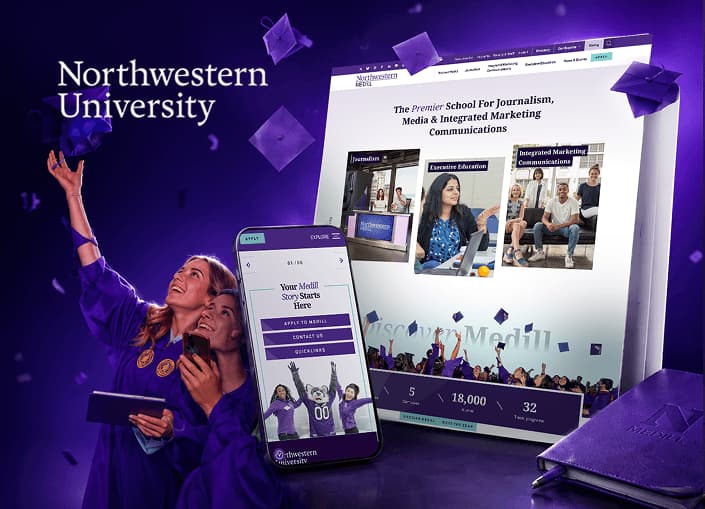
Northwestern Medill – A respected name in journalism, now has a lead-converting site
Northwestern Medill needed more than a surface-level update, so Digital Silk delivered the digital strategy, and site architecture to match.
Micro-animations and a carefully mapped user journey guide prospective students from exploring programs to submitting an application.
The impact moves the needle on conversions, giving one of journalism’s most respected names a genuinely useful site.
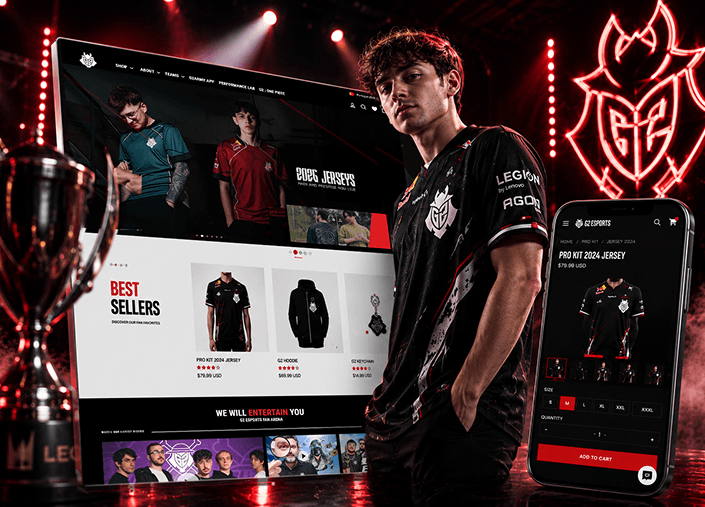
G2 Esports – A community-first brand, with a storefront for repeat visits
G2 Esports established its name on competitive wins and a global fanbase of 40 million, with strong partners like Logitech and Red Bull.
Our team developed a custom eCommerce storefront with streamlined navigation, faster checkout and a community-first design that ties directly into G2’s teams.
The result is a shopping experience designed for repeat visits, turning casual buyers into loyal fans.
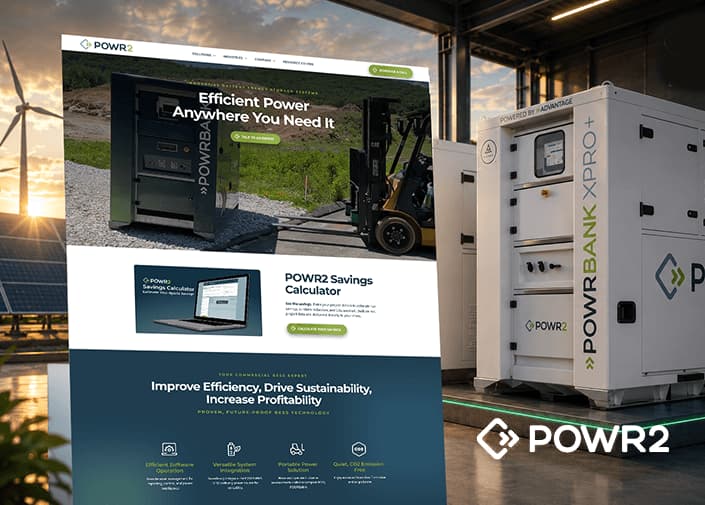
POWR2 – 16 countries, one global leader, backed by a 75% digital lift
POWR2 is the global leader in battery energy storage systems, trusted by companies across 16 countries to cut emissions, fuel costs and generator noise.
We delivered a custom website with tailored graphics, a dynamic counter and bold social proof to keep visitors engaged.
Within six months, digital performance rose more than 75%, turning a modernized site into a genuine lead-generation engine.
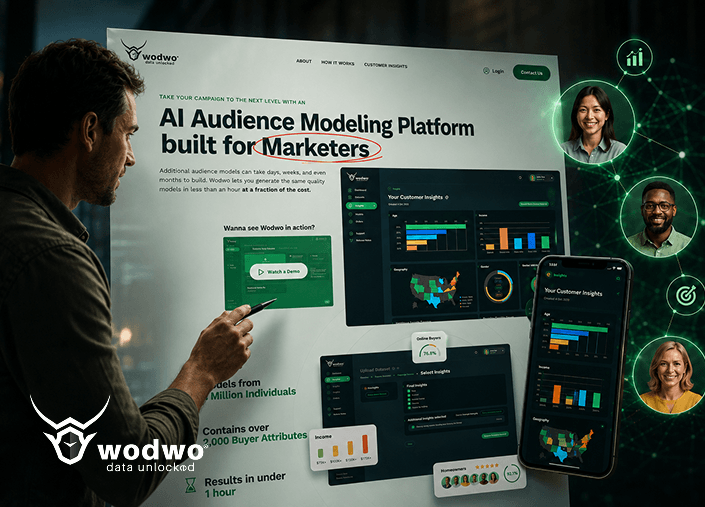
WodWo – Complex AI, made visual and easy to understand
WodWo uses AI to model custom audiences drawn from more than 230 million people, far faster than traditional research allows.
Digital Silk handled web design and brand strategy, building a site with interactive elements, live dashboards and a chatbot to guide prospects.
The result is a highly visual site that makes a complex technology easy to understand, reflecting how the brand helps marketers build models independently.
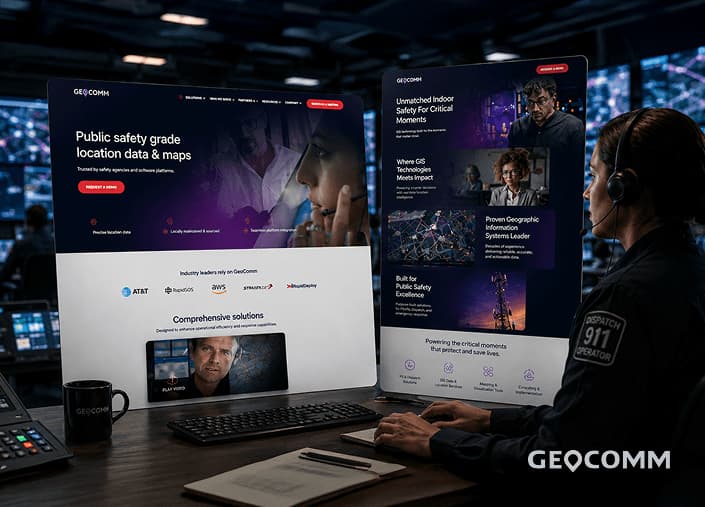
GeoComm – The GIS behind emergency response, structured for three distinct audiences
GeoComm builds the mapping technology behind emergency response, used by government agencies preparing for situations where accurate location data matters most.
The site was separated by audience type by Digital Silk, government buyers, technical evaluators and existing partners, rather than presenting one generic path for every visitor.
Complex GIS terminology was translated into plain language wherever a non-technical decision-maker was likely to be reading.
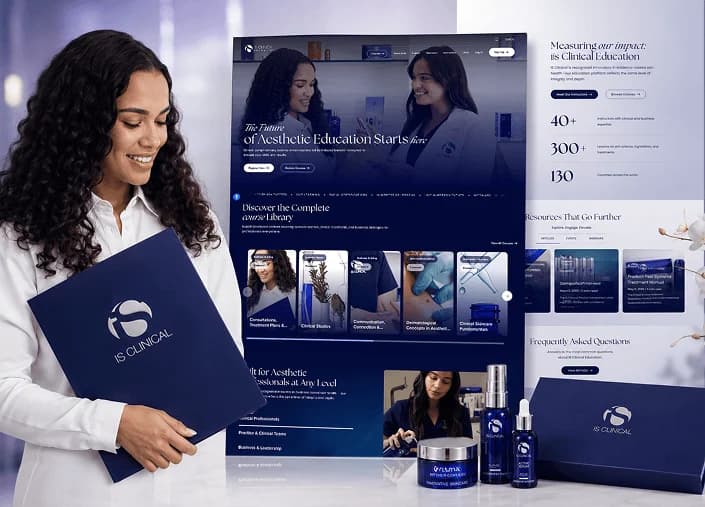
iS Clinical – The future of aesthetic education, with a platform to match it
iS Clinical EDU serves five distinct groups, clinical professionals, business leadership, sales teams, content creators and practice staff, each with different training needs.
The LearnDash platform was organized by Digital Silk around those five audiences, so a sales rep and a treating clinician no longer see the same course library.
Progress tracking and certification records now follow each learner automatically, regardless of which audience path they started on.
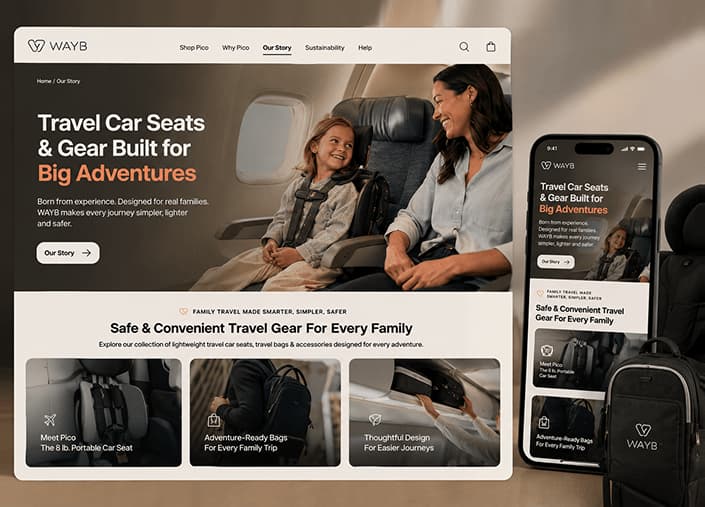
WAYB – A family travel brand, with a homepage that educates before it sells
WAYB designs travel gear for families, built around the Pico, a car seat approved for both car and airplane use.
Our experts structured the homepage around a step-by-step explanation of what makes the Pico different, rather than assuming visitors already understood the category.
Calls to action appear only after that context is established, so visitors move toward purchase once they understand what they’re buying, not before.
From startups launching their first site to established brands going through a full redesign, we’ve delivered results across industries and business sizes.
Digital Silk did a fantastic job putting together our refreshed digital presence. The team is terrific, highly professional, and has unique ideas and suggestions. I would highly recommend the group for any of your digital needs.
Proven process built around strategy, collaboration and delivering results at every stage.
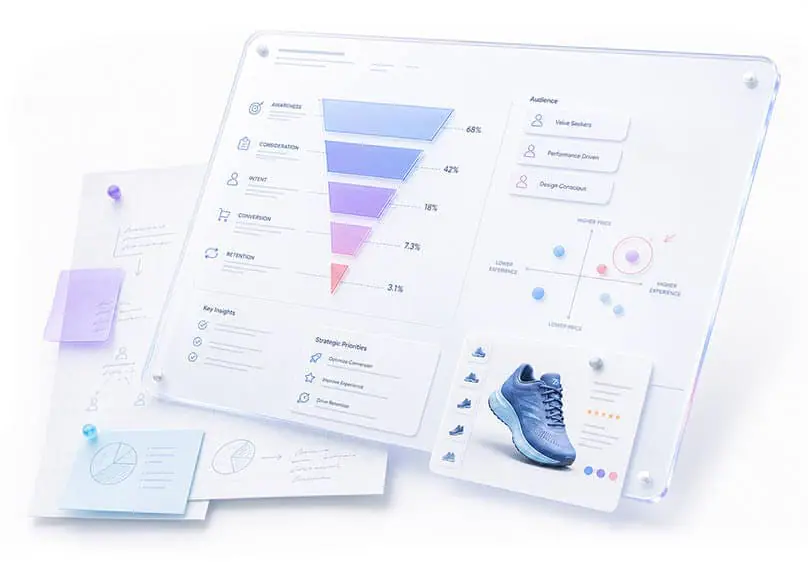
Discovery & Strategy
The first thing we do is learn your business. Not a quick briefing call but actual research into your goals, your competition and the parts of your current site that are not working well.
This is the foundation of every web design project we take on and we don’t rush it.
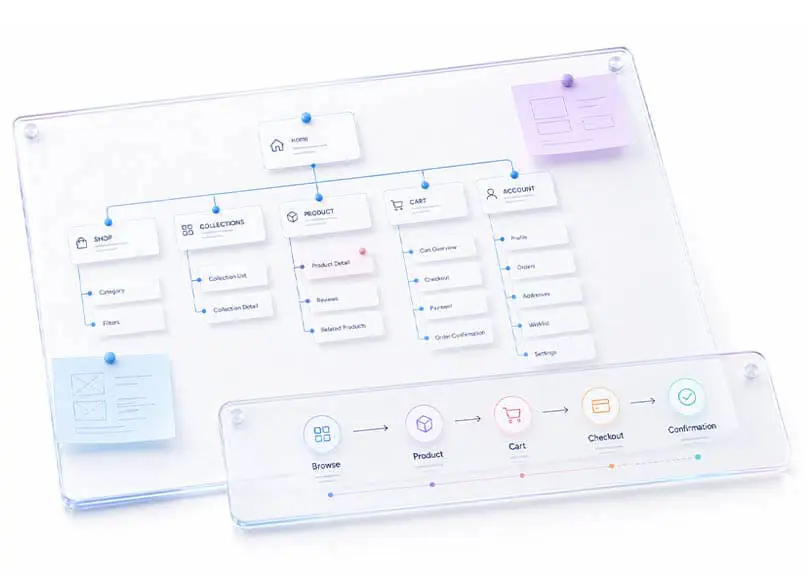
Planning & Information Architecture
Before anyone starts designing, we figure out how the site should be organized, including which pages go where, how visitors get from one section to another and what the conversion paths look like.
Any agency that skips this step usually ends up getting restructured later anyway, so we get it right the first time.
Messaging & Conversion Funnel
What you say on each page matters just as much as how the page looks. Our SEO team researches what your audience is searching for and builds the messaging around that.
Every headline, every call to action and every value proposition has a reason for being on the page.
Wireframes & UX Design
You get to review the wireframes and tell us what works and what does not. Changing layouts at this stage takes minutes instead of days, which saves everyone time and money.
After you sign off, our web designers start to work on designs for mobile and desktop. It’s one of the ways we keep projects on time and on budget.
Custom Web Development & Integration
This is the stage where we build your site. Our web developers write code that loads fast and works on every screen size.
Your content management system gets configured, your tools get connected and when it is all done your team can run the site day to day without calling us for every small change.
Our website design services allow that level of independence across every project.
Testing & Quality Assurance
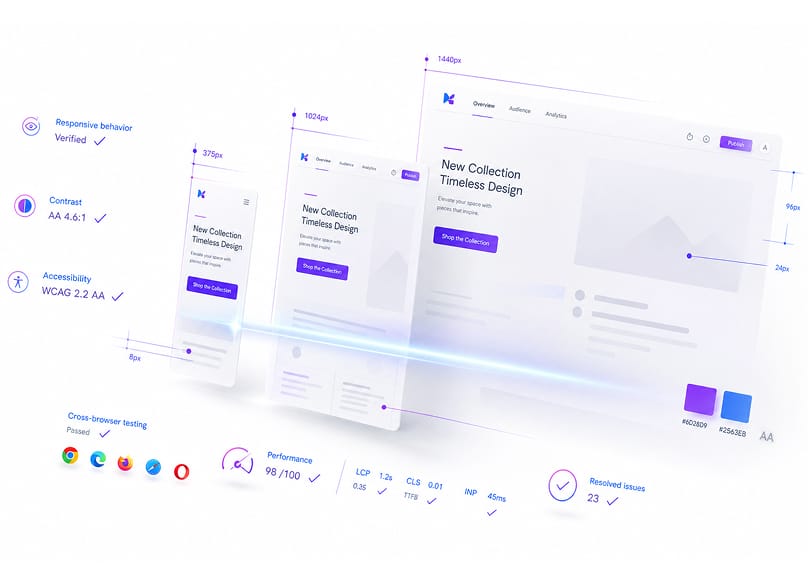
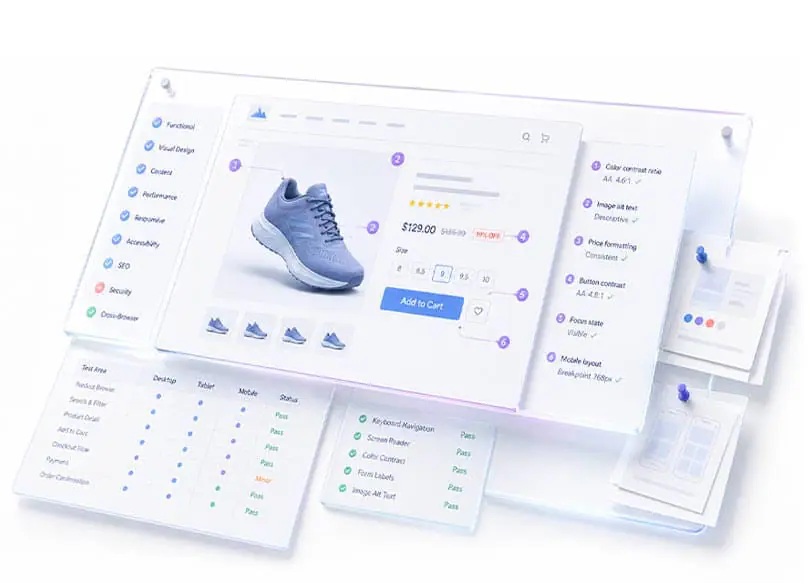
Before launch, our team tests everything. And we mean everything.
Browsers, devices, page speed, accessibility, security. We go page by page.
If we find a problem it gets fixed right then, not after your customers find it first.
Launch & Ongoing Optimization
Going live is not where our job ends.
We pay attention to how visitors behave on your site after launch, i.e., which pages they spend time on, where they drop off and what converts.
If something is underperforming, we dig into the data and make changes. That is how our web design services keep your site improving long after launch day.
Attention and dedication to the projects, besides being fundamental in the conceptualization, allowed us to broaden the brand’s scope and structure, resulting in an optimal final product that met the team’s expectations.
From the first strategy call through design, development and ongoing optimization, we work as part of your team.
Experience That Shows In The Work
We’ve been in rooms with eCommerce founders, SaaS teams, healthcare execs, educational institutions, energy providers and sports organizations.
Every one of those industries plays by different rules. We know what compliance looks like in healthcare. We know what converts in SaaS and software. We know how shoppers behave on eCommerce sites.
That’s what you learn by doing the work.
Five-Star Reviews
We could sit here and tell you how great we are but you’ve probably heard that from every agency you have talked to.
Instead, here’s what the people who hired us have to say. Check out our reviews on Clutch and DesignRush:
“If you are looking for a web design team that is professional and meets expectations, then give Digital Silk an opportunity to impress you. They have a global team of experts that have met expectations, and I have been impressed with their expertise. I am excited about our new brand and project thanks to this team,” Patrick Brown, CEO at Unity Communications.
Award-Winning Work
Good work gets noticed. Forbes named Digital Silk one of the best digital agencies in 2025 and that did not happen by accident.
Our website design services are focused on performance, our clients see more traffic, stronger engagement and higher conversion rates because every site we build has a real strategy behind it.
Brand Growth
Besides needing a website, most companies also need branding, content, SEO and a digital marketing plan that ties everything together.
We handle it all under one roof, which ensures that your site, brand identity and marketing strategy all work smoothly from day one.
A good website needs more behind it than just design. To get real results, it needs to work together with your brand, search visibility and digital marketing. We handle all of it.
Digital Branding
Your website is one piece of your brand.
We help companies build brand identities that carry across every touchpoint, from logo and visual language to messaging and tone of voice.
When your brand is consistent, your website becomes more effective because visitors already understand who they are dealing with before they even start browsing.
We build SEO into every project from the ground up.
Think site structure, page speed, metadata and internal linking. We plan all of it alongside the design and that way, your site is ready to rank the day it goes live.
Nobody sticks around for filler copy. We figure out what your audience wants to hear and how they want to hear it.
Then we write blog posts, landing pages, case studies and product descriptions that keep them reading and get them to act on it.
I would absolutely work with Digital Silk again on future projects and would recommend them to anyone looking for a team that knows what they are doing but is also made up of really good people.
How long should I expect a web design project to take?
The timeline depends on the project size. A professionally designed five-page website built on our proven framework can go live in a few weeks.
A typical custom project runs 3 to 6 months, and a large enterprise build with heavy integrations can take 9 months or more. Here’s the part most agencies won’t tell you: roughly 35-40% of any timeline is client-side – design approvals, content, stakeholder sign-off and user acceptance testing.
Our production time is fast and getting faster as we augment our dev teams, so the real lever on your launch date is how quickly your reviews and approvals are delivered. We give you a dated schedule upfront showing exactly when we need decisions from you.
How does Digital Silk handle scope creep when requirements change mid-project?
We manage it with numbers, not arguments. Every project starts with a budget broken down into estimated hours per role and task, agreed with you before work begins.
Your project manager then reviews hours logged against hours allocated every week, so drift gets spotted early rather than at the end. If a request falls outside the agreed scope, we stop and tell you before doing the work – you’ll get the extra hours or cost in writing and decide whether to approve it, swap it for something else in scope, or park it.
No unapproved work, and no surprise invoice at the end.
What is the Digital Silk testing process before a website goes live?
Every client project has a dedicated QA engineer, and testing runs in layers. We start with software-assisted checks, then each department does a second manual review of its own work, the Head of Department signs off, and for development projects the CTO gives the final approval before anything deploys.
Every team works from a detailed checklist refined over years of builds, covering formatting, security, design accuracy, content, SEO, page speed and every contact form. You also get a user acceptance testing round to test the site yourself before we go live.
Does Digital Silk use custom themes or rely on templates?
Custom, always. We don’t use pre-built or off-the-shelf themes – every design is built specifically for your brand and your users.
What we do reuse is our own library of previously built, battle-tested modules where they genuinely fit your project.
That isn’t templating; it’s reusing proven code so we spend the budget on the parts that make your site distinctive rather than rebuilding a contact form from scratch. It saves you time and money without compromising the design.
How do you transfer knowledge to the brand team once the site launches?
We plan the handover before launch, not after. You get a bespoke handover document written for your specific site, a series of one-to-one recorded training sessions with the people who’ll actually manage it, the CMS, repositories and any relevant third-party accounts.
If your site is hosted with us, it comes with a warranty period after launch for any bugs. If you’d rather not manage it in-house, our general service retainer keeps us available for as long as you need.
What is your tech stack?
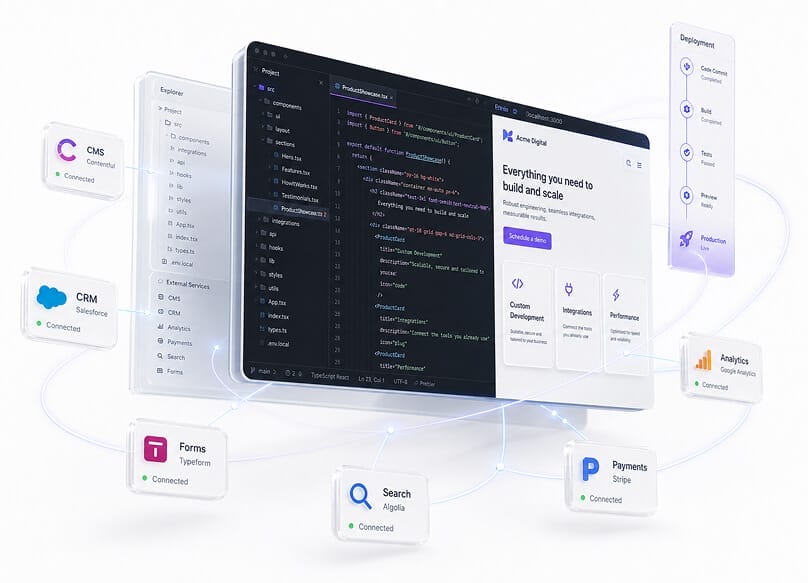
WordPress is our preferred framework for most builds – it’s genuinely versatile and scales from a 5-page site to a very large one, and your team can manage it without needing a developer.
For ecommerce we use Shopify Plus, Adobe Commerce (Magento) or WooCommerce. For custom applications and headless builds our team works with React, Next.js, Laravel, Angular, TypeScript and Node.
Behind the scenes we run Docker, self-hosted Git with automated CI/CD pipelines, AWS and Cloudflare, with Terraform and Ansible for infrastructure. We pick the stack around your needs, not our preferences.
What hidden costs typically arise after the initial contract is signed?
None, if we’ve scoped it properly – and scoping it properly is our job. Your proposal lists everything included, and we won’t invoice for anything you haven’t explicitly requested and approved in writing.
The costs worth planning for from the start are the ongoing ones every website has: hosting and maintenance, third-party licences or plugin subscriptions, and any premium integrations or stock assets.
Where those apply, we’ll flag them during scoping so they’re in your budget from day one. If you ask for something outside the original brief mid-project, you’ll get the cost before we start it – never after.
How does Digital Silk charge their clients?
We use a hybrid model, matched to the type of work. Clearly defined deliverables are fixed-fee, so you know the price upfront.
Hosting, maintenance and marketing services run on tiered monthly plans with defined deliverables and service levels. Projects, ongoing support and custom work are billed against agreed hours at standardized rates, with monthly limits so scope stays controlled.
On project payments, the total is split into equal instalments across the timeline – first payment before work starts, final payment before delivery.
Who owns the intellectual property and code?
You do. Once the project is paid in full, ownership of the custom code written specifically for you transfers to you, along with the final approved designs, brand assets and content deliverables.
You get the repositories, deployment credentials and production access. Two sensible exceptions: third-party frameworks, plugins and licensed components stay under their own licences (that applies to any agency), and our pre-existing internal modules and accelerators remain ours – though you get a full licence to keep using them in your site.
You’re never locked in and you can take the site to another team at any point.
What does your post-launch support and maintenance package include?
We build it around what you actually need rather than selling a fixed bundle. Options include technical maintenance (updates, backups, security monitoring, uptime), content management and production, ongoing design and development for new features, conversion optimisation, and full digital marketing.
Hosting & Maintenance is included on tiered monthly plans.
Do you provide infrastructure and hosting?
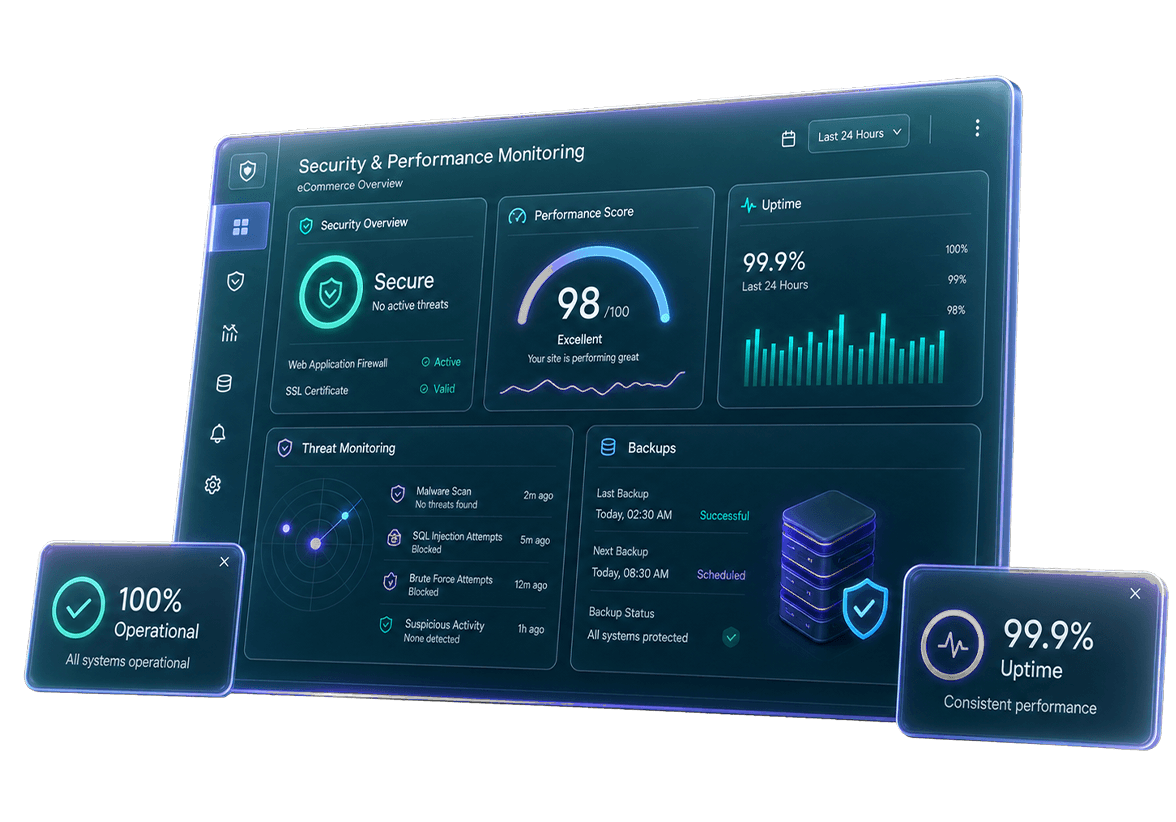
Yes. We run premium web servers in the United States & Europe with a dedicated DevOps team, and hosting comes in three tiers depending on your traffic and requirements. That includes SSL, Cloudflare CDN and web application firewall, DDoS protection, automated encrypted backups on a defined rotation, uptime monitoring and alerting, and a documented disaster recovery plan.
For high-traffic events we load-test the infrastructure in advance. You’re not obliged to host with us – we’ll deploy to your own infrastructure if you prefer.
How do you measure the return on investment for a redesign?
We baseline before we build, then measure against it. Before launch we record where you are on the metrics that matter to your business – enquiries or sales, conversion rate, organic traffic and rankings, and engagement signals like time on site, bounce rate and returning visitors.
After launch we track the same metrics so the change is measurable rather than a matter of opinion. For most clients the honest ROI question is ‘what is one extra lead per week worth to us?’ – we’ll work that number out with you upfront so the target is agreed before we start.
Our case studies show what this has looked like for other clients.
Can you share a time a project failed and how you fixed it?
Yes. The most common challenge in web design isn’t technical: it’s when the initial design direction doesn’t fully hit the mark. This happens on a small percentage of projects, and when it does, we don’t defend the work for the sake of it.
We go back to the brief with you, identify where we may have misinterpreted the vision, and adjust the direction accordingly. In our experience, projects are most likely to run into difficulty when concerns remain unspoken for too long.
Open communication allows us to address issues quickly, make the right adjustments, and keep the project moving in the right direction.
How do you balance aesthetic design with fast page load speeds and SEO?
They’re not actually in conflict – slow sites are usually badly built, not beautifully designed. We keep the code-to-content ratio lean, load the important above-the-fold elements first and defer everything else, serve images in modern compressed formats at the right sizes, and run the site behind a CDN.
We track Core Web Vitals throughout the build – LCP, INP, CLS and TTFB – and treat them as a launch requirement rather than a post-launch fix.
Every extra animation or embed adds weight, so when something is expensive in performance terms we’ll show you the trade-off and let you decide.
What data do you need from us to start the strategy phase?
Less than you’d think. The essentials are your business objectives and how you’d define success, an understanding of how you actually sell and service customers, the main challenges the brand is facing, and any history behind how you got here.
Beyond that, anything you can share helps: analytics and search console access, past campaign or sales data, brand guidelines, customer research, and a list of competitors you rate. If you don’t have research or clean data, that’s not a blocker – our strategists know their sectors and we’ll fill the gaps ourselves.