Most agencies will offer to get you more leads. For a lot of contractors that’s the wrong product.
Your constraint usually isn’t demand — it’s crew capacity. If you can service forty jobs this quarter and marketing delivers two hundred inquiries, the surplus doesn’t become revenue. It becomes estimator hours you never bill for, slower response times on the leads that would have converted, and a reputation for not calling people back.
Construction marketing works better as a matching problem: the right jobs, inside the radius you actually serve, in the season you can do them, at a volume your crews can absorb. Urbanna Landscaping didn’t just get more leads from us — they doubled average customer value while growing sales 66%.
A Construction Marketing Agency That Works To Capacity
We market for landscaping, glazing, flooring, insulation and specialty trade businesses — residential contractors selling to homeowners and B2B operations selling to builders and general contractors.
The measure we care about is qualified work won, matched to what you can deliver. One team owns strategy, campaigns, content and the site itself, so the lead flow and the thing receiving it are designed together.
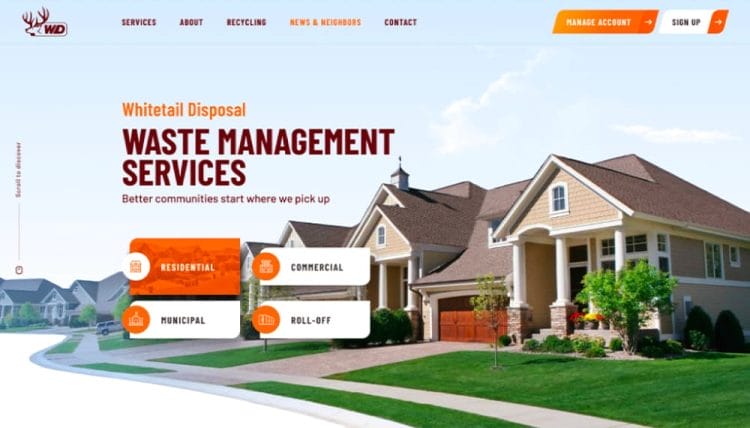
Custom Websitefor Construction & Contractor
Capacity Is The Constraint, Not Demand.
01
Why more leads is often the wrong goal.
A contractor’s business has a hard ceiling that most digital marketing programs ignore: how much work the crews can physically complete. Add a second ceiling — how many estimates the business can produce — and the picture changes again, because estimating is expensive, skilled and almost entirely non-billable.
Push volume past those ceilings and the marketing starts working against the business. Response times slip, because the same person is fielding more inquiries. Estimate quality drops, because they’re being produced faster. Conversion rate falls, which makes the campaign look worse than it is. And the leads that don’t get called promptly leave reviews about not being called promptly.
The more useful objective is value per job and fit per lead, not leads per month. That’s what actually happened with Urbanna. Their prior marketing wasn’t delivering enough qualified leads to fill a seasonal pipeline, and budget wasn’t optimized toward high-return areas or services. We ran geo-targeted Google and Meta campaigns that pushed high-value services specifically — landscape design and xeriscaping — while cutting spend on audiences that weren’t performing.
The outcome was 300+ qualified leads, $500K in sales and 66% growth, but the number that matters most is that average customer value doubled.
The same crews, doing better work, for more money. That’s the shape of a good construction marketing program. Not a bigger funnel — a better-aimed one.
02
Geography isn’t a targeting setting, it’s the whole strategy
A contractor serves a radius. Cross it and jobs stop being profitable — drive time, fuel, crew hours, sometimes licensing. Every impression outside that radius is pure waste, and in a category with high click costs the waste compounds fast.
This makes construction marketing structurally different from ecommerce or software, where a wider net is generally better. Here the discipline is subtraction: define the service area honestly, including the parts of it where you’d rather not work, and then spend only there.
It gets more granular than a radius, too. Within a service area, some neighborhoods generate larger jobs, better margins and more referrals than others. Urbanna’s budget was spread evenly across areas and services that performed very differently; concentrating it changed the economics more than any change to the ads themselves.
Google treats service area as fundamental as well — which is why Local Services Ads let you dispute and recover the cost of leads that came from outside the area you serve.
03
Local Services Ads sit above everything, and take six weeks to get into.
For most trades, Local Services Ads are the single highest-intent placement available, and they work differently enough from search ads to need planning.
They’re pay-per-lead rather than pay-per-click — typically $25 to $75 per lead depending on trade and market — and they appear above everything else on the results page: above standard search ads, above the map pack, above organic results.
The entry requirement is verification, and this is where contractors get caught out. The Google Guaranteed badge requires Google to verify your business license against licensing databases, your insurance — general liability and workers’ compensation, with minimums that vary by trade — and background checks on the business owner and field employees. The background check alone takes two to four weeks and cannot be expedited. The full process typically runs three to six weeks, and up to eight in some markets.
The practical implication is a planning one: if you want LSAs live for a spring season, verification needs to start roughly sixty days before, not in March. We’ve seen more contractors miss a season over this than over any campaign decision.
Once running, invalid leads can be disputed within thirty days for credit — most commonly leads for services you don’t offer or from outside your service area. That dispute process is real money and it’s routinely left on the table.
04
Shared leads mean you’re racing for something you already paid for.
Lead marketplaces — Angi, Thumbtack, HomeAdvisor and the rest — have a mechanic worth understanding clearly: the same lead is typically sold to several contractors at once.
The issue isn’t the fee. It’s exclusivity. You’ve paid for an introduction you’re now competing for on response speed, against three or four businesses who paid for the same one. The contractor who calls back in four minutes wins; the one who calls back that evening paid for nothing.
That makes marketplaces a viable supplementary channel only if the operation behind it is genuinely fast, and it makes owned channels — your own search visibility, your own LSA presence, your own repeat and referral base — structurally more valuable, because those leads arrive exclusive.
05
Seasons don’t negotiate.
Roofing, landscaping, paving, HVAC, pools and much of exterior trade work concentrate demand into months, and in some markets the window is short.
Urbanna’s stated problem was that prior marketing couldn’t fill their seasonal pipeline — a phrase that describes most trade businesses at some point.
Two things follow. Budget pacing has to match the season rather than the calendar year, front-loading into the weeks when intent actually exists.
And off-season spend is usually better spent building the list — capturing interest, running remarketing audiences, producing content and gathering reviews — so the on-season starts with an audience rather than from zero.
Weather adds a second layer for storm-exposed trades. Post-event demand arrives with no notice, converts at very high intent, and rewards whoever is already visible and able to answer. That’s a readiness question as much as a bidding one.
06
Homeowners and general contractors are not the same funnel.
Most construction marketing advice assumes a homeowner buying a roof. A large part of the industry doesn’t work that way.
RM Interiors is a nationwide B2B flooring contractor with 15 locations across 13 states, selling into builders and commercial projects.
That’s a long-cycle, specification-driven purchase where the buyer is professional, the competition is a bid list, and nobody converts from an ad.
Their problem was engagement — 51 seconds average visit duration against a 6-minute benchmark set by category leaders, and a 48.46% bounce rate — which is a site and content problem, not a traffic one.
The fix was structural: positioning, information architecture, 15 purpose-built location pages, a self-service flooring calculator, and a unified funnel from homepage to quote request.
If you sell to both audiences, they need separate paths. Running one message at both usually means the homeowner finds it cold and the contractor finds it thin.
Urbanna – Driving $500K In Sales Through A Localized Paid Media Strategy
Urbanna, a landscaping contractor serving Santa Fe homeowners, set out to increase sales and boost return on ad spend with a more focused digital strategy.
We launched geo-targeted Google & Meta Ads that highlighted high-value services like landscape design and xeriscaping while cutting waste from low-performing audiences.
In just a few months, Urbanna generated 300+ qualified leads, doubled average customer value and grew total sales by 66%, all while maintaining efficient ad spend.
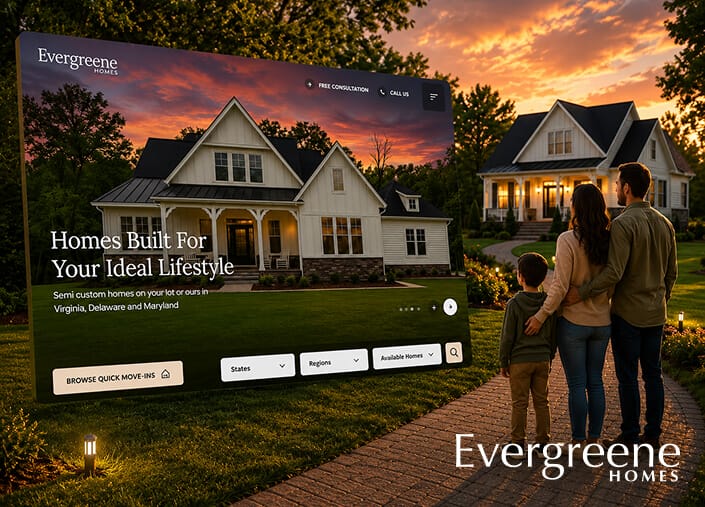
Evergreene Homes – A homebuilder’s story, told through strategy and design
Evergreene Homes builds semi-custom homes across Virginia, Maryland and Delaware, known for timeless architecture and livable design.
Digital Silk combined strategy and storytelling to create an elevated digital experience that connects prospective buyers with the communities and homes that fit their lifestyle.
Thoughtful UX design and a contemporary aesthetic make the new site feel intuitive from the first interaction.
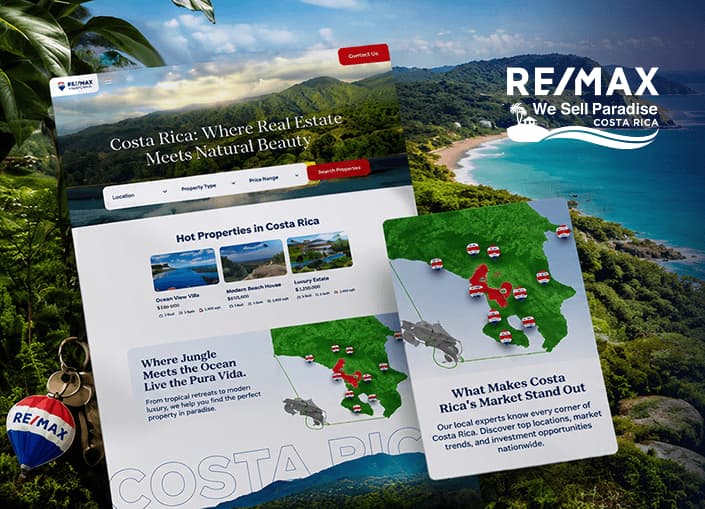
RE/MAX – Costa Rica Property Management Website Design
RE/MAX in Costa Rica was running on outdated software that made day-to-day property management harder than it needed to be.
We built a custom site from scratch with a proper listing database, a search tool that actually works and broker-friendly features like a built-in PDF exporter.
The whole thing was designed to make life easier for the team and give their clients a smoother experience from first search to final booking.
I would absolutely work with Digital Silk again on future projects and would recommend them to anyone looking for a team that knows what they are doing but is also made up of really good people.
We start by learning your business. What you sell, who buys it, what’s working and what isn’t.
We define goals, identify your competitive edge and determine which eCommerce platform fits what you’re trying to build.
Everything our eCommerce web design company does after this point is based on what we figure out in this phase.
We add a capacity and job-value review: crew availability, estimating throughput, and which job types and areas actually carry margin. The recommendation usually differs from where the budget currently sits.
We also add structured fan and community research before any direction is developed, with explicit identification of which brand elements carry meaning.
UX Planning
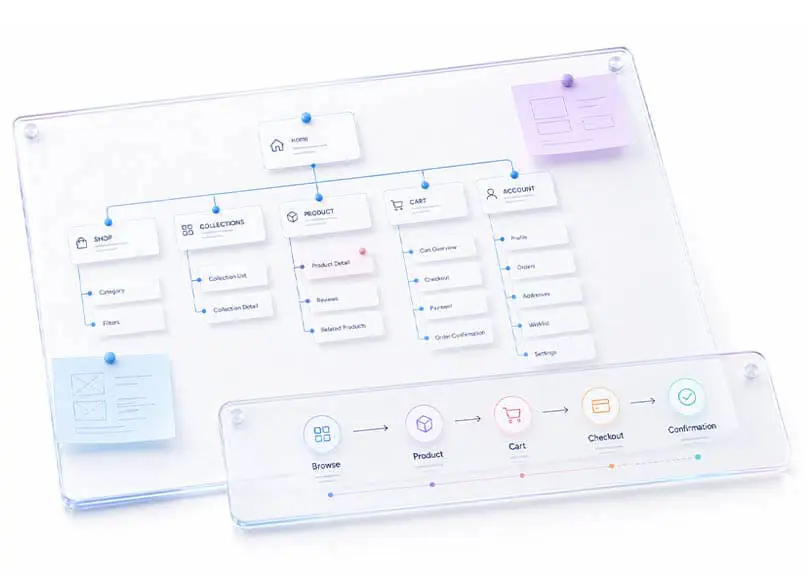
Navigation gets mapped before anyone opens a design tool.
Audience research shapes detailed wireframes, user flow and sitemap structures for every key page, including multi-language, multi-currency or regional setup if your store needs it.
This is where structure gets right, before design and development build on top of it.
UI & Creative Design
Some stores need a fully custom interface. Others work better with a tailored theme.
We figure out which approach fits your project and budget, then build out every screen with interactions placed where they help people buy.
Every screen goes through review with you before it moves forward, so nothing reaches development without your sign-off.
We add a co-branding stress test: every mark reviewed in a realistic sponsor lockup, at broadcast scale and as a small avatar, before it’s signed off.
Responsive Development
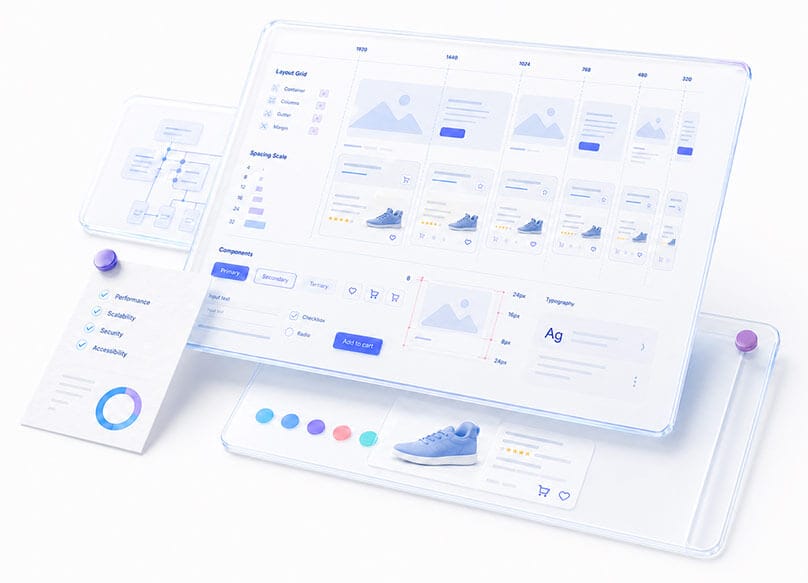
The approved design becomes a working store, not a static file.
Product catalogs, checkout logic, payment gateways, shipping rules and third-party integrations get built in, loading fast and looking right on every screen size.
Custom functionality gets built the same way, all under one roof.
Quality Assurance
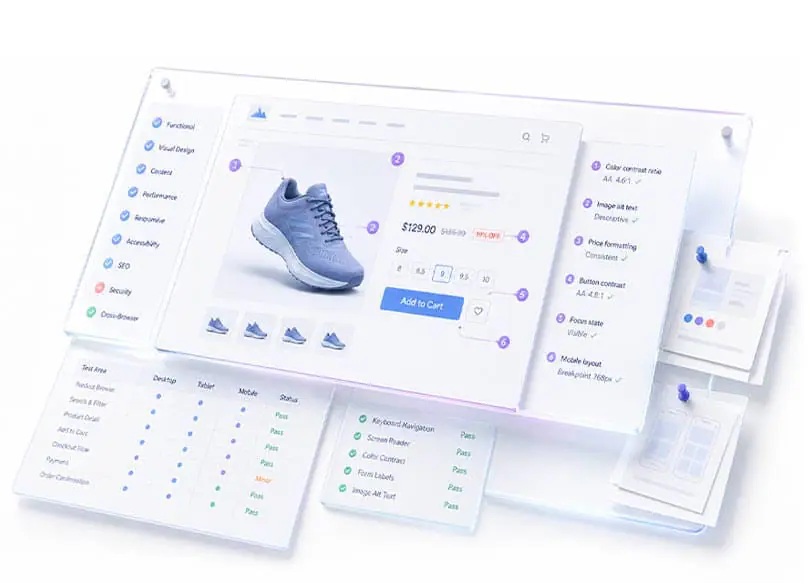
Nothing goes live until we’ve gone through the entire store ourselves.
We test your website throughout every phase of development, across every browser and device. We check accessibility, load speed, and security, and go through every feature on every page. If something is off, we fix it before launch.
Launch & Optimization
The store goes live once everything is signed off, with our team monitoring closely through the first few days after launch.
After things settle, attention shifts to performance: what pages hold attention, where visitors leave, which products get clicks but not purchases.
We add Local Services Ads verification as an explicit early workstream, since it gates the highest-intent placement and takes weeks.
A launch isn’t the end of the project. It’s the point where we start using real data to keep improving the store.
Where Contractor Marketing Budgets Leak
Service-area paid media
Service-area paid media
Geo-targeted Google and Meta campaigns built around your profitable radius and weighted toward the neighborhoods and services that carry margin.
Local Services Ads management
Local Services Ads management
Verification handled ahead of the season, category and service-area configuration, and disciplined lead disputes so invalid charges get recovered.
Local SEO and multi-location visibility
Local SEO and multi-location visibility
Location pages with genuine substance, listings accuracy and review generation — for single-market contractors and multi-branch operations alike.
Conversion and quote-path design
Conversion and quote-path design
Calculators, quote flows and estimate requests designed to qualify before they reach your estimator.
Only up to your capacity. Past the number of jobs your crews can complete and estimates your team can produce, extra volume converts into unbilled estimator time and slower response — which lowers conversion and generates complaints.
Above that line the better goal is job value and lead fit. Urbanna’s headline result was 66% sales growth, but the more useful number is that average customer value doubled.
How long does it take to get Google Guaranteed?
For most trades, yes — they appear above standard search ads, the map pack and organic results, and they’re charged per lead rather than per click, usually $25 to $75 depending on trade and market.
They also allow disputing invalid leads within thirty days, which is real money most contractors never claim.
Should we use Angi or Thumbtack?
As a supplement, and only if you can respond very fast. Those platforms typically sell the same lead to several contractors, so you’re competing on speed for an introduction you already paid for.
Owned channels produce exclusive leads, which is why they’re worth more per dollar even when the cost per lead looks higher. should look like it.
Our work is seasonal. How should we budget?
To the season, not the calendar. Front-load spend into the weeks when intent exists, and use off-season budget to build the audience — remarketing lists, content, reviews — so the season opens with demand rather than from a standing start.
Filling the seasonal pipeline was exactly the problem Urbanna came to us with.
We sell to builders, not homeowners. Is this relevant?
Yes, but it’s a different program. B2B trade selling is long-cycle and specification-driven, and nobody converts from an ad — the work is positioning, substantive location and capability content, and a path to quote.
RM Interiors is the example: 15 locations across 13 states, and the problem was engagement rather than traffic.
Can you build the website too?
Yes — see our construction web design services. For contractors it matters more than usual, because the quote path and the calculator are where a lead either qualifies itself or lands on an estimator’s desk unqualified.