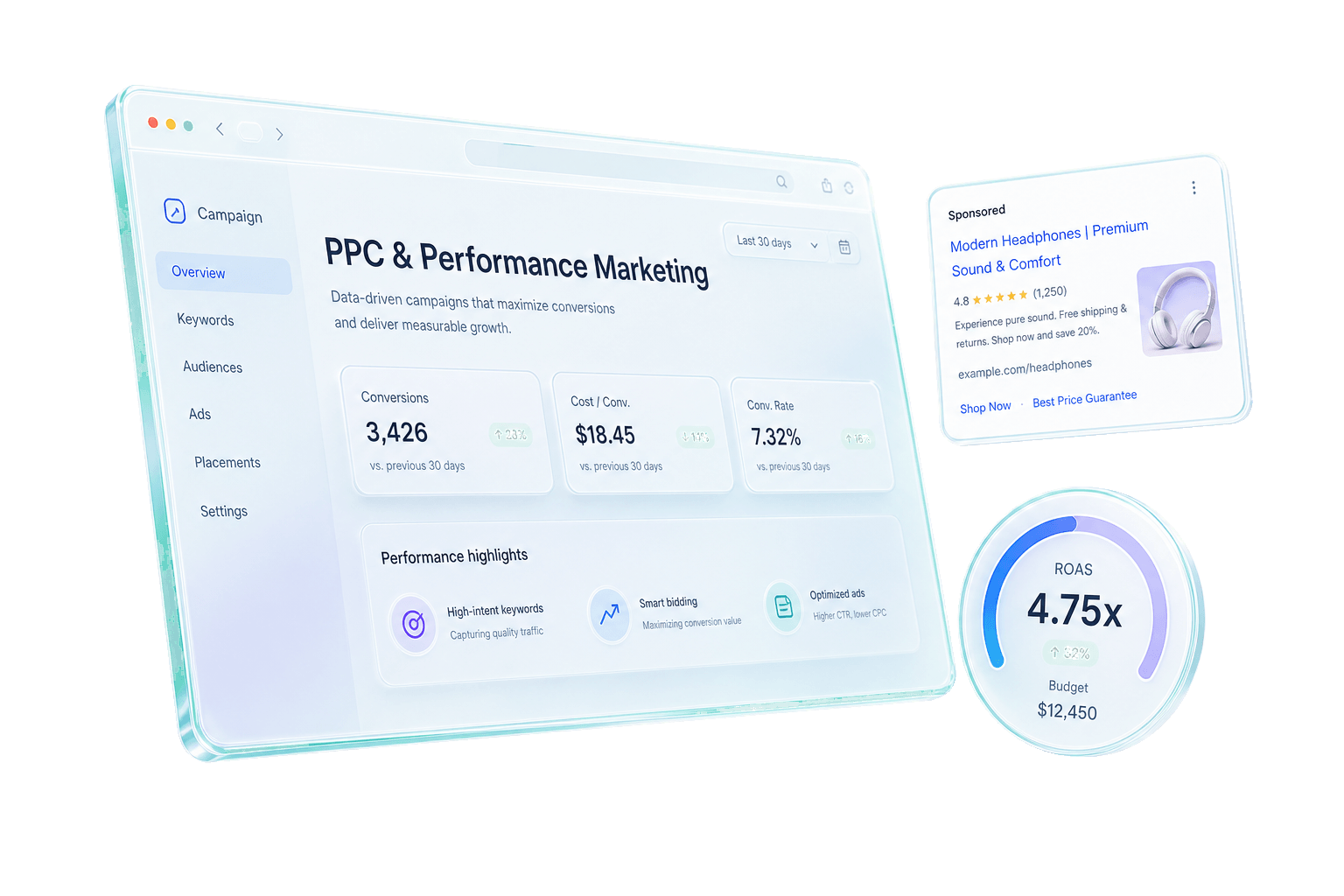
Attorneys and legal services carry the highest cost per click of any industry in Google Ads — $9.87 against an all-industry average of $5.42 — and the highest cost per lead, at $131.63.
Legal also converts below average: a 5.55% conversion rate against 8.18% across all industries, and a 5.87% click-through rate against 6.64%.
So the category pays roughly double for a click and converts below average. We work on the conversion rate, by fixing the landing page, the intake and the follow up so more of those expensive clicks turn into clients.
Request a Quote
Let’s Create Something AMAZING Together
"*" indicates required fields
You Can’t Win Legal PPCThrough Bidding Only
01
The Benchmark Data Says The Problem Is Downstream
WordStream’s 2026 benchmark study looked at 13,474 US search advertising campaigns running from April 2025 to March 2026, using medians and a minimum of 52 active campaigns per subcategory. Legal is the outlier in every column.
Attorneys and legal services pay $9.87 per click, the highest of the 23 industries measured, against an all-industry median of $5.42. Cost per lead is $131.63, also the highest, against $66.69 across all industries. Click-through rate sits at 5.87% versus 6.64%, and conversion rate at 5.55% versus 8.18%.
Firms are bidding in the most expensive auction in advertising, against competitors running the same budgets, the same agencies and largely the same keyword lists. Bid management still helps there, just not by much. Conversion rate is the bigger lever: legal converts at roughly two thirds of the all-industry rate.
Three things drive that gap in legal specifically, and all three are fixable.
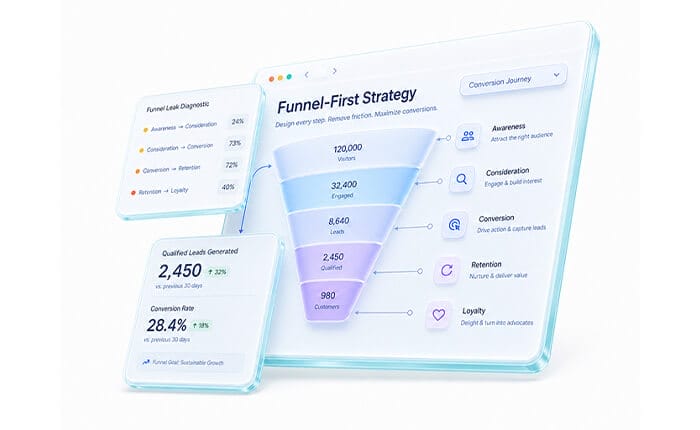
The landing page is usually the firm’s homepage or a generic practice page. A homepage is built to serve every audience the firm has — prospective clients, referring attorneys, recruits, media. A paid click from someone who typed a specific problem into Google at 11pm needs a page about that problem. Practice-level landing pages that match the ad’s promise, load fast on a phone, and ask for one thing consistently outperform, and they’re the least glamorous work in the engagement.
The form asks for too much and qualifies for too little. Long forms depress conversion; forms with no qualification depress lead quality, which is worse at $131 a lead. The version that works asks few questions, and makes one or two of them qualifying — jurisdiction, incident date, case type — so the firm isn’t paying full price for matters it cannot take.
And a large share of legal paid traffic is on a phone and wants to call, not type. Call extensions, click-to-call, call tracking with recording, and someone actually picking up. Which brings us to the second structural fact about this category.
02
Local Services Ads Changed The Page, And Answering The Phone Is Now A Ranking Factor
Google Local Services Ads sit above traditional search ads and rank in a separate unit. For law firms in eligible categories and markets, that means the paid real estate at the top of a legal search increasingly belongs to a product that works nothing like Google Ads.
The mechanics differ in three ways that matter commercially:
You pay per lead, not per click. Google’s documentation is explicit that advertisers “pay only for leads related to your business and the services you offer,” delivered as phone calls or messages through the platform. That inverts the risk of the $9.87 click — you are no longer paying for traffic that bounces.
Eligibility runs through verification, not budget. The Google Screened badge requires a license or business registration, headshots, reviews, and completed billing setup. Google runs its screening before approval. Pre-badge ads can run while requirements are outstanding, but they appear below fully verified providers. You cannot outbid a badge.
And responsiveness affects your ranking. This is the part worth reading twice: Google’s own documentation states that failing to answer calls or respond to messages can negatively affect ad ranking. Intake speed is not just a conversion factor in this channel — it is an ad-ranking factor. A firm whose phone goes to voicemail at 6pm is being demoted by the platform, not merely losing that one caller.
The practical consequence is that a serious legal paid program is now two programs. Local Services Ads for the high-intent local searches where the unit appears, run as a lead-cost play with verification and responsiveness as the levers. Google Ads underneath and around it, for the practice areas, geographies and query types LSA doesn’t cover, run as a conversion-rate play. Treating them as one thing, or running Ads as though LSA didn’t exist above it, is how firms end up paying premium CPCs for the second-best position on the page.
03
What A High Cost Per Lead Actually Depends On
The single most common failure in legal PPC is running the whole firm on one blended cost-per-lead target.
At $131.63 median cost per lead — and materially higher in contested personal injury markets — the arithmetic changes completely depending on what the matter is worth and how often a lead becomes a client.
A serious injury matter with a meaningful expected fee can absorb a high lead cost several times over, and the constraint becomes intake capacity rather than budget. A high-volume, modest-fee practice — traffic, simple wills, uncontested filings — cannot, and a program that quietly averages the two will fund the wrong one. Consumer bankruptcy, immigration, family and criminal defense all sit at different points on that curve, and business and transactional work behaves differently again: longer cycles, referral-heavy, and often better served by search for a narrow band of intent than by broad paid coverage.
What that means for how the program is built:
Budget and targets are set per practice area, not per account. Different campaigns, different cost-per-lead ceilings, different conversion definitions, and a willingness to switch a practice area off when its math stops working.
The measurement has to reach a signed matter, not a form fill. In a category where a lead costs $131 and matters vary hundredfold in value, cost per lead is a diagnostic. Cost per signed matter is the result. That requires the intake system and the ad platform to be connected, which is a week of work most firms never do and which changes every decision afterward.
And “more leads” is frequently the wrong objective. If the firm can take twelve new matters a month and the program delivers eighty leads, the surplus becomes unbilled intake time and slower responses to the leads that would have converted. Volume past capacity is a cost, not a win.
04
Where Compliance Fits Into A Legal PPC Program
Ad copy and landing pages are attorney advertising, and your state bar’s rules apply to both, not just the ad. Case result claims, guarantees, testimonials and comparative language against other firms are restricted or banned outright in most states, and the required disclaimers vary by jurisdiction and practice area, so the same ad copy that clears one state can get flagged in another.
Local Services Ads add a verification layer before you’re even eligible to appear. Google checks license number, bar standing, insurance and background screening before your listing goes live, and a lapse in any of those pulls it until it’s resolved.
The operating principle here is simple: the claim in the ad, the claim on the landing page and the substantiation behind both are one piece of work. That gets reviewed by your ethics counsel before it runs, not after a complaint or a bar inquiry.
OUR Work
Featured Law Firm Case Studies
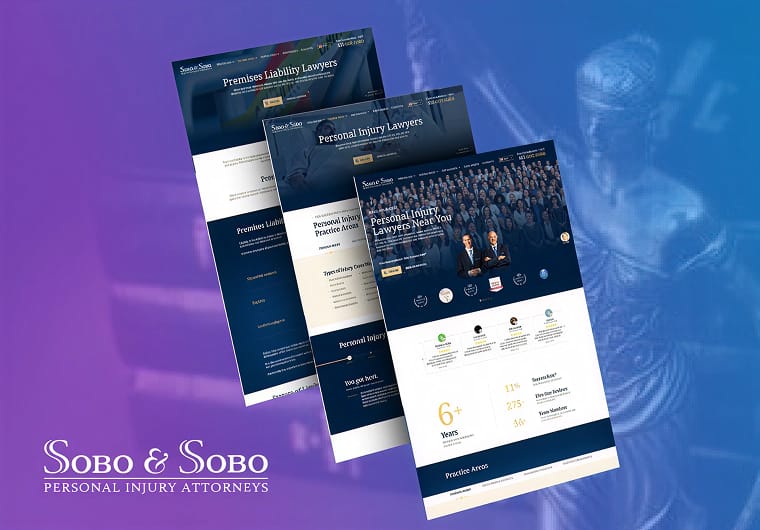
Sobo & Sobo – A PPC overhaul, with 430% return in 90 days
Sobo & Sobo needed to lift lead quality, cut acquisition costs and pull scattered campaign data into one clear view.
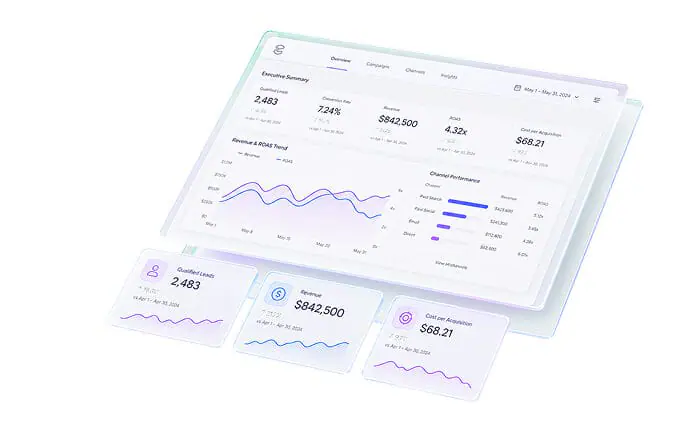
We refined the keywords, segmented geo-targeting and synced Google Ads with HubSpot, then built a custom dashboard with lead segmentation for real-time control and automated scaling.
Within 90 days the firm reached a 430% return on marketing spend and full tracking accuracy.
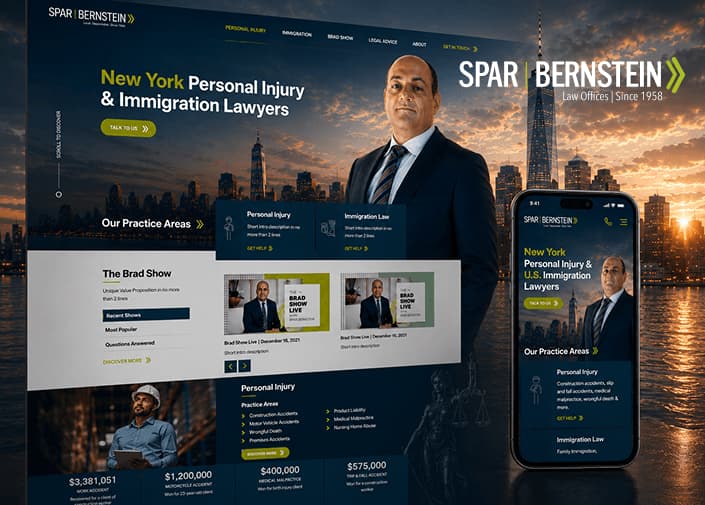
LawSB – Topic-and-intent structure, for qualified leads
Spar & Bernstein needed its legal services to surface for the people actively searching for that kind of help.
We reshaped the site around targeted keywords, technical fixes and clearer language, organizing content by topic and intent so services are easy to scan.
In six months organic traffic multiplied 14 times and brought in more qualified inquiries.
I would absolutely work with Digital Silk again on future projects and would recommend them to anyone looking for a team that knows what they are doing but is also made up of really good people.
Legal pays $9.87 a click and converts at 5.55% against an 8.18% average. Dentists pay $8.00, convert at 10.67%, and get leads for half the price. The gap is entirely downstream.
Answering The Phone Is A Ranking Factor
Google’s own documentation says failing to answer calls or respond to messages can hurt Local Services Ads ranking. Slow intake doesn’t just lose the caller — it demotes you.
Targets Per Practice Area
A $131 lead is cheap for a serious injury matter and ruinous for a traffic case. One blended target across the whole firm funds the wrong practice.
Measured To The Signed Matter
Cost per lead is a diagnostic. Cost per signed matter is the result. That means connecting intake to the ad platform, which most firms never do.
What We Run And In What Order
01
Local Services Ads First, Where You’re Eligible
Pay-per-lead economics, a verification moat competitors can’t outbid, and placement above the search ads. The work is getting screened, keeping reviews current, and making sure the phone gets answered — because the platform measures that.
02
Search Campaigns Built Per Practice Area
Separate campaigns, separate budgets, separate cost-per-lead ceilings. Tightly matched ad copy and landing pages, with negative keyword work doing more heavy lifting than in almost any other category — legal queries attract enormous volumes of research, student, self-help and job-seeking traffic that will happily consume a $9.87 click.
03
Landing Pages That Match The Query
One page per practice area and, where volume justifies it, per problem. Fast on mobile, one clear action, a form short enough to complete and qualified enough to be worth reading.
04
Call Infrastructure
Call extensions, click-to-call, tracking numbers, recording where lawful and appropriate, and reporting that shows which campaigns produce calls someone actually answered.
05
Intake integration
The connection between the ad platform and whatever the firm uses to track matters. Without it, you’re optimizing toward form fills. With it, you’re optimizing toward signed cases, and the two produce different campaigns.
06
Remarketing, Carefully
Legal remarketing needs a lighter touch than most categories — following someone around the internet after they searched for a criminal defense attorney is a poor experience and a reputational risk. Sensible frequency caps, sensible creative, and exclusions for the queries where it isn’t appropriate.
results-driven strategies
Our Law Firm PPC Services
Explore what’s included in a full law firm PPC strategy.
Local Services Ads Management
Local Services Ads Management
Google Screened verification, profile and review management, budget and lead-dispute handling, and the responsiveness monitoring the platform rewards.
Practice-Area Search Campaigns
Practice-Area Search Campaigns
Separate campaigns, budgets and cost-per-lead ceilings by practice, with the negative keyword discipline a $9.87 click demands.
Landing Page Design And Testing
Landing Page Design And Testing
Pages matched to the query and the ad, built for mobile and for one action. This is where legal PPC is won.
Form And Intake Conversion Work
Form And Intake Conversion Work
Short forms with qualifying questions, so you aren’t paying premium lead costs for matters you can’t take.
Intake Integration And Reporting
Intake Integration And Reporting
Connecting the ad platform to your matter tracking, so the program optimizes toward signed cases rather than form fills.
We’ve built out a version of our PPC process specifically for law firms, adapted to how legal leads actually convert into signed matters.
PPC Strategy Audit
We review your current campaigns, keyword performance and funnel structure to see where spend is wasted and where the real opportunities sit.
Before proposing a budget, we get the average matter value and the lead-to-signed-matter rate by practice area. Without those two numbers, a cost-per-lead target is a guess, and it’s the number the whole plan hangs on.
PPC Plan Development
Based on what the audit finds, we map out platform selection, budget allocation and audience segments by practice area.
We build a testing schedule around your actual sales cycle rather than a generic one. Plans get revisited as performance data comes in.
PPC Campaign Setup
Our team builds campaigns on Google, Bing, LinkedIn and Meta, prioritizing whichever platforms your prospective clients actually use.
Before anything launches, we audit intake, who answers, how fast, on what hours and what happens at 7pm on a Friday. Responsiveness affects ranking in this channel, so intake is part of the media work we handle, too.
Landing Page Optimization
A good ad sending traffic to a weak landing page wastes budget.
We review the pages tied to your campaigns for slow load times, weak headlines or a call to action that isn’t pulling its weight. Fixing those keeps cost per click down and turns ad spend into signed matters instead of clicks.
Conversion Tracking & Analytics Setup
We configure GA4, server-side tracking and conversion APIs so every meaningful action gets attributed correctly.
We also connect the ad platform to matter tracking at the start of the engagement. Retrofitting that connection six months in means six months of optimizing toward the wrong number.
Working with Digital Silk has been an incredible experience for Digital Marketing Partnerships. The agency provided numerous creative ideas some that the client didn’t even consider.
Because the matters are worth a great deal and every firm knows it. WordStream’s 2026 study of 13,474 U.S. campaigns puts attorneys and legal services at a $9.87 median cost per click and $131.63 cost per lead — the highest of 23 industries on both measures, against all-industry medians of $5.42 and $66.69.
Contested personal injury markets run far above the median. The number isn’t the problem in itself; what you do with the click is.
If clicks cost that much, is PPC worth it for us?
It depends on your matter value and your conversion rate, which is why we ask for both before quoting. A practice with high matter values can absorb a $131 lead comfortably and will usually hit a capacity ceiling before a budget ceiling.
A high-volume, low-fee practice often can’t, and is better served by Local Services Ads, organic search, or referral development. We’d rather tell you that at the outset than six months in.
What are Local Services Ads and do we need them?
A separate Google product that appears above traditional search ads, charges per lead rather than per click, and requires verification — license or business registration, headshots, reviews, billing setup — to earn the Google Screened badge.
If you’re eligible in your category and market, yes, they usually belong in the mix, because you cannot outbid a badge and the pay-per-lead model removes the risk of the expensive click. Eligibility varies by category and state, so it needs checking for your specific practice areas.
How much does intake speed really matter?
More than most firms think, and now mechanically. Beyond the obvious — a caller who reaches voicemail calls the next firm — Google’s Local Services documentation states that failing to answer calls or respond to messages can negatively affect ad ranking.
So slow intake compounds: you lose the lead, and the platform shows you less often. Fixing intake is frequently the highest-return change available in a legal paid program, and it costs less than a month of media.
Why is our conversion rate low?
Usually three things, in this order: paid clicks landing on a homepage or generic practice page instead of a page matched to the query; a form that’s too long, too generic, or both; and no genuine path to a phone call for the large share of legal traffic that’s on mobile and wants to talk to someone.
Legal converts at 5.55% against an 8.18% all-industry average, so there is a lot of headroom here — dentists, at almost the same click cost, convert at 10.67%.
How do we stop paying for the wrong clicks?
Negative keywords, relentlessly, plus qualification in the form. Legal queries attract research traffic, students, people looking for free self-help, and job seekers, and at $9.87 a click each of those is expensive.
Beyond that, qualifying questions in the form — jurisdiction, case type, date — mean you stop paying intake time on matters you were never going to take. ISP’s paid program cut cost per lead 40.37% largely through this kind of intent filtering, in a different industry with the same underlying discipline.
What should we actually measure?
Cost per signed matter, by practice area. Cost per lead is useful for diagnosing campaign health and useless for deciding whether the program works, because lead values in legal vary by orders of magnitude.
Getting to cost per matter means connecting your intake or case management system to the ad platform. It’s a short piece of work and it changes every subsequent decision.
Talk To Our Legal PPC Team
Tell us three numbers: your average matter value by practice area, how many leads become signed matters, and how many new matters you can actually take this month. Those answers decide whether we’d recommend paid media at all — and if we would, what it should look like.