A firm wins a significant verdict. The result is public record, reported, docketed and searchable. Posting about it seems like an easy call.
It isn’t. Under ABA Formal Opinion 18-480, a lawyer using social media or blogs is still bound by Rule 1.6, and Rule 1.6 makes no exception for public information. Confidentiality holds even when the information is already public. A courtroom win, a decision analysis or a matter already on the record all need the client’s consent first.
The same opinion goes further: a lawyer can’t respond to a negative review if doing so would reveal protected information.
So the most natural post needs permission, and the most natural reply to criticism is off the table. As a law firm social media agency, that’s what we plan for on every post and every response.
Request a Quote
Let’s Create Something AMAZING Together
"*" indicates required fields
The Content You’d Naturally Publish Is The Content You Can’t
01
Rule 1.6 Has No Public-Information Exception
ABA Formal Opinion 18-480, issued March 2018, addresses lawyers who blog and comment publicly, and its central holding surprises most people who haven’t read it.
Model Rule 1.6 provides that a lawyer “shall not reveal information relating to the representation of a client unless the client gives informed consent” or a narrow exception applies. The opinion is explicit that there is no carve-out for information that is publicly available. As the analysis puts it, the protection afforded by Rule 1.6 is not forfeited even when the information is available from other sources or has been publicly filed.
The practical consequences are broad:
Case result posts require consent. The verdict being reported in the local paper does not release you from Rule 1.6.
Commentary on your own matters requires consent — analyzing a decision in a case you handled, explaining what happened, using it as a teaching example.
Responding to a negative review is constrained. If the reply would reveal information relating to the representation — that the person was a client, what happened in their matter, why the outcome went as it did — Rule 1.6 restrains it. This is the single most common way firms get into trouble on social, because the provocation is real and the instinct to correct the record is strong.
And Opinion 18-480 also points at Rules 3.5 and 3.6 — ex parte communications and trial publicity — as further limits on what can be said online about pending matters.
02
So What Does A Law Firm Actually Post?
The constraint rules out roughly the content most firms would start with. It leaves a great deal that works better anyway.
Explain the law, not your cases. How a process works, what a statute changed, what happens at each stage of a matter, what someone should do in the first 48 hours after an event. This is what people are actually searching for, it requires no consent, and it demonstrates competence more convincingly than a verdict figure does.
Answer the questions people are embarrassed to ask. What does this cost. How long will it take. Do I even need a lawyer for this. What happens if I do nothing. Most legal marketing avoids these; addressing them plainly is a genuine differentiator in a category people find intimidating.
Use consented client stories properly when you have them. Consent is obtainable — many clients are pleased to be featured — and a story told with permission is more powerful than a number. Get the consent process right, in writing, with scope, and treat it as a workflow rather than an afterthought.
Talk about the firm, the people and the work. Attorney backgrounds, why someone practices in an area, what the office is like, community involvement, recruitment. None of it touches Rule 1.6 and all of it does the trust work that legal buyers need.
And publish the general lessons of your cases without the cases. “Three things people get wrong in the first week after a workplace injury” is drawn from experience, teaches something useful, and identifies nobody.
03
The Comments And The DMs Are The Real Risk Surface
Most firms think about the post. The exposure is usually below it.
Someone will describe their situation in the comments and ask what they should do. Publicly, in detail, sometimes about a matter with an opposing party who can read it. A substantive answer risks creating expectations of a lawyer-client relationship, giving advice without the facts, and doing so in a jurisdiction where the responding lawyer may not be licensed.
And a lawyer’s audience is national while their license is not. A firm licensed in one state has followers in fifty. General educational content is one thing; something that begins to look like advising a specific person in another jurisdiction is another, and the line is easy to cross when the question is sympathetic and the answer feels obvious.
The working solution is unglamorous and it needs to exist before the first post, not after the first awkward comment:
A standard response, used consistently. Warm, brief, and non-advisory: we can’t give advice on specific situations here, every case turns on its facts, here’s how to reach us for a consultation. Templated so nobody improvises it at 11pm.
Marketing owns moderation, not the attorneys. A trained person monitors comments and DMs, escalating anything that needs a lawyer’s judgment, and applying the standard response otherwise. The failure mode is a partner answering a comment personally because they’re being helpful.
An explicit jurisdiction line in the profile and where appropriate in content. Where the firm is licensed, and that content is general information rather than advice.
And a rule about pending matters. Rules 3.5 and 3.6 exist. Live litigation is the worst possible subject for spontaneous posting.
04
Where The Audience Actually Is, Which Isn’t Where Firms Assume
A final point that changes budget allocation more than any of the above.
For most firms, the highest-value social audience is other lawyers, not consumers. Referrals are the dominant client acquisition channel across most of the profession — particularly in specialized, high-value and business-facing practice areas. A boutique that gets three referrals a year from other firms has a better economic outcome than one with a large consumer following.
That reframes the program considerably. The referral audience lives largely on LinkedIn, responds to demonstrated expertise rather than to accessibility, and is reached by content that would bore a consumer — a genuinely useful analysis of a recent decision, a clear explanation of a procedural change, a considered take on where an area of law is heading. It’s also a small, identifiable audience, which makes it a B2B social problem in a professional-services wrapper, with the same measurement caveats: you will not be able to attribute the referral to the post.
Recruitment is the other under-used audience. Associate and lateral hiring is competitive and expensive, and the content that shows what a firm is like to work at is largely content the firm should be producing anyway.
Consumer-facing practices are the exception. Personal injury, family, criminal defense, immigration and consumer bankruptcy do have genuine consumer social audiences, and short-form video reaches them effectively. Those are also the practice areas where the comment-moderation problem is most acute, because the people asking are distressed and the questions are specific.
The Digital Silk team was, from the outset, the clear winner of our selection process and they’ve been an absolute dream to work with throughout the entire process. Their project team was both patient when needed and prodding when warranted to keep the process on target.
LawSB – Critical legal help, reaching the people who need it
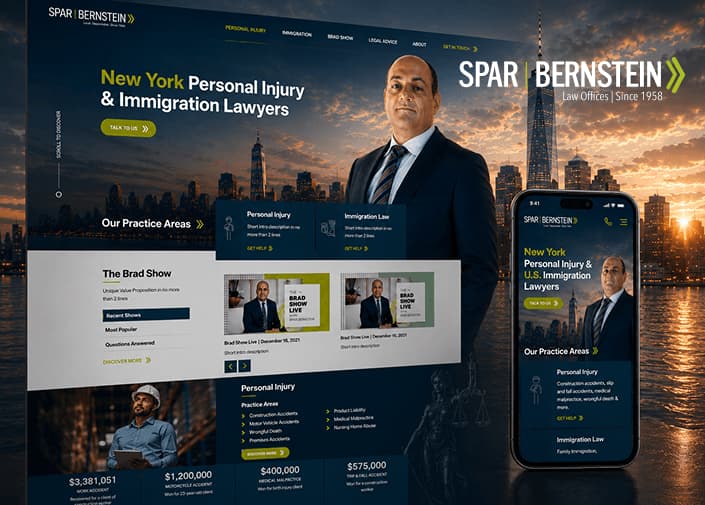
Spar & Bernstein offers essential immigration and personal injury legal services, but had limited visibility.
We reshaped the site around targeted keywords, technical fixes and clearer language, organizing content by topic and intent so services are easy to scan.
The right people now find the firm more easily, with organic traffic up 14 times in six months.
Rule 1.6 has no public-information exception — a verdict in the public record still needs client consent. Explaining process and rights requires none and performs better.
Moderation Is A Marketing Job
Someone will describe their case in the comments. A templated, warm, non-advisory reply routed by a trained person beats a partner improvising at 11pm.
The Audience May Be Other Lawyers
Referrals drive most legal work. Three referrals a year from other firms beats a large consumer following in most practice areas.
Your Reply To A Bad Review Is The Risk
Correcting the record usually means confirming someone was a client and why things went as they did. Acknowledge, don’t explain, and invite them to call.
What This Looks Like By Practice Area
01
Personal Injury And Mass Tort
The largest genuine consumer audience in law, well suited to short-form video, and the practice area where comment moderation matters most because the people asking are distressed and specific.
02
Family Law
A consumer audience with an acute privacy problem: clients are frequently in the worst period of their lives and will not consent to being featured.
Educational and process content carries the whole program, and it works well — people going through a divorce research obsessively and want to understand what’s coming.
03
Criminal Defense
Consumer-facing, extremely sensitive, and the practice where discussing any current matter is most obviously unwise.
Rules 3.5 and 3.6 are live considerations. Educational content about rights and process does the work.
04
Immigration
A large, motivated, frequently multilingual audience with urgent information needs, and one of the strongest cases for social in the profession.
Language architecture matters enormously here too, the same way it does across every other channel these clients use to find and vet a firm.
05
Business, Corporate And Transactional
Essentially B2B. A small, identifiable audience of in-house counsel, founders and executives, reached on LinkedIn through demonstrated expertise. Credibility infrastructure rather than lead generation.
06
Boutique And High-Net-Worth Practices
Where discretion is part of the product and volume is not the goal. The Vacca Family Law Group model — authority and standing rather than intake capture.
Social’s role is being findable and evidently expert to a small number of people, and being unshowy is itself positioning.
As a new company, we were in need to push all social channels and streamline our messaging. We found that Digital Silk team has an effective workflow. For sure, they’d helped our company to stand out against its competitors and made Fast Forward recognizable.
A law firm’s social presence has to walk a line between visibility and compliance, and that’s exactly where our approach starts.
Educational & Multilingual Content
Educational & Multilingual Content
Process explainers, rights content, statutory changes and first-48-hours guidance, the material that requires no consent and answers what people actually search for.
That’s particularly true for immigration and personal injury practices, where the audience isn’t primarily English-speaking.
Comment And Message Moderation Protocols
Comment And Message Moderation Protocols
Templated non-advisory responses, trained monitoring, a clear escalation path, and a jurisdiction line that’s stated rather than assumed.
Client Story And Consent Workflow
Client Story And Consent Workflow
For firms that want to use client narratives, a written consent process with scope and duration built into the engagement rather than requested afterward.
Thought Leadership And Referral Programs
Thought Leadership And Referral Programs
LinkedIn content aimed at the referral audience — decision analysis, procedural change, considered commentary — with measurement by proxy rather than by attributed lead.
Short-form Video For Consumer Practices
Short-form Video For Consumer Practices
Where the audience is genuinely consumer, built for the platforms they’re on and moderated properly.
Law firms face a different set of rules on social media than most industries, so we built our process around those from the start.
Research & Planning
We review your current channels, past performance and where competitors are showing up.
Before the first post goes out, we agree the content rules with your ethics counsel, what can be published about active matters, what consent looks like and how jurisdiction gets addressed. That agreement is the deliverable that makes everything else possible.
Defining Your Audience
Most firms assume the real target is prospective clients, and that assumption is often wrong.
We establish upfront whether the audience is consumers, referring attorneys or recruits, since that choice changes the platform, the content and how success gets measured. Getting this right shapes the strategy that follows.
Creating Content
We build out posts around attorney profiles, case results and firm updates, tailored to whichever platforms your audience actually uses.
Moderation gets set up before anything goes live too, who watches comments and DMs, what the standard response says and what gets escalated. None of that gets figured out after the first difficult comment comes in.
Tracking Analytics
We monitor engagement, reach and audience growth across every channel and adjust as the data comes in. Reporting stays clear so you can see what’s actually moving the needle. That data feeds back into the content plan over time.
Law Firm Social Media Marketing FAQs
Can we post about a case we won?
Only with the client’s informed consent — even if the result is a matter of public record. ABA Formal Opinion 18-480 is explicit that Rule 1.6 contains no exception for publicly available information, and that the protection isn’t forfeited because something was publicly filed or reported elsewhere.
Consent is often readily given, so this is a workflow problem rather than a prohibition: ask at the right moment, get it in writing, and define the scope. Your ethics counsel approves the form; your state’s rules govern.
A former client left a damaging review. Can we respond?
You can respond, but you generally can’t explain. Opinion 18-480 notes that a lawyer is restrained from responding to a negative online review where doing so would reveal information relating to the representation — which covers confirming the person was a client, describing what happened, or setting out why the outcome went as it did.
The workable reply thanks them for the feedback, states that the firm takes concerns seriously and can’t discuss specifics publicly, and invites them to make contact. It’s unsatisfying to write while annoyed, which is exactly why it should be templated in advance.
Someone described their whole legal problem in our comments. What do we do?
Apply a standard response, and make sure a trained person, rather than an attorney is applying it. Warm, brief, non-advisory: we can’t advise on specific situations here, every matter turns on its facts, here’s how to reach us.
The risks in answering substantively are real — expectations of a lawyer-client relationship, advice given without the facts, and the possibility the person is in a state where the responding lawyer isn’t licensed. Have the template written before you need it.
Our lawyers are licensed in onestate, but our audience is national. Is that a problem?
It’s a manageable one, and it should be managed deliberately. General educational content about the law is one thing. A response that starts to look like advising a specific person in a jurisdiction where you’re not licensed is another.
State where the firm is licensed in the profile, make clear that content is general information rather than advice, and route out-of-jurisdiction inquiries rather than answering them. Your counsel should set the line; we build the process that holds it.
What should we post if wecan’tdiscuss our cases?
Most of what people are actually searching for. How a process works, what a recent change means, what someone should do in the first 48 hours after an event, what things cost, how long they take, whether a lawyer is even needed.
None of it touches Rule 1.6, all of it demonstrates competence more convincingly than a verdict figure, and it’s the content that reaches people before they’re ready to call. You can also publish the general lessons of your cases without the cases — a post about what people get wrong in a given situation identifies nobody.
Which platform should we be on?
Depends entirely on the audience, and most firms guess wrong. If your work comes from referrals — which it does across most of the profession — the audience is other lawyers and it’s on LinkedIn, reached through genuine substantive analysis.
If you’re consumer-facing in personal injury, family, criminal defense or immigration, short-form video reaches real audiences and is worth the moderation burden. Deciding which of those you are is the first question, not the last.
How do we measure it?
By proxy, and agree that before you start. Referral relationships and reputation don’t produce attributable conversions — someone reads a post, remembers the firm, and calls eight months later after their own search.
Track branded search volume, direct traffic quality, self-reported attribution on the intake form, and where referrals are coming from.
Talk To Our Legal Social Team
Tell us where your work actually comes from — referrals, search, or reputation — and who currently answers when someone describes their case in your comments. Those two answers shape the whole program, and most firms haven’t decided either.