

Babies R Us logo
Enchant Christmas's logo
G2 eSports logo
Grenco Science's logo
Miami Country Day School logo
HP logo
NYU logo
P&G logo
Sony logo
Xerox's logo

What Selling From Austin Actually Involves

  • 01
    Texas Sources Sales Tax In Two Directions At Once 
    Texas is one of the more difficult sales tax environments in the country for an online seller, and the difficulty is structural rather than just a matter of rates. 

    The state rate is 6.25%. Local jurisdictions can add up to 2%, capping the combined rate at 8.25%. Behind that sit more than 1,500 local taxing jurisdictions, many of them overlapping — cities, counties, special purpose districts and transit authorities layered over the same ground. 

    The part that catches Austin businesses is sourcing: 

    If you have a place of business in Texas — an Austin warehouse, studio or office — you use origin sourcing for local taxes. You collect your own city’s rate, plus destination city use tax where it applies, and you have to respect that 2% combined local cap while doing it. 

    If you’re a remote seller with no Texas location, you use destination sourcing based on where the customer takes delivery — or you can elect a single local use tax rate of 1.75% across all Texas sales instead, making a flat 7.95% combined. 

    Economic nexus kicks in at $500,000 in Texas revenue over the prior twelve months. 

    So two ecommerce businesses selling the identical product to the identical Austin customer can legitimately collect different amounts, depending on where each one is based.

    Texas is a mixed-sourcing state, and the default tax configuration in most ecommerce platforms is built for the destination-based model that nearly every other state uses. 

    Why this is a web design problem and not just an accounting one. Unexpected tax at checkout is one of the more reliable causes of cart abandonment. If tax appears only on the final step, or the total moves after a customer has committed mentally, you lose sales you had already won.

    The design response is to surface the full landed cost early — estimated tax and shipping visible in the cart, not revealed at the last screen — which requires the tax logic to be correct and fast enough to run before checkout. 
    Getting this right is unglamorous. 

    It’s also the kind of thing that quietly costs a growing Austin brand real money, and it’s rarely anyone’s job. 
  • 02
    Austin Makes Things, And That Changes What The Site Has To Do 
    Austin’s ecommerce economy is disproportionately consumer product companies rather than pure retailers.

    The Austin Chamber describes CPG as one of the region’s strongest startup segments, driven by a genuine ecosystem: Whole Foods and H-E-B as accessible distribution for emerging brands, a collaborative founder culture, and growing local capital. Kendra Scott, western boot brands and a dense food and beverage startup scene all came out of it. 

    That matters for design because a consumer brand’s site has a harder job than a retailer’s. A retailer’s site needs to help someone find and buy a known item efficiently. A brand’s site has to establish why this product exists, who made it and why it’s worth more than the alternative — and then convert. Those two goals pull in opposite directions on almost every page. 

    The sites that resolve it don’t split the difference. They front-load the brand where a first-time visitor lands and get progressively more transactional as intent rises, so a returning customer who knows what they want isn’t wading through storytelling to reach a cart. 

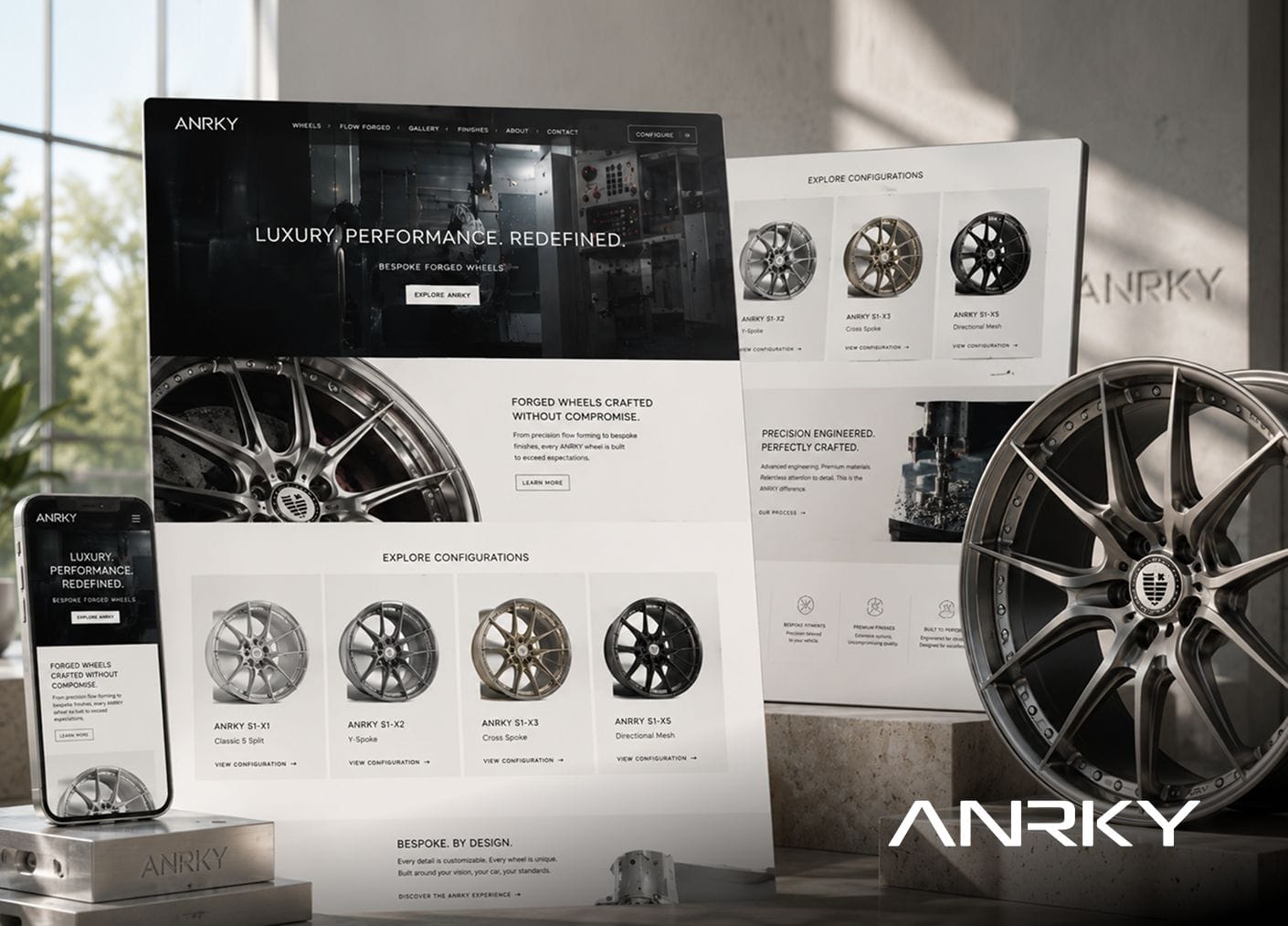
    That’s an information architecture decision, made deliberately, and it’s what most of our strongest ecommerce work has in common — ANRKY Wheels turning a technical catalogue into a luxury brand experience is exactly this problem. 


  • 03
    The Wholesale-to-DTC Transition Breaks The Site 
    Here’s the pattern that recurs in a CPG city: a brand builds around retail distribution, gets into Whole Foods or H-E-B, and the website exists to support that — a brand story, a stockist finder, a press page, a wholesale enquiry form. It’s a brochure, and for that stage it’s the right thing. 
    Then direct-to-consumer becomes a real channel, and the site has to become a store. 

    That transition is where things break, because the underlying architecture was never built for it. Product content written for a retail buyer doesn’t sell to a consumer. There’s no review infrastructure, no subscription logic, no bundling, no post-purchase flow.

    Navigation organised around brand values doesn’t map to how someone shops. And the wholesale audience doesn’t disappear — it still needs serving, now alongside a consumer audience with completely different needs. 

    Handled as a redesign, this is one of the higher-return projects a growing brand can run. Handled as “add a shop section,” it produces a site that does neither job well. We’ve done this transition repeatedly, and the decisive work happens in content modelling and IA long before any visual design. 

  • 04
    Austin Demand Is Spiky In A Way Most Cities Aren’t
    SXSW, ACL, F1 at Circuit of the Americas — Austin’s calendar creates genuine demand concentration that a brand in most cities never experiences. Local brands lean into it with limited drops, event collaborations and tie-in merchandise. 

    There are two design consequences. The infrastructure has to survive a spike, which means the front end has to be genuinely fast under load rather than fast on a good day — and it means the merchandising system has to support a timed drop without a developer, because the marketing team will want to launch one on three days’ notice.

    Limited-inventory patterns — countdown, waitlist, notify-on-restock, queue behaviour when stock runs out mid-checkout — are their own design problem, and they’re the difference between a sell-out that builds a list and a sell-out that just frustrates people. 

Our eCommerce Web Design Work

ShadePro — An RV awning and outdoor accessories provider

We redesigned the site with a streamlined UX, simplified purchase journey and custom sales configurator to help customers find the right products.

Just weeks after launch, daily revenue increased 155.8%, with reduced purchase friction and sustained growth.

ShadePro Redesign Case Study

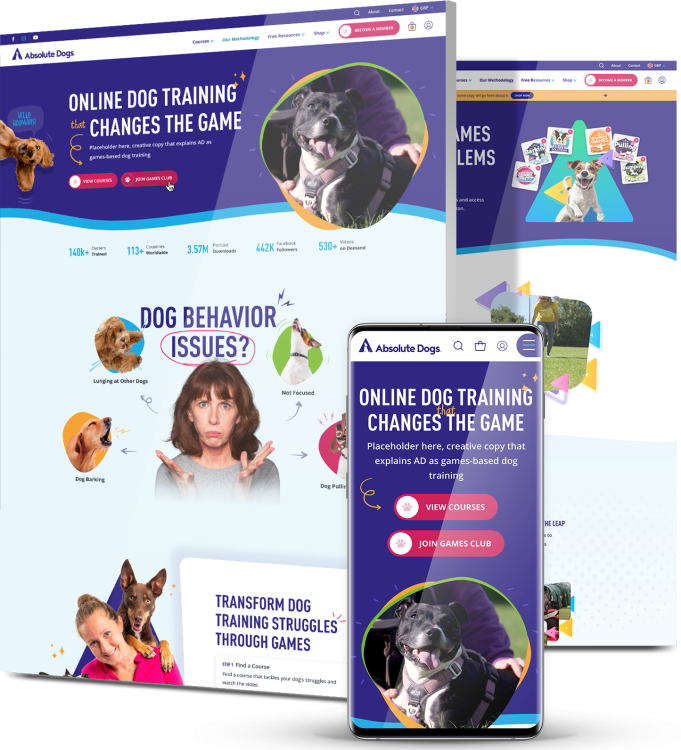
Absolute Dogs — An online dog training platform

We migrated the site from WordPress to Shopify and redesigned the eCommerce experience with clearer course and membership paths, optimized conversion funnels and a more streamlined checkout journey.

Within the first month, completed purchases increased 35.63% and add-to-cart actions jumped 77.88%.

Absolute Dogs portfolio image optimized

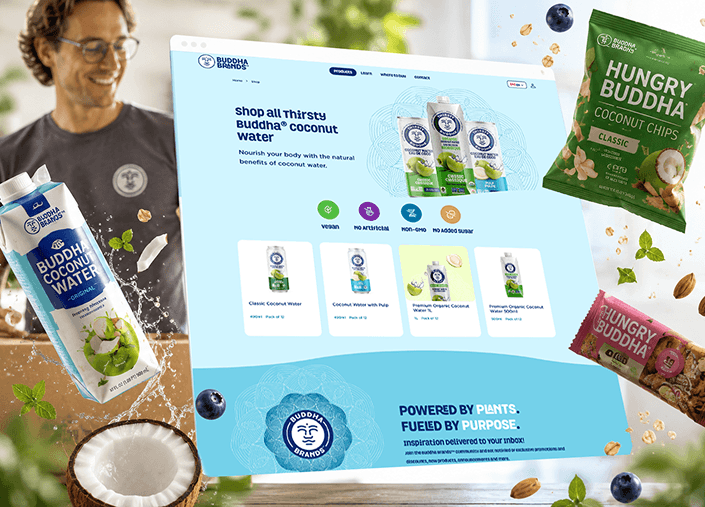
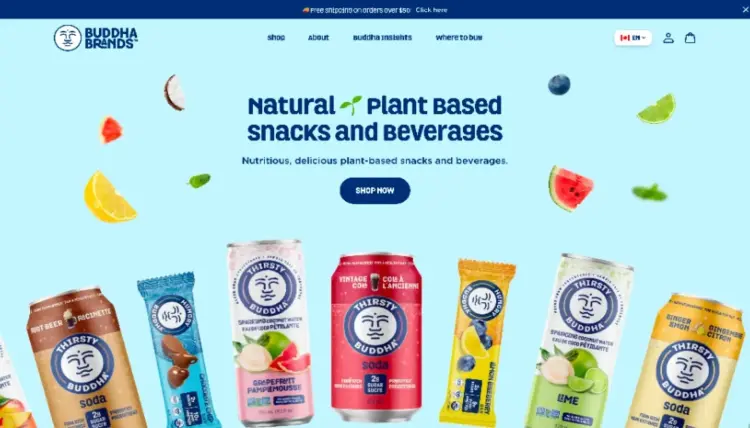
Buddha Brands — A plant-based food and beverage brand

We built a custom eCommerce platform with a vibrant, brand-led design, bilingual experience, SEO-focused site architecture and conversion-focused messaging.

Within 12 to 18 months, organic traffic grew roughly 86x and the number of keywords ranking in the top 100 grew 124x, according to Ahrefs.

Buddha-Brands-portfolio-image (2)

ANRKY Wheels — A luxury custom forged wheel brand

We rebuilt the site with a story-driven design, searchable gallery and configuration-focused navigation to better showcase its craftsmanship and growing catalog.

Since launch, organic traffic has increased ~40% and keywords ranking in the top three search positions have grown 15x, with domain authority also up ~20%.

ANRKY Portfolio

I would absolutely work with Digital Silk again on future projects and would recommend them to anyone looking for a team that knows what they are doing but is also made up of really good people.

leora conway
Leora Conway
VP of Development

Where Austin eCommerce Sites Lose Sales

A collage of brand books and promotional materials

TAX AT THE LAST SCREEN 

Texas sourcing is unusual and platform defaults get it wrong. A total that changes at the final step loses a customer you’d already won. 

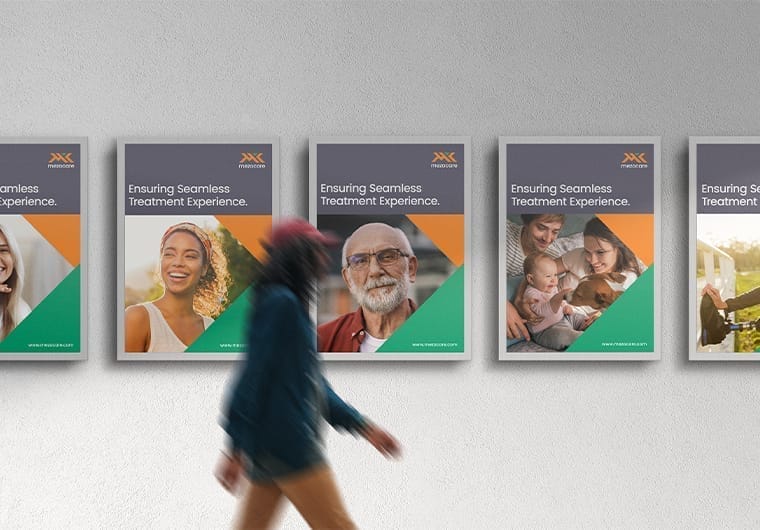
Healthcare branding campaign posters displayed on a wall with a person walking past the display

A BROCHURE WITH A CART BOLTED ON

Brands that grew through retail often add commerce to a site that was never built for it. The result serves neither the wholesale buyer nor the consumer. 

BRAND STORY IN THE WAY

A returning customer who knows what they want shouldn’t have to scroll past the founder’s story to reach a product. Intent should change what the page does. 
A healthcare professional speaks with a smiling older woman seated on a couch in a bright home setting

THE DROP THAT FALLS OVER 

Event-driven spikes are normal here. If a launch needs a developer, or the site slows under load, the spike becomes a missed quarter. 

Our Austin eCommerce Web Design Services

We design Austin eCommerce websites that turn product discovery into seamless, conversion-focused shopping experiences.

Conversion-led eCommerce Design

Product, collection, cart and checkout designed against conversion rate and average order value, tested rather than assumed. 

Checkout And Landed-cost Experience 

Tax and shipping surfaced early rather than at the final step, with Texas sourcing configured correctly for your actual business location. 

Brand-to-commerce Information Architecture 

Structures that carry a brand for first-time visitors and get progressively transactional as intent rises. 

Wholesale-to-DTC Transitions

Content modelling and IA for brands adding a direct channel to a site built for retail distribution — serving both audiences properly. 

Drops, Limited Inventory And Campaign Merchandising 

Timed launches, waitlists and restock flows the marketing team can run without a developer.

Platform Design For Shopify, Magento And WooCommerce 

Design that works with your platform’s real constraints.  

Request A Proposal
Drive More Sales With Digital Silk

"*" indicates required fields

This field is for validation purposes and should be left unchanged.
WHY DIGITAL SILK?

Why eCommerce Brands Work With Digital Silk 

Digital Silk's digital marketing and web design agency services

REVENUE-LED DESIGN

ShadePro grew revenue 155.8%. Absolute Dogs lifted purchases 35.63% in a month. We design against the commercial number. 

BRAND AND COMMERCE TOGETHER 

Consumer brands need both, and most agencies are good at one. ANRKY Wheels is what happens when a catalogue becomes a brand experience. 

PROJECT OWNERSHIP

One team from strategy to post-launch. Merchandising, checkout design and technical configuration decided together. 

Colorful icon of a presentation board

BUILT TO SCALE 

Architecture that survives a drop, a new channel and a category expansion. 

Our eCommerce Web Design Process

See the step-by-step process we follow for eCommerce web design.
  • 01
    Strategy & Discovery

    We start by understanding your products, customers, sales model and growth goals. We look at how shoppers discover your products, compare options and move toward purchase, along with where the current site creates unnecessary friction.

    We also review your tax and landed-cost configuration, including how Texas sourcing rules apply based on where your business is actually located. This helps us account for the real costs customers need to see throughout the shopping experience.

    We define the site’s objectives, assess the competitive landscape and establish the technical requirements for the project before design begins.

  • 02
    UX & Creative Design

    We map the shopping experience around the decisions customers need to make, from discovering products and comparing options to adding items to their cart and completing checkout.

    We develop the information architecture, page layouts and user flows before moving into the visual design. We also conduct a peak-load and drop-readiness review to make sure the proposed experience can support high-demand launches, limited inventory and campaign-driven traffic before development begins.

    From there, we create an interface that reflects your brand while keeping product discovery, purchasing and conversion at the center of the experience.

  • 03
    Website Development

    We turn the approved designs into a functional eCommerce store and connect the systems needed to run your online business.

    This can include product catalogs, search and filtering, shopping carts, checkout, payment gateways, shipping tools, inventory systems and third-party integrations.

    We build the platform so your team can manage products, pricing, promotions and other day-to-day content without relying on developers for every update.

  • 04
    Quality Assurance (QA)

    Before launch, we test the store from the perspective of both shoppers and your internal team.

    We go through product discovery, filtering, cart and checkout flows across different browsers and devices, while also checking forms, payments, integrations and responsive behavior.

    We look for anything that could interrupt a purchase, from a broken product variant to an unexpected checkout issue, and resolve it before customers encounter it.

  • 05
    Launch & Optimization

    Once everything is ready, we launch the store and closely monitor its performance as real shoppers begin using it.

    We track the metrics that matter to the business, including conversion rate, average order value, product engagement, cart activity and checkout drop-offs.

    We use these insights to identify opportunities for improvement and continuously refine the shopping experience after launch.

Austin eCommerce Web Design FAQs

How does Texas sales tax affect our checkout? 

More than most states. Texas has over 1,500 local taxing jurisdictions and uses mixed sourcing — businesses with a Texas location source local tax from their own address, while remote sellers source from the customer’s or elect a flat 1.75% local rate. Economic nexus starts at $500,000 in Texas sales. Platform defaults are generally built for destination-based states, so Texas configuration needs checking. The design consequence is showing the full landed cost early rather than surprising customers at the last screen. 

We sell wholesale and want to add DTC. Is that a redesign? 

Usually, yes — though not always a visual one. The work is in content modelling and information architecture: product content written for a retail buyer doesn’t convert a consumer, and you’ll need review, bundling, subscription and post-purchase infrastructure that a brochure site doesn’t have. Both audiences still need serving. It’s one of the higher-return projects a growing brand can run. 

Which platform should we be on? 

 It depends on catalogue complexity, how much you customise, and your team’s capacity. We design for Shopify, Magento and WooCommerce and will give you a straight recommendation rather than defaulting to whichever we prefer to build.

Can we run limited drops without a developer? 

That’s how we build them. Timed launches, waitlists, notify-on-restock and sensible behaviour when stock runs out mid-checkout, all controlled by your marketing team. In a city where demand concentrates around events, needing engineering support to launch a drop is a real constraint.

How do we balance brand storytelling against conversion? 

By letting intent decide. First-time visitors get context; returning customers who know what they want get a short path to the cart. That’s an architecture decision made in wireframes, not a copy-length argument. 

Do you also handle the build?

Yes — see our ecommerce development services. Design and build sit with the same team, which is why the checkout experience and the tax configuration don’t end up as separate people’s problems.

How long does an eCommerce site take? 

Typically 12–20 weeks depending on catalogue size, integrations and how much product content needs rewriting. Product content is the item most likely to move the date — we scope it early. 

Speak With Our eCommerce Web Design Team

Tell us your conversion rate, your average order value and where customers drop out. We’ll come back with an honest read on whether the problem is the design, the checkout, or the product content. 
Take The Smart Road To

Digitizing Your Business Growth

Follow Us

Start A Conversation With Us

"*" indicates required fields

This field is for validation purposes and should be left unchanged.