Babies R Us logo
Enchant Christmas's logo
G2 eSports logo
Grenco Science's logo
Miami Country Day School logo
HP logo
NYU logo
P&G logo
Sony logo
Xerox's logo

Hospitality Marketing Is A Calendar Problem, Not A Volume Problem

  • 01
    Your Product Is A Date, Not A Room 
    Most marketing sells a product that keeps. Hospitality sells a product that expires on a schedule, and every unit is a different product with a different price. 

    A Tuesday in February and a Saturday in July are not the same room. They have different buyers, different competitive sets, different rates and different amounts of natural demand.

    Averaging them into one campaign produces the most common failure in hospitality marketing: you spend money promoting the dates that were going to sell anyway, and almost nothing moves on the dates that weren’t. 

    The report reads well either way. Bookings up, cost per booking down, everyone pleased. 

    Meanwhile the shoulder nights, the midweek gaps and the low season are exactly where they were, and the incremental revenue is close to zero because you paid to acquire guests who had already decided to come. 

    The fix is unglamorous and it changes everything downstream. Marketing has to be planned against the actual occupancy and rate calendar — which nights are soft, how soft, at what rate and how far out. 

    The unit of work is a need date. Budget follows the gaps rather than the calendar month. Creative changes by date type. Geography changes with lead time, because someone booking three months out lives further away than someone booking Thursday for Friday. Measurement stops at revenue on the dates you were targeting, not total bookings. 

    The same logic runs through food and beverage, and most restaurant marketing ignores it just as thoroughly. Your inventory is seats multiplied by turns multiplied by service periods, and it expires every night at close. 

    Saturday 8pm sells itself. The commercial question is Tuesday, and the early seating, and the bar at 5pm. When Headwaters went from struggling to fill to fully booked across the week, the win wasn’t the weekend. 
  • 02
    The Booking Window Collapsed, So You’re Now Running Two Programs At Once 
    STR’s data describes a market that has pulled sharply forward: roughly two thirds of rooms booked in the final month, close to a third in the final week.

    Leisure demand in particular has barbelled — people book well in advance, or they book the week they travel, with less in between. 

    That means a single funnel is the wrong shape. You have two audiences buying the same inventory with almost nothing in common: 

    The early booker is planning. They’re comparing destinations as much as properties, they respond to packages and reasons to commit, and they are reachable through the channels you already own — email, loyalty, past guests.

    This is where owned audience genuinely outperforms paid, and where a property with a real database has an advantage no competitor can buy. 

    The last-minute booker is deciding. They’re mobile, geographically closer, often weather-driven or event-driven, and frequently not comparing at all — they’re checking availability.

    Reaching them means being present and bookable at the moment of intent, with pricing and availability accurate to the hour.

    It also means the ability to move spend within days rather than within quarters. 

    Operators are already restructuring around this. Evans Hotels described the split plainly at a recent industry panel: email and loyalty for the early bookers, mobile for the last-minute ones. Two programs, two rhythms, one set of rooms. 

    The practical consequence for an agency relationship is a bit uncomfortable, so it’s worth being direct about it: a hospitality media plan set quarterly and left alone will underperform. 

    The compression means the money has to be movable inside the month, sometimes inside the week, in response to how the calendar is actually filling. That’s an operating model, not a campaign.  


  • 03
    Marketing Has To Be Wired To The Rate Calendar — And Usually Isn’t 
    Somewhere in your business, someone adjusts rates daily against pickup and pace. In most hospitality organizations, the marketing team does not see that work, and the two functions publish into the market independently. 

    The results are predictable and common: paid campaigns still running against dates that sold out; a promotion pushing a rate that revenue management moved last week; email blasting an offer for a weekend already at 96%; social spend concentrated in the high season because that’s when the marketing calendar says to be visible. 

    Every one of those is money spent to do nothing, and none of them show up as a failure in a marketing report. 

    Connecting the two isn’t complicated, but it does have to be deliberate. Marketing needs visibility of pace and pickup by date, not just last month’s occupancy. Campaign structure needs to be segmentable by date range so spend can be steered toward the gaps.

    Someone needs to own the weekly conversation between revenue and marketing, and it needs a standing slot rather than an escalation.

    And reporting needs to answer the question revenue management actually asks — did we move the nights we needed to move — rather than the one marketing prefers to answer. 

    There’s a growth angle in this too, not just an efficiency one. STR’s read on current demand shows the bridge days expanding: Thursdays and Sundays growing around 3% and 3.5% respectively, ahead of other weekdays at 1.5% to 2.5%.

    Pivot Hotels & Resorts describes treating shoulder days as their own micro segment rather than sorting everything into weekday or weekend. 

    That is a marketing opportunity sitting in plain sight, and it’s invisible to any program that plans by month. 


How We Work With 
Hospitality Brands

A collage of brand books and promotional materials

WE START FROM YOUR CALENDAR

Not your target audience. Which nights are soft, how far out, at what rate. Need dates are the unit of work — everything else follows from them. 

Healthcare branding campaign posters displayed on a wall with a person walking past the display

WE RUN TWO PROGRAMS, NOT ONE 

Owned channels and packages for the planners. Mobile presence and movable spend for the third of guests who book inside the final week. 

WE SIT WITH REVENUE MANAGEMENT 

Campaigns segmented by date range so spend can steer toward gaps, and a standing weekly conversation about pace instead of a quarterly readout. 
A healthcare professional speaks with a smiling older woman seated on a couch in a bright home setting

WE REPORT ON THE RIGHT DATES

“Bookings up 30%” is not a result if the increase landed on nights that were already full. We report revenue against the dates we were hired to move. 
our work

Hospitality Marketing Results

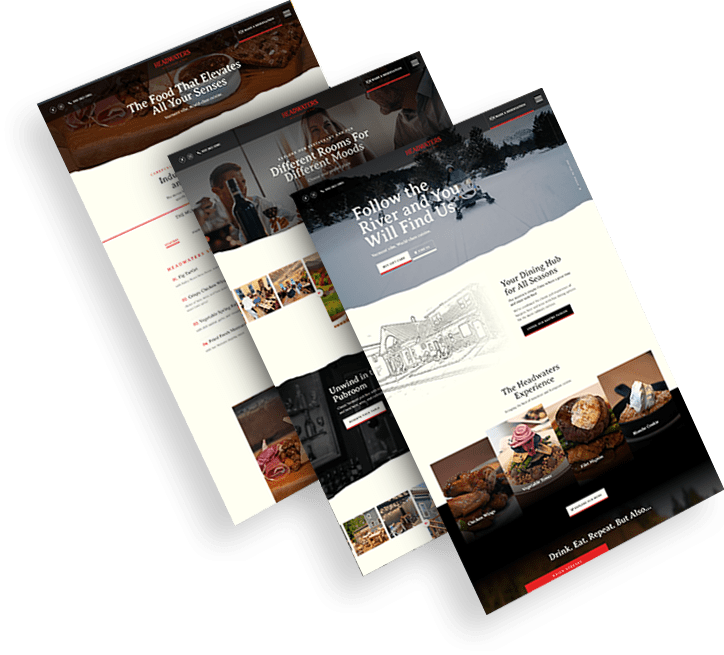
Headwaters – A new restaurant that turned local demand into 600+ reservations

Headwaters needed to establish itself as a new culinary destination while reaching local diners and giving them an easy way to book.

Digital Silk combined a new website and streamlined reservation experience with targeted PPC campaigns across Google and social media, including location-based targeting and remarketing.

In just two months, Headwaters generated 605 table reservations, 623 location searches and a $3.52 CPA, with the restaurant fully booked every day of the week.
headwaters-trio-flipped

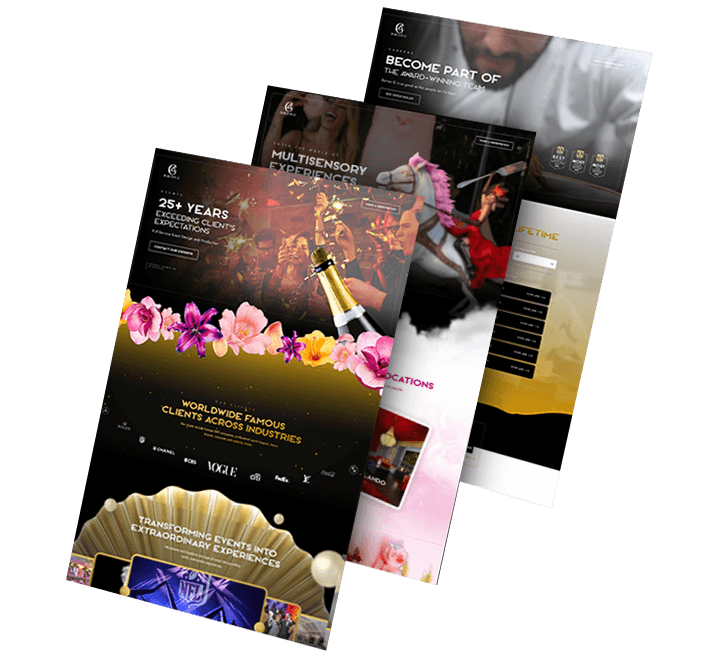
Barton G – A restaurant and events brand that grew its digital reach by 207%

Barton G needed a stronger digital presence to stand out in the competitive Miami and L.A. markets and promote its restaurant, events, catering and brand activation offerings.

Digital Silk combined a website redesign and conversion funnel optimization with multi-channel marketing across PPC, paid and organic social media, and email, while rebuilding the brand’s digital advertising and tracking infrastructure.

Within six months, website visitors increased 207% and engagement jumped 334%, giving Barton G a stronger foundation for attracting and converting customers.
Barton-G-trio-flipped-1

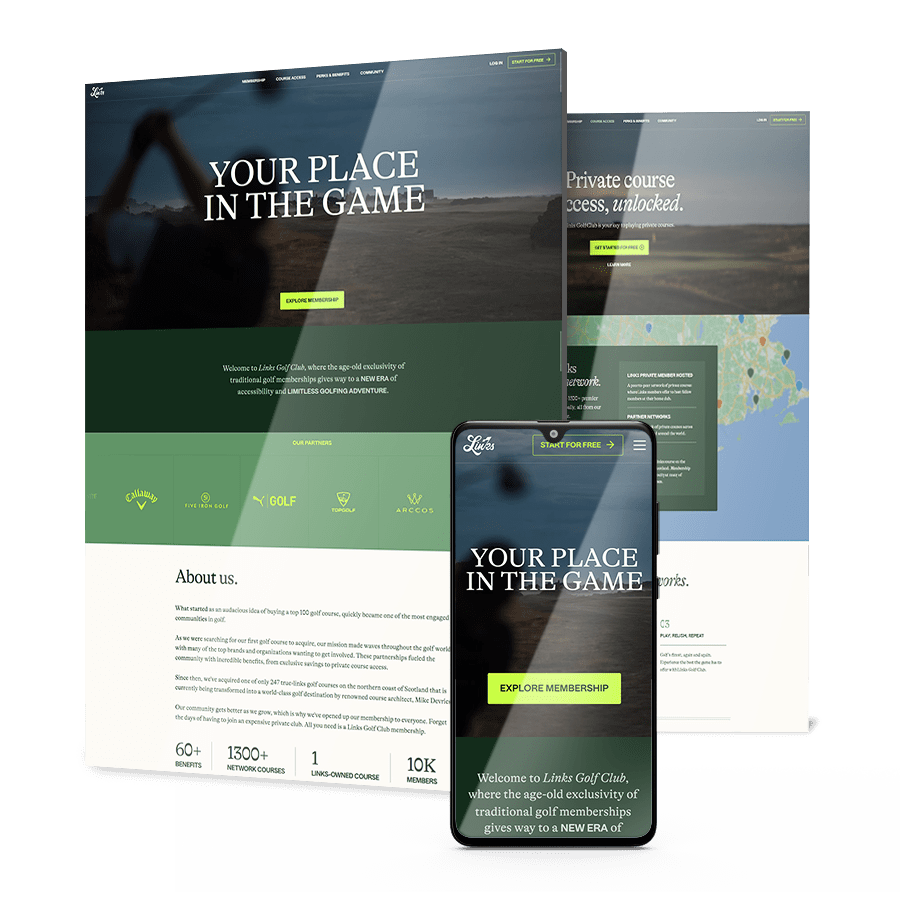
Links Golf – An SEO strategy that took a new golf brand to Google’s #1 spot

Links Golf needed to build organic visibility quickly despite competing with Wikipedia and established sites for a highly competitive search term that matched its brand name.

Digital Silk developed an ongoing SEO strategy combining 30 backlinks per month, six optimized articles per month and continuous technical optimization to build authority and improve rankings.

In less than six months, Links Golf reached #1 on Google, increased its domain rating by 38 points and gained 5,000 backlinks, helping drive membership sales through organic search.
Links-Golf-collage

Vacation Homes of Key West – A CRO-led rebuild that made the booking journey easier to navigate

Vacation Homes of Key West, a boutique Florida vacation rental company, needed to reduce friction across its booking journey, particularly for mobile users. We reworked the experience around clearer property information, simplified booking flows, mobile-friendly interactions and familiar UX patterns borrowed from leading vacation rental platforms.

Following the March 2025 CRO implementation, average engagement time increased 1,602%, engagement rate rose 17.47%, and engaged sessions increased 5.18% between March and May 2025.
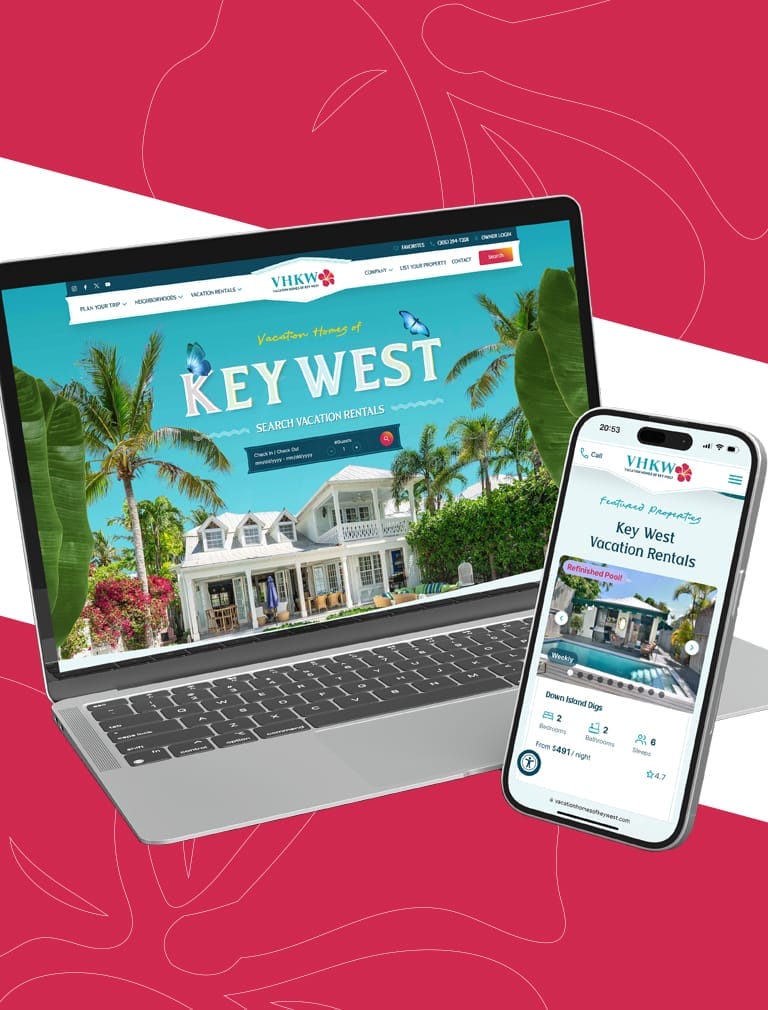
Vacation Homes of Key West website design on desktop and mobile devices

I would absolutely work with Digital Silk again on future projects and would recommend them to anyone looking for a team that knows what they are doing but is also made up of really good people.

leora conway
Leora Conway
VP of Development

Our Hospitality Digital Marketing Services

Digital Silk's digital marketing and web design agency services

Need-date Campaign Planning 

Media planned against your occupancy and rate calendar, structured by date range so budget can be steered toward the nights that aren’t filling. 

Paid Search And Paid Social 

Search for in-market intent, social for demand creation and last-minute reach, with the flexibility to move spend inside the week — the mix behind Headwaters’ $3.53 CPA. 

SEO And Content 

Destination, neighborhood and experience content that earns visibility months before a booking, plus the technical work that makes it rank. Links Golf reached number one against a generic-term competitor set in under six months. 

Colorful icon of a presentation board

Email, Loyalty And Past-guest Programs

The channel that reaches early bookers best and costs least. Segmentation by stay history, season and date preference rather than by generic list. 

Booking Journey Conversion Work

Reducing friction between interest and confirmation, on mobile first. Vacation Homes of Key West is the reference point.

Local Presence And Map Visibility 

Google Business Profile, local search and review presence for properties and venues where the search is geographic and the decision is fast. 

Colorful star and crescent icon

Revenue And Marketing Alignment

Reporting built around pace and pickup by date, and the standing weekly rhythm that keeps campaigns from promoting sold-out inventory. 

Stylized package icon with tag

Multi-property Programs

Allocation across properties by need rather than by size, with local execution and group-level reporting.

Our Hospitality Digital Marketing Process

Take a look at our hospitality digital marketing process.
  • 01
    Strategy & Discovery

    We start with the numbers that tell us when demand actually matters.

    Before planning campaigns, we review your occupancy and rate calendar and sit down with whoever owns pricing.

    We look at 12 months of pace data to identify soft dates, booking windows and periods where additional demand could have the biggest impact.

    From there, we assess your current channel mix, past campaign performance, competitors and revenue goals. The booking calendar becomes the foundation for where and when your marketing budget needs to work hardest.

  • 02
    Campaign Planning

    We build the media plan around your property’s actual booking windows rather than treating every month the same.

    Campaigns are mapped by date range, demand period and booking window, with messaging and targeting adjusted around the type of guest the property needs to attract at each stage.

    We also keep part of the budget in reserve so it can be deployed when a soft period emerges or a booking window needs additional support, rather than committing the entire budget in advance.

  • 03
    Campaign Development & Launch

    We turn the strategy into campaigns across the channels that make sense for your property and target guests.

    This can include paid search, paid social, display, remarketing, email and other digital channels, with creative and messaging tailored to the offer, destination and booking period.

    Campaigns are connected to the appropriate booking paths and tracking so we can see not just who clicked, but what happened after they arrived.

  • 04
    Performance Monitoring

    We monitor campaigns against the dates and revenue goals they were designed to influence.

    We look at booking pace, conversion activity, cost efficiency, audience response and performance across individual demand periods. If a campaign is underperforming or a soft date needs more support, we adjust the allocation rather than waiting for the next reporting cycle.

    This gives the marketing team room to respond to changes in demand while there is still time to influence bookings.

  • 05
    Reporting & Optimization

    We report on the numbers that matter to the property first.

    Revenue generated on target dates comes before total bookings. A campaign can produce more reservations while still missing the dates or rate objectives that matter to the business, so we use revenue on target dates as the primary measure of performance.

    We then use booking and campaign data to refine future spend, shift budget toward stronger opportunities and build a clearer picture of what actually drives revenue for the property.

Hospitality Digital Marketing FAQs

Our occupancy is already strong. Why would we spend on marketing? 

Because occupancy is an average and you don’t sell averages.

A property running at 78% for the year usually has a handful of near-sold-out periods carrying a lot of soft midweek and shoulder inventory, and that soft inventory is where incremental revenue lives.

The question isn’t whether you need more guests overall — it’s whether Tuesday in November is where you want it to be. 

How far ahead should we be marketing? 

Both further out and much closer in than most plans assume.

STR’s data shows roughly two thirds of rooms booked inside the final month and close to a third inside the final week, while leisure demand has split toward booking either well in advance or the week of travel. 

That’s two audiences, not one, and they need different channels — owned and email for the planners, mobile presence and movable spend for the rest. 

How does this relate to direct bookings and OTAs? 

It’s adjacent, and it’s the subject of a different page. In short: everything here makes direct booking more achievable, because a program that targets the dates you actually need is a program whose value you can measure without an intermediary. 

The full commission argument lives on our hospitality web design page, which is where that decision really gets made. 

Can you work with our revenue management team? 

That’s the intention. The most common failure we see in hospitality marketing isn’t bad creative, it’s marketing and revenue management operating without visibility of one another — campaigns running against sold-out dates, promotions contradicting a rate change from last week. 

We’d rather build the weekly rhythm between the two functions than deliver campaigns into the gap.   

We’re a restaurant, not a hotel. Does any of this apply? 

Directly. Your inventory is seats times turns times service periods, and it expires nightly — the same perishability, on a shorter clock. The commercially useful work is almost never Saturday at eight. 

It’s the early seating, midweek, and the bar. Headwaters is the example: 605 reservations in two months, $3.53 CPA, and a restaurant that filled across the week rather than just on the nights that were already busy. 

What should we actually measure? 

Revenue on the dates you were targeting, first. Then cost per acquisition, pace against the same period last year, and the share of bookings that arrived through channels you own.

Total booking volume and site traffic are diagnostic, not results — an increase on nights that were already full is a rounding error dressed up as a win. 

How quickly does this work?

Faster than most categories, because the buying cycle is short and the inventory turns nightly. Paid campaigns aimed at near-term dates can move pickup within weeks; Headwaters’ results came inside two months.

SEO and content run longer — Links Golf took under six months to reach number one, which is quick for that discipline but not instant. A sensible program uses paid to move the dates in front of you while organic builds the demand that shows up next season. 

We need the website fixed first. Where do we start?

Often that’s correct, and there’s a specific version of it in hospitality: if the booking journey leaks, paid traffic makes the leak more expensive.

Vacation Homes of Key West is the sequence done properly — fix the booking path, then market into it. Start at hospitality web design. 

Talk To Our Hospitality Marketing Team

Send us your occupancy calendar for the next six months, or your covers by day part. We’ll tell you where the revenue actually is before we tell you what we’d charge. 
Take The Smart Road To

Digitizing Your Business Growth

Follow Us

Start A Conversation With Us

"*" indicates required fields

This field is for validation purposes and should be left unchanged.