- Services
- Case Studies
- Work By Industry
- Digital Trends
- Press
- About
- Contact


Modula makes automated storage systems, but struggled with online visibility and drew too many unqualified leads against a crowded field.
We built a full marketing strategy across SEO, PPC on Google and Bing, and social, targeting buyers by industry and role with relevant content.
Over 18 months organic traffic grew 1,025% and conversions rose 37%.
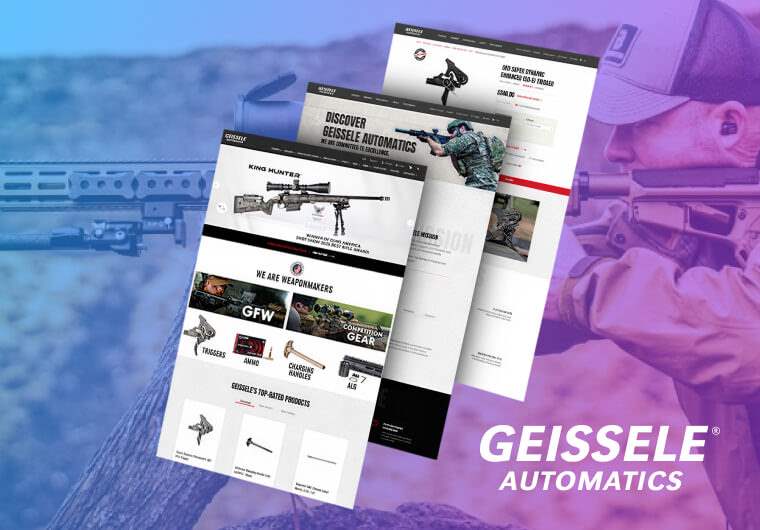
Geissele, a precision firearms manufacturer, leaned heavily on high-intent sale periods and needed to nurture warm leads year-round.
We rebuilt the email program around user intent, with segmented campaigns, automated flows and an upsell strategy.
Email revenue doubled year over year, with a single holiday campaign lifting sales 40%.
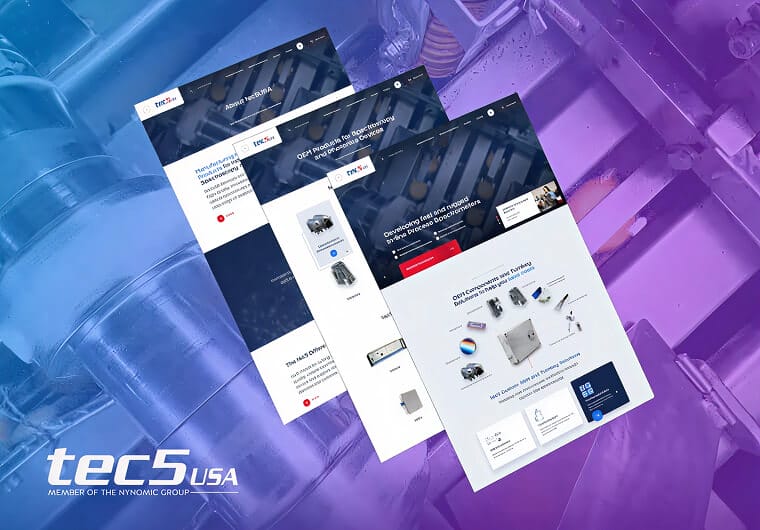
Tec5USA makes in-process spectrometers, but a dated, unoptimized site buried its range and left organic visibility low.
We simplified the architecture, refined the conversion flow and wrote SEO-rich content that explains the technology to a technical audience.
Organic traffic rose 230%, average sessions stretched past three minutes and the site reached top-10 rankings within three months.
Only if the product meets the standard: final assembly or processing in the U.S., all significant processing in the U.S., and all or virtually all components U.S.-made and sourced. If one meaningful component is imported, an unqualified claim is a risk — the FTC settled three cases in a single April 2026 sweep, the largest at $625,000, and Executive Order 14392 directs continued enforcement priority.
The better move is usually a qualified claim: “Assembled in USA,” “Made in USA of U.S. and imported parts,” or a specific percentage. Specific claims tend to read as more credible anyway. This is a legal question in the end, and your counsel should sign off — but the claim gets written in marketing, so it should be scoped there from the start.
It works differently. The reason isn’t the length of the cycle, it’s what happens at the end of it: once you’re specified into a design, you generally stay there for that product’s production life, because changing you means re-validation.
That makes a single acquisition worth years of orders, which justifies a level of investment that a short-cycle business couldn’t defend. Modula’s program ran 18 months to reach 1,025% organic growth. Judged at month four it would have looked unremarkable.
Only if it’s designed as though the channel doesn’t exist. Route inquiries by territory, define what a qualified handoff means, give reps co-brandable material, and agree what reporting comes back.
Done that way, demand generation makes your channel more productive and they’ll ask for more of it. The genuine risk isn’t marketing itself — it’s a “Buy Direct” button appearing without warning.
If engineers specify your parts, yes. A downloadable model is the highest-intent action on most industrial sites, because a model that lands in a CAD assembly tends to become the part on the drawing and then a line on the bill of materials.
Vendors in this space publish very high download-to-purchase figures; treat those as vendor claims rather than independent research, but the underlying mechanism is sound and worth acting on. The practical point is friction: if getting a STEP file requires a form and a wait, a competitor whose file was one click away gets specified instead.
Change what you measure. When your realistic market is a few hundred companies, session counts don’t mean much.
Track which named accounts engaged, which requested documentation, which downloaded models, and which reached your channel — then work with the channel on closed-loop reporting so cost per order becomes visible over time. It’s slower to build than a traffic dashboard and considerably more useful.
Frequently, yes, and it’s a mistake to treat it as separate from digital. Trade publication audiences and show attendee lists are among the cleanest targeting inputs available in this sector, and the follow-up after a show is digital work.
The question isn’t print versus digital — it’s whether the badge scans get a sequence built for them or a single generic email.
Three things. The buyer splits into a specifier and a purchaser with different behavior. The conversion event is often a technical file rather than a form.
And the claim with the most commercial value is federally regulated. If your agency’s plan for you would work unchanged for a software company, it isn’t a manufacturing plan. For the general version, see our B2B lead generation services.
Often that’s the correct order — you can’t market a site that hides its own products. tec5 USA’s 230% organic traffic increase came from exactly that sequence: rebuild the product architecture, then optimize and write for it.
Start at manufacturing web design and treat marketing as the phase that follows.