
Enterprise Web Design Services
- +1,341% revenue for IT training provider Learning Tree
- +37% conversions for automated storage manufacturer Modula
- +115% converting users a month for insurtech Zywave
- +20% sales for global printing technology company Xerox
- All numbers client-verified.


"*" indicates required fields









Built For Scale, Governance & Global Teams
- Multi-Site & Multilingual Platforms
- Enterprise CMS & Integrations
- Security, Speed & Governance
Enterprise sites rarely have one audience. Buyers, partners, investors, job candidates and customers in several regions all need to find their part of the business quickly. We structure the site around those journeys instead of your org chart, so each visitor gets a clear path to the next step.
Behind it, we build on a modular CMS, connect your CRM, ERP and other business tools, and test for security and speed before anything goes live.

Websites For Global Brands & Complex Organizations
Explore our work across energy, manufacturing, insurance and entertainment.
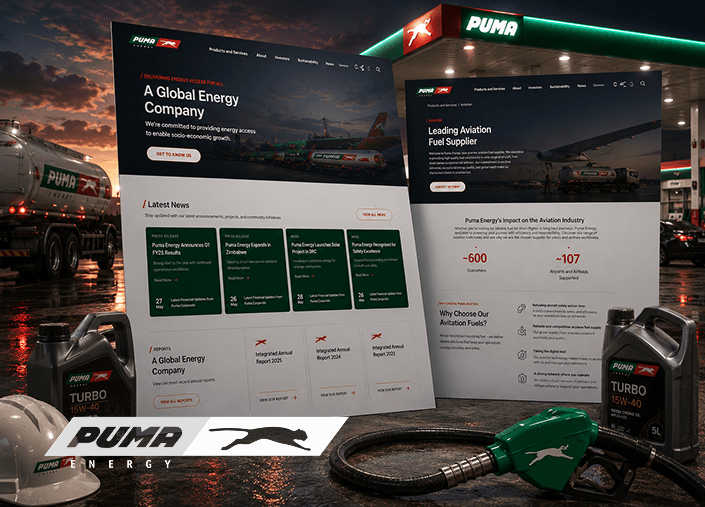
Puma Energy – A Responsive Redesign For A Multinational Energy Group
Puma Energy serves B2B and B2C customers worldwide, but its site had inconsistent branding, no tailored journeys and weak mobile performance.
We introduced a modern visual system, user journeys built for each audience and an SEO foundation based on keyword research.
Just 3 weeks after launch, direct traffic grew 32.1% and user engagement rose 63%.
VigilantIoE – Outcome-Led Messaging For Critical Infrastructure Buyers
VigilantIoE builds monitoring, predictive analytics and managed operations platforms for healthcare, government and industrial enterprises, but its site didn’t explain what they do.
We rewrote the messaging around operational outcomes and restructured navigation so buyers go straight to monitoring, insights or managed operations.
Engineers and procurement teams now have a clear route from research to a demo request.

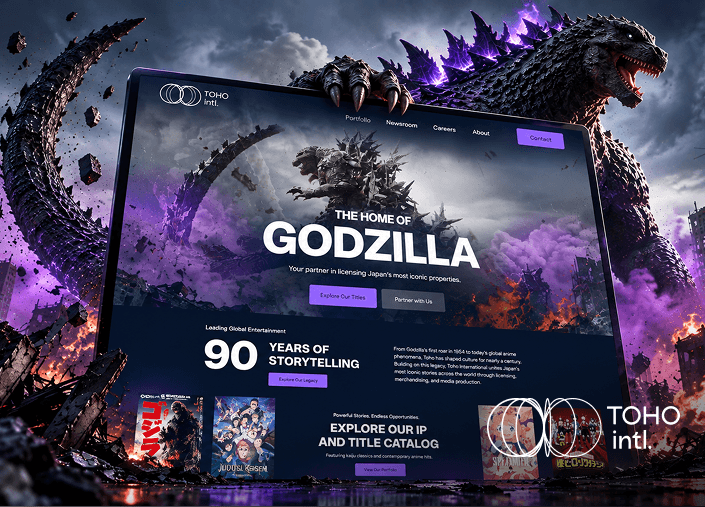
Toho International – A First Corporate Site For A Global Licensing Business
Toho International manages licensing and merchandising for Godzilla and major anime properties, but had no corporate website for partners, vendors or candidates to check.
We ran discovery, strategy and site planning first, then built a portfolio of the full IP catalog, licensing inquiry paths and a careers section.
Each of the seven core pages maps to a business goal set in discovery.
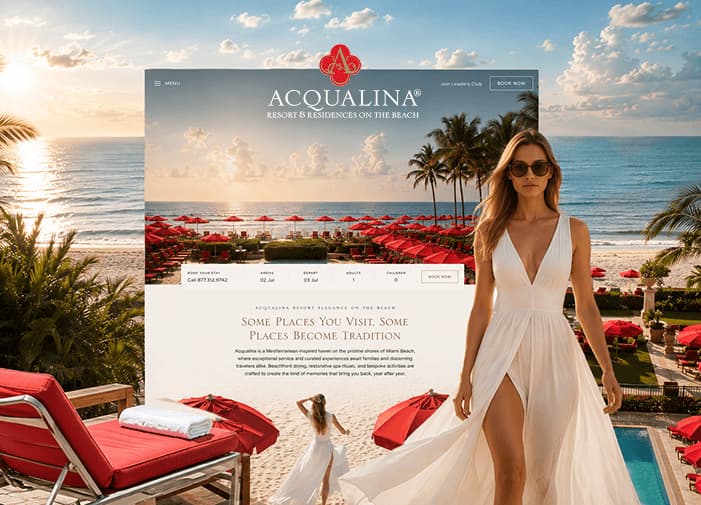
Acqualina – Hospitality And Residences Managed On One Custom CMS
Stays, residences, dining and spa operate as separate businesses at this Forbes Five-Star resort, each with its own audience.
We unified all four into one on-brand platform with integrated booking, managed by the resort’s team on a custom CMS.
The resort later brought us on for ongoing search and marketing work.
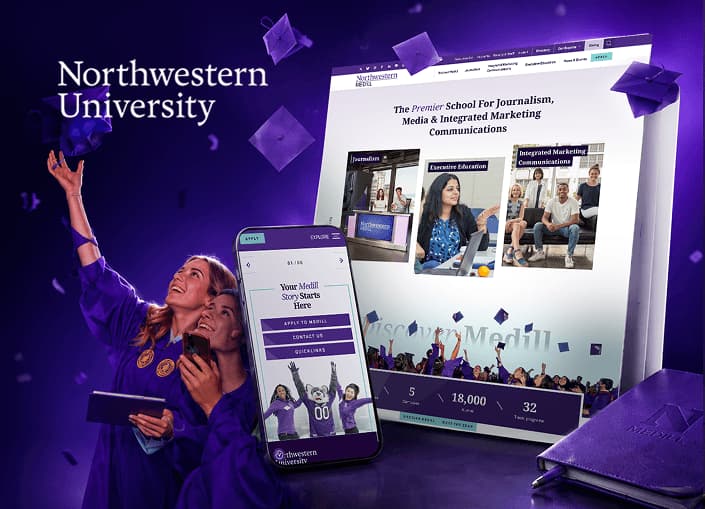
Northwestern Medill – Five Audiences, One University Platform
A century-old journalism and marketing school was serving undergraduates, graduate students and executive learners through one site converting at 0.60%.
We benchmarked six peer schools, built a school-wide value proposition and redesigned the site with five dedicated audience journeys.
A scalable template system now supports journalism, IMC, executive education, news and faculty profiles.
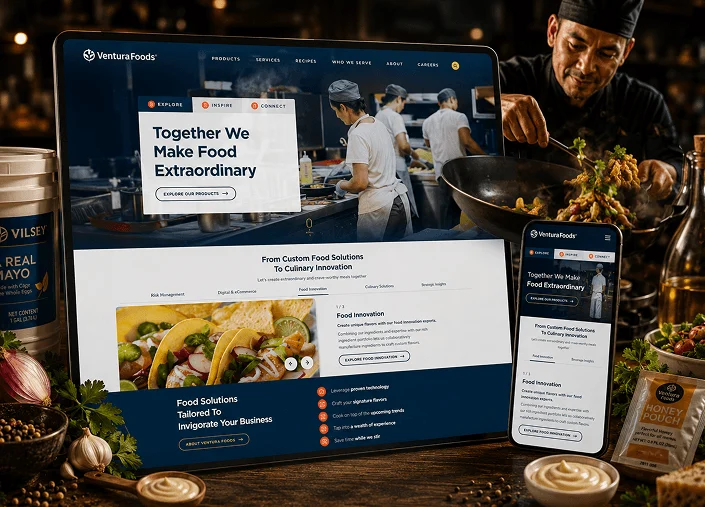
Ventura Foods – Video Campaigns At National Scale
Reaching foodservice decision-makers at scale was the goal, on a $12K monthly media budget.
Our team built Customer Match audiences in Google Ads and restructured the brand’s YouTube channel for discovery.
The channel grew to more than 180,000 subscribers in six months, most of them earned organically.
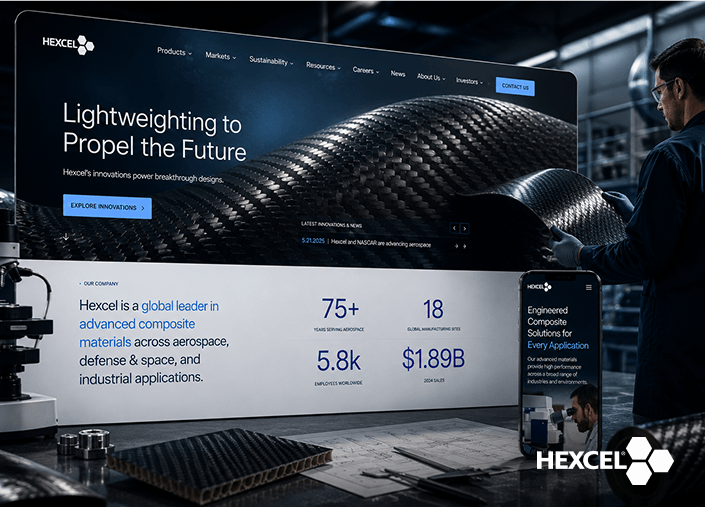
Hexcel – A Scalable CMS For A Global Advanced Materials Leader
Hexcel’s engineers, procurement teams and partners struggled to find materials, technologies and specifications on the old site.
We reorganized the product and technology architecture, added clearer content pathways and built it on a scalable CMS with flexible modules.
Comparing Feb 6–Mar 13, 2026 to the previous period, active users grew 132% and engaged sessions 76.52%.
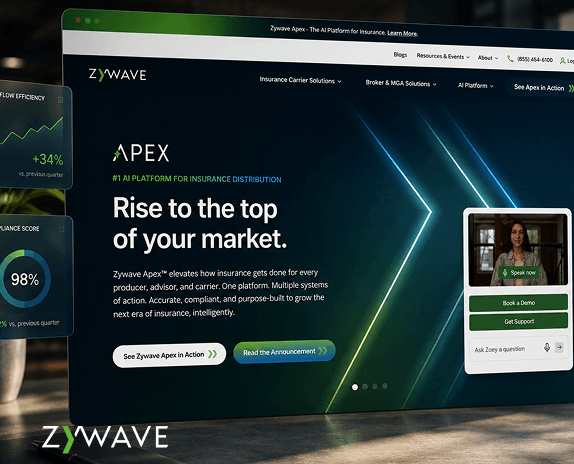
Zywave – Audience Hubs That Turn Search Traffic Into Leads
The Milwaukee insurtech ranked well, but 20+ solutions in dense menus kept brokers, insurers and service providers from converting.
Our CRO-driven redesign moved the site from product-first to audience-first, with dedicated hubs, product pages and a new demo experience.
Within five months, monthly lead form submissions rose about 135% and converting users over 115%.
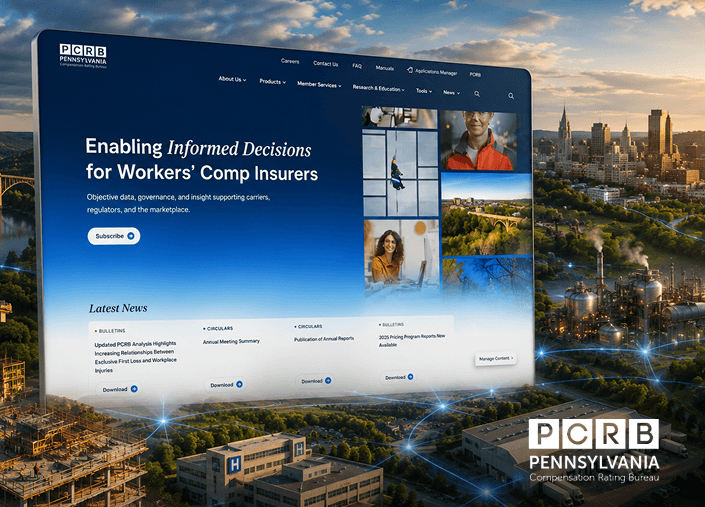
PCRB – An Enterprise CMS For A Workers’ Comp Regulatory Authority
Pennsylvania’s workers’ compensation rating bureau kept its rate filings, manuals and circulars in static PDFs that members had to search by hand.
We rebuilt the information architecture around carriers, employers and agents and moved 6,000+ documents into a searchable digital library.
Running on enterprise WordPress, the team now publishes and governs content without developer support.
Very hands-on approach, not a typical marketing firm. [Their] approach [is] as if they become part of your internal team to make sure all deliverables are met.

What We Build For Enterprises
From governed content platforms to the integrations behind them, we create every part of a website that large organizations rely on every day.
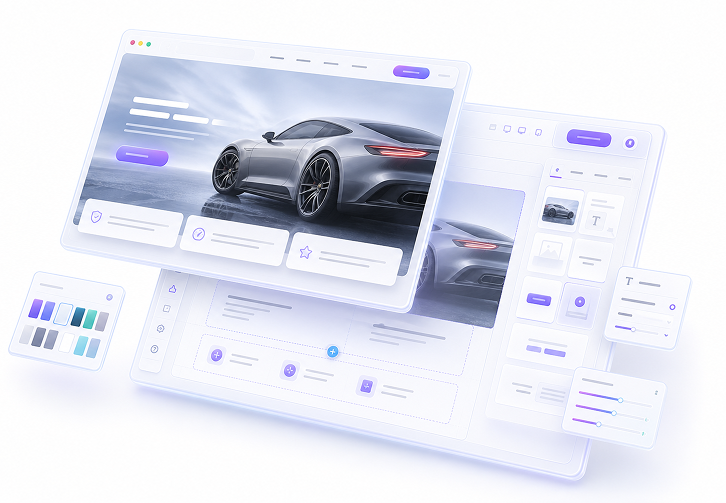
Every team publishes, the brand stays consistent.
One platform, every market.
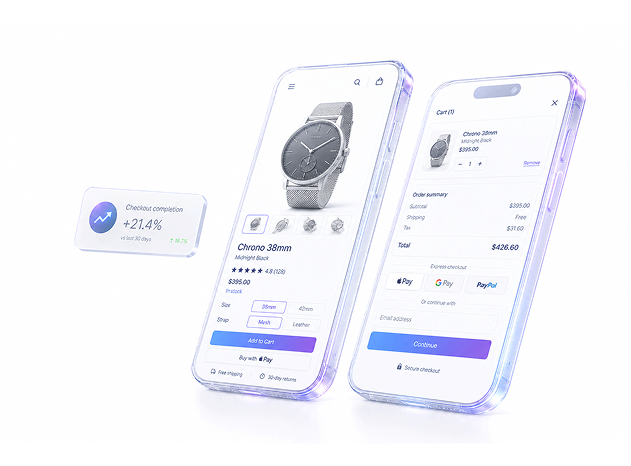
The site should talk to the rest of your stack.
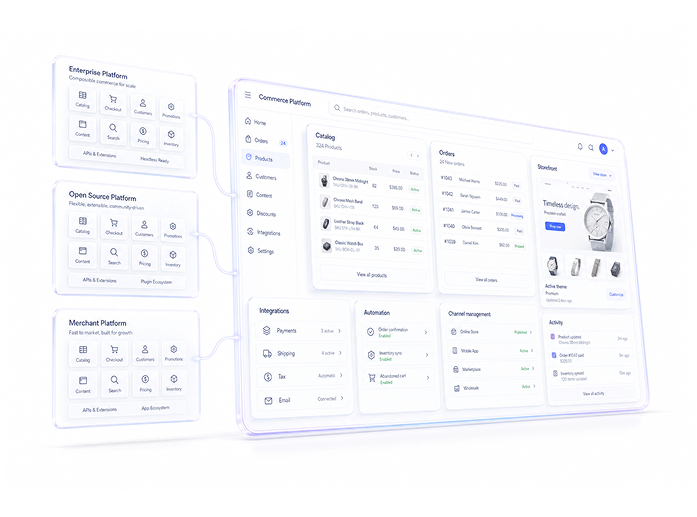
Procurement will ask, so we plan for it.
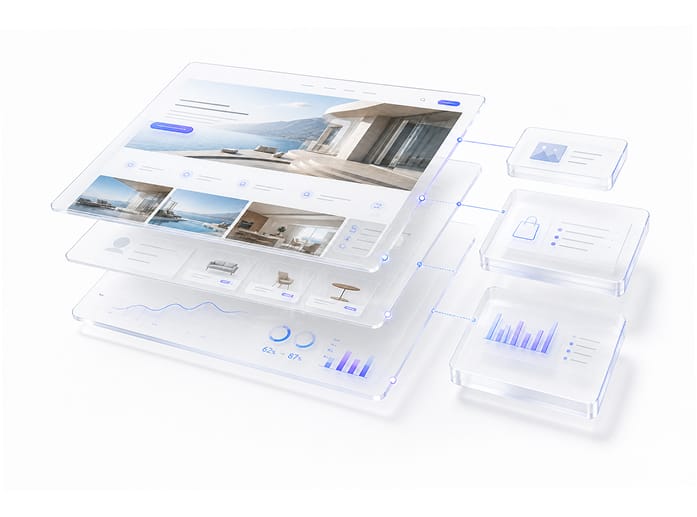
Large sites don’t have to be slow.
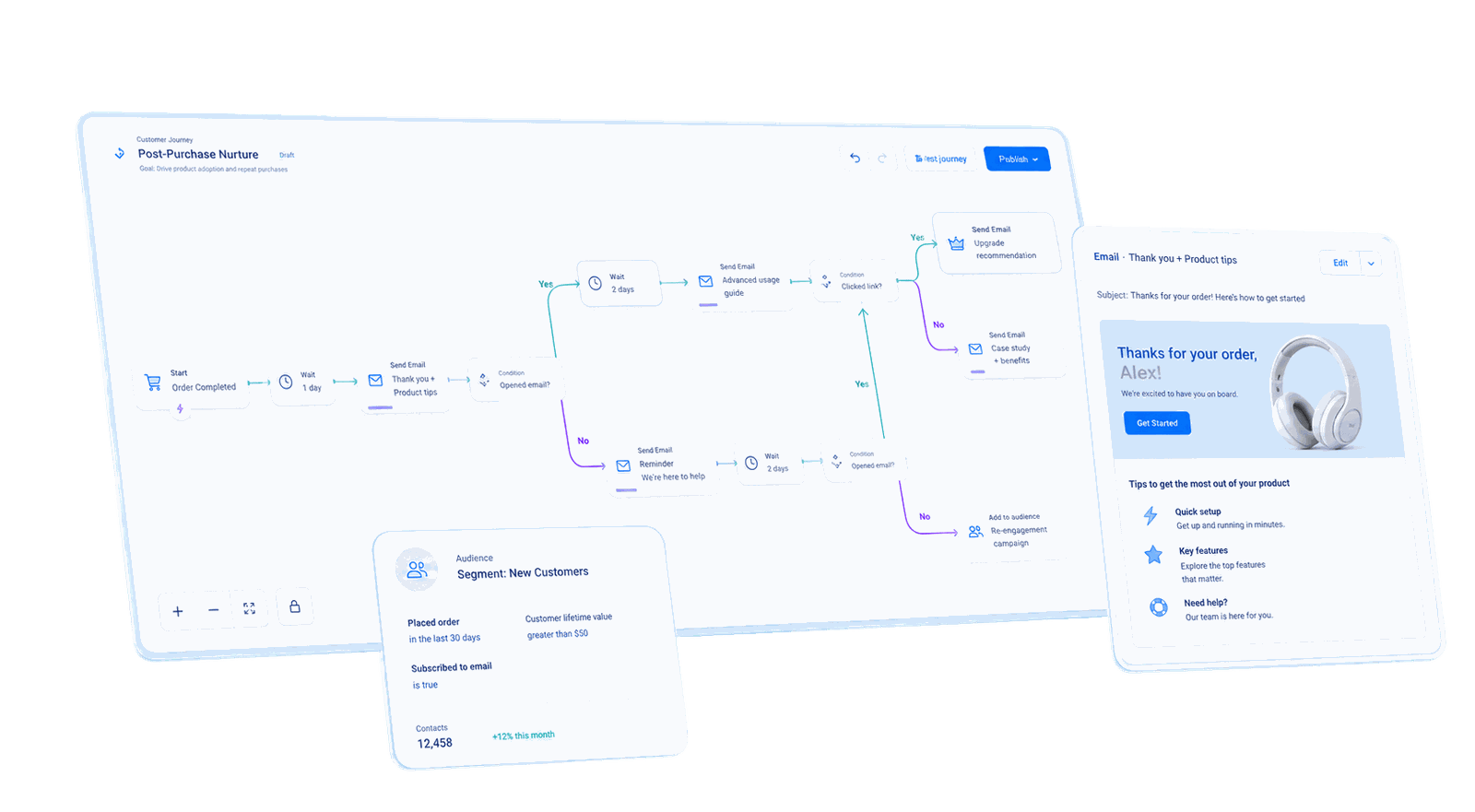
Our Process For Enterprise Web Design
Projects at this scale involve more stakeholders, systems and approvals. This is how we keep everyone aligned and the launch on schedule.
Alignment

Every department gets heard early.
We review your goals, current site, analytics, content and tech stack with your team, then agree on KPIs before design starts.
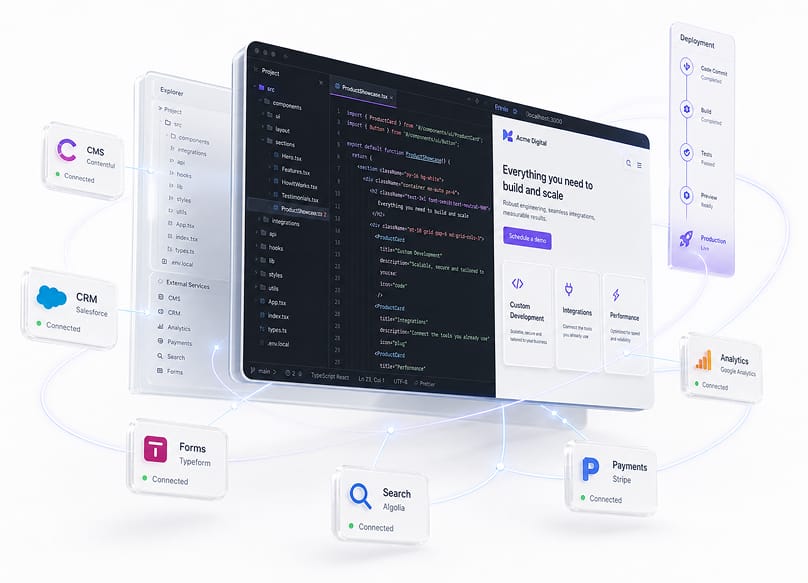
Content Model

A structure that grows with the business.
We plan the sitemap, templates, content model and governance rules, covering regions, languages and business units.
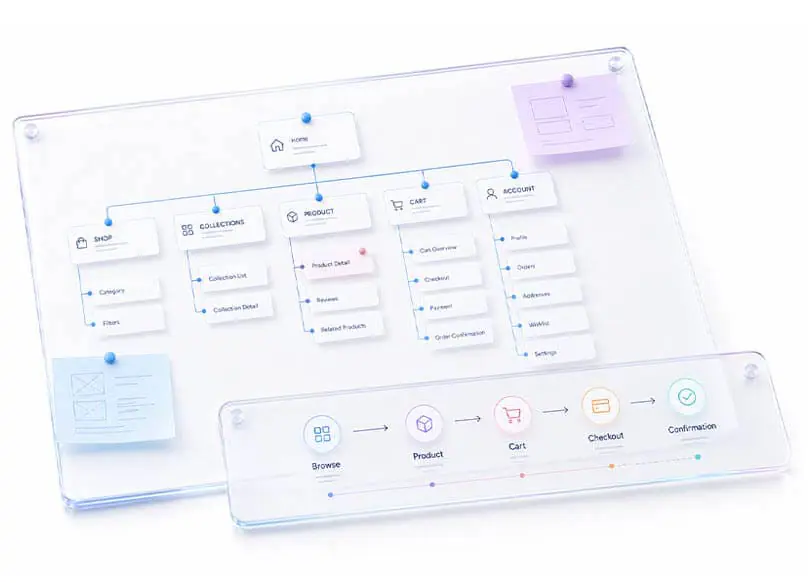
SEO

Clear copy for every audience.
Our strategists write messaging for buyers, partners, investors and candidates, backed by keyword research and a URL plan that protects existing rankings.
Design System

Components, not one-off pages.
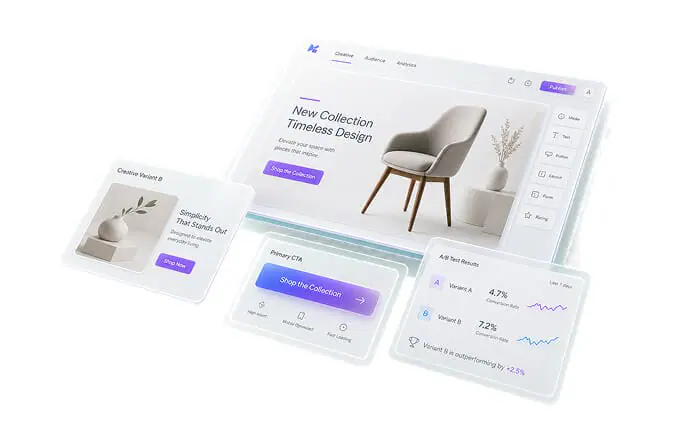
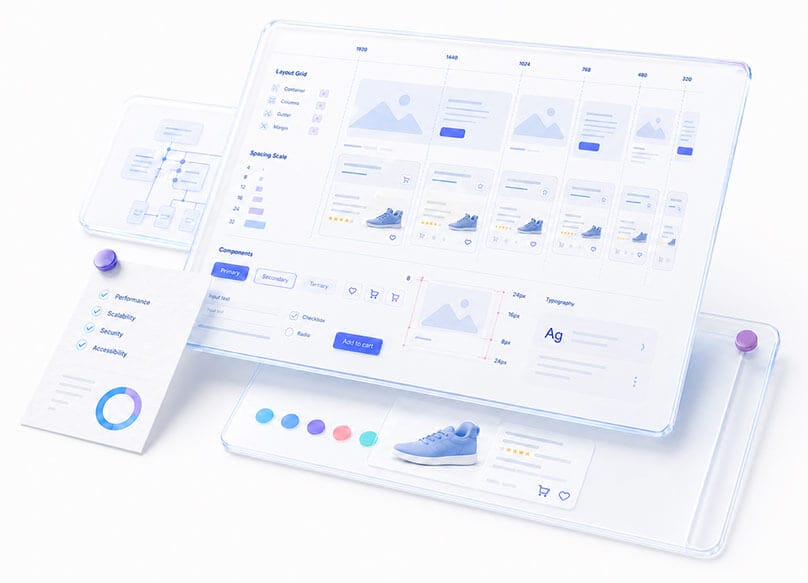
After wireframes are approved, we design a component library and responsive layouts your teams can reuse for years.
QA

Tested before it reaches production.
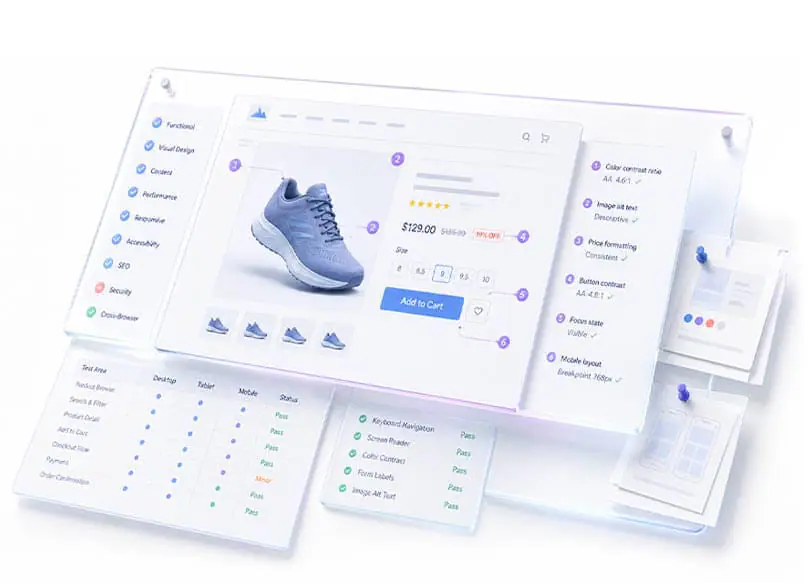
We build on your chosen stack, connect your systems and run layered QA with a dedicated QA engineer before launch.
Governance

A smooth handover to your teams.
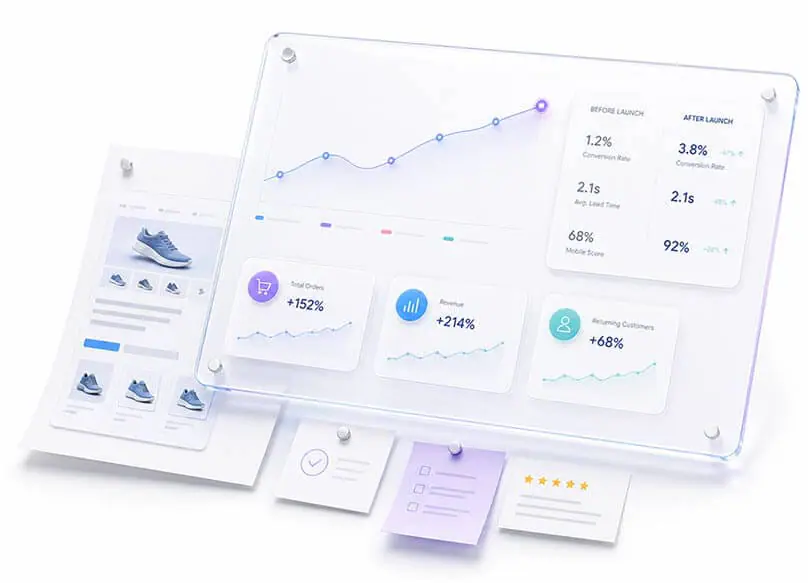
We plan the migration and redirects, train each team on the CMS and stay on through support and optimization retainers.

What Sets Us Apart?
Engineering
A modern, well-tested stack.
Scope Control
No surprise invoices.
Experience
We’ve built for organizations your size.
Roof
Fewer vendors to manage.
The Digital Silk team was, from the outset, the clear winner of our selection process and they’ve been an absolute dream to work with throughout the entire process. Their project team was both patient when needed and prodding when warranted to keep the process on target.

FAQs About Our Enterprise Web Design
What makes enterprise web design different from a standard website project?
Scale and coordination. An enterprise site serves many audiences, regions and business units, connects to several internal systems and has to pass security, legal and brand reviews. We plan the content model, governance and integrations upfront, so the platform stays consistent as dozens of people publish on it.
How do you work with our internal IT, marketing and procurement teams?
We keep them involved throughout, with decision points marked in the project plan and a user acceptance testing round so each team can review the site before launch.
Can you integrate our CRM, ERP and other core systems?
Yes. We build custom API connections between the site and your CRM, ERP, PIM, marketing automation and analytics, with error handling and monitoring so a failed sync gets caught instead of silently corrupting data. If a system has no modern API, we scope a middleware approach and tell you the effort involved upfront.
Which platforms do you build enterprise websites on?
WordPress for most enterprise marketing sites, because it scales to thousands of pages and your teams can manage it without a developer. For custom applications and headless builds, we use React, Next.js, Laravel, Angular and Node, with Docker, CI/CD pipelines, AWS and Cloudflare behind them. We choose the stack around your requirements, not our preference.
How do you keep an enterprise website secure?
In layers. We use SSL across the site, a web application firewall and DDoS protection through Cloudflare, encryption in transit, role-based admin access with two-factor authentication, regular patching, malware monitoring and automated encrypted backups. Security is shared, so we also show your team where its own processes and access rules come in.
How long does an enterprise website project take?
A typical custom project runs 3 to 6 months, and a large build with heavy integrations can take 9 months or more, depending on the number of sites, languages and systems involved. Roughly 35-40% of any timeline depends on the client side, such as content, stakeholder reviews and testing, so we share a dated schedule at kickoff showing when we need decisions from each team.
How do you handle changing requirements during the project?
With numbers. The project starts with hours per role and task, agreed before work begins, and your project manager reviews logged hours against that plan every week. If a request falls outside scope, you get the extra hours in writing first and decide whether to approve it, swap it for something in scope or move it to a later phase.
How do you migrate a large site without losing content or search traffic?
With a staging environment and a checklist refined over many migrations. We map every page, document and URL, move the content, plan 301 redirects for every old address and keep metadata and structured data in place. We reconcile page counts before launch and monitor rankings and traffic closely afterward.
Can you build multilingual or multi-region websites?
Yes. We’ve built multilingual sites with WPML and region or country selectors, and location pages that grow with your footprint.
How do you test an enterprise website before launch?
Every project has a dedicated QA engineer. Testing starts with software-assisted checks, then each department reviews its own work against a detailed checklist covering formatting, security, design accuracy, content, SEO, page speed and every form. Our CTO gives final approval before deployment, and your team gets a user acceptance testing round.
Do you host enterprise websites, and can they handle traffic spikes?
Yes. We run premium servers in the United States and Europe with a dedicated DevOps team, a CDN, firewall, DDoS protection, uptime monitoring and a documented disaster recovery plan. Before major launches or campaigns, we load-test the infrastructure and scale resources in advance. If your IT team prefers, we deploy to your own infrastructure.
Who owns the code and designs after launch?
Your organization does. Once the project is paid in full, the custom code, approved designs and content transfer to you, with repositories, deployment credentials and production access. Third-party components keep their own licenses, and our internal modules come with a full license for you to keep using them.
What support do you offer after an enterprise site launches?
We build support around what your teams need, from technical maintenance, security monitoring and uptime to new features, content production, conversion optimization and digital marketing. Hosting plans are available in monthly tiers.
"*" indicates required fields