eCommerce Cost Optimization: A Guide For Store Owners In 2026
Cut down on cost per order without cutting down your reach. See the 10 eCommerce cost optimization strategies store owners can use in 2026.


-
Low conversion makes every order more expensive. At the 1.7% average, you pay for 100 visitors and roughly 98 leave empty-handed..
-
Cutting spend is not the same as cutting waste. Pausing ads or squeezing a supplier improves this month’s numbers and takes next quarter’s revenue with it.
-
Ads stop when you stop paying, search traffic doesn’t. Our client Buddha Brands went from about 8 organic visits a month to roughly 86x growth in organic traffic within 18 months of launch.
Running an online store costs more in 2026 than it did 3 years ago. Ad auctions keep climbing, carriers raise rates every January and the subscription apps on your monthly invoice multiply faster than anyone tracks them.
At the same time, shoppers worldwide abandon 77% of desktop carts and 84% of mobile carts, which means most of the money you spend to bring people to your store walks out at the final step.
Below, we explore 10 eCommerce cost optimization strategies that protect your margin without shrinking the business you spent years building.
10 eCommerce Cost Optimization Strategies To Try
Pausing ads is the easiest lever to pull and usually the wrong one. Every strategy below cuts a cost without cutting what your customers get.
1. Find Out What One Order Actually Costs You
Most store owners can recite their ad spend and their cost of goods, then go fuzzy after that. Pull twelve months of bank statements and platform invoices, then sort every line into buckets: goods, fulfillment, shipping, returns, software, payment fees, labor and marketing.
Divide each bucket by the number of orders you shipped in that period. For instance, $18,000 of software across 6,000 orders comes to $3 per order. Add all eight figures together, then subtract that total from your average order value to see what you keep on a typical sale.
Watch the lines people miss, since you’ll have to export payment fees from your payout reports rather than find them on an invoice, and a return costs you two shipping labels plus the labor to inspect and restock it. This map gives eCommerce cost optimization a baseline, and without one, you’re cutting blind.
2. Cancel The Apps You’re Not Actively Using
Stores collect software the way garages collect boxes. Export your app and SaaS billing for the last year, then put three columns next to each tool: monthly cost, last login and what would break if you removed it tomorrow.
Anything with no login in 90 days goes on the chopping block, and anything that duplicates a feature your platform already ships loses too.
Two or three overlapping apps at $79 a month add up to a few thousand dollars a year you can redirect into inventory.
3. Fix Checkout Before You Buy More Traffic
Paying to send shoppers into a slow, confusing checkout is the most expensive habit in retail.
Every second of load time and every extra form field eats into the same traffic you already paid for, so a checkout fix pays you back on all future ad spend instead of a single campaign.
Google PageSpeed Insights gives you a free score plus a list of what’s slowing each page down, and it separates lab data from real visitor data so you can see what your actual shoppers experience.
On the other hand, GTmetrix shows you a waterfall chart of every file your page loads, which makes it obvious when a single tracking script or oversized product image is holding everything up.
Inside Google Search Console, the Core Web Vitals report flags which URL groups fail across your whole catalog rather than one page at a time.
Numbers like these tell you where to start. When G2 Esports came to us, their site averaged 6.23 seconds to load, converted at 0.65% and lost as much as 70.58% of carts before payment.
Our team rebuilt G2 Esports’ shop into a modular eCommerce and content ecosystem, splitting the store from fan content, adding category, size and price filtering plus wishlists.
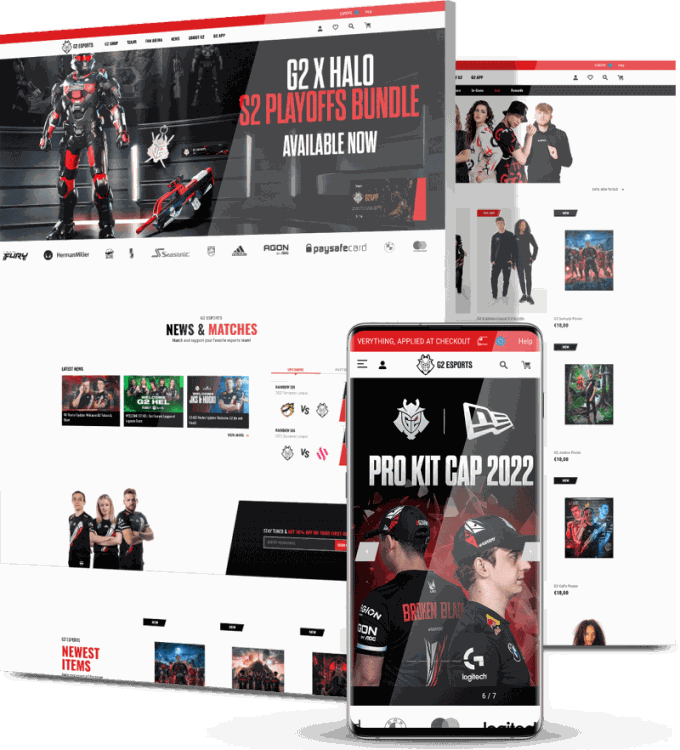
Same traffic, fewer dead ends.
4. Grow Organic Traffic So You Depend Less On Ads
Paid traffic disappears the day you stop paying. Organic search keeps working for years, which lowers your blended cost per customer and gives you a floor under revenue when ad prices spike in Q4.
You get there through keyword research that matches what buyers type, a sitemap that gives every product line its own page and content that answers questions before the sale.
Buddha Brands sells plant-based snacks across North America’s biggest retailers, but the site drew roughly 8 organic visits a month and ranked for 6 keywords.
We delivered a custom eCommerce platform with the SEO architecture underneath it, and within 12 to 18 months organic traffic grew about 86x with top-100 keywords up 124x.

That’s an acquisition channel you own rather than rent, which sits at the heart of eCommerce cost optimization.
5. Break The Habit Of Discounting By Default
A 20% off code feels free because no invoice arrives. It isn’t.
Discounts come straight out of gross margin, and running them on a schedule teaches your best customers to wait for the next one instead of buying at full price.
Look at your last six promotions and calculate incremental revenue, meaning sales you would not have made anyway, then compare that to the margin you handed back.
Swap one sitewide sale for bundles, free shipping thresholds or early access for email subscribers, and watch average order value do the work a discount used to do.
6. Write Descriptions That Stop Returns Before They Happen
Returns cost you twice on shipping, once on labor, and sometimes the whole unit when it comes back unsellable.
Most of them trace back to a gap between what the shopper pictured and what arrived in the box.
Add real dimensions, fit notes from actual buyers, photos against a familiar object for scale and short video of the product in use.
Then pull your top ten most-returned SKUs, read the return reasons instead of skimming them, and fix the description that’s causing the confusion.
7. Build Your Store Around The Device Your Buyers Actually Use
Open your analytics and check the mobile share of sessions. For stores selling through social video it often runs past 90%, and yet most storefronts get designed and signed off on a desktop monitor by people who already know the catalog by heart.
Someone arriving from a 20-second video has no category knowledge and no patience for a menu tree, so the product has to explain itself on the page in front of them.
R&W Co. sells home cleaning and fragrance products and had built a serious TikTok following, but their store gave visitors almost no context on scents, product differences or everyday use.
Our team rebuilt R&W Co.’s storefront on Shopify around its mobile audience, adding scent detail and product context to the pages and reworking navigation, cart and cross-sells into a shorter path to purchase.

Mobile accounted for more than 95% of sessions after launch, the store passed six figures in sales within 36 days and conversion held above 5%, roughly three times the average online store.
8. Forecast Your Inventory Based On Sales
Dead stock ties up cash you could spend on ads, and stockouts hand sales to a competitor while you keep paying for the traffic.
Build a simple forecast from last year’s weekly sales by SKU, adjusted for promotions you have planned and lead times from each supplier.
Flag slow movers at 90 days instead of waiting for end-of-season clearance, because a 15% markdown in month four recovers more margin than a 60% fire sale in month nine.
9. Rebuild Paid Media Based On Customer Value
Cost per click tells you almost nothing on its own. What matters is what a customer from that channel spends over a year, how often they come back and what margin their order carries.
Segment your channels by those numbers and you’ll usually find one that looks cheap but delivers one-time bargain hunters, and another that looks expensive but brings repeat buyers.
Move budget accordingly, then add retargeting, email and affiliate partners so you stop paying full price to reach the same person twice.
Rollink entered the U.S. as an unknown brand in an oversaturated category with costly keywords.
We paired their store with a 360-degree market entry strategy for Rollink spanning SEO articles, PPC, retargeting, email offers and an affiliate network with influencer giveaways.

Within a year the brand reached 730,000 visitors and lifted the average order value to $205, which is how you make a competitive ad market affordable.
10. Prioritize Long-Term Website Maintenance
Emergency development costs several times what planned development costs, and it always lands during your busiest week.
Expired payment gateway credentials, a broken tracking pixel, a plugin conflict that kills mobile checkout: none of these announce themselves and all of them drain revenue until someone notices.
Set a monthly cadence for platform updates, backup restore tests, checkout QA and Core Web Vitals checks.
A predictable retainer beats a panicked invoice, and steady eCommerce cost optimization depends on a store that doesn’t break every quarter.

Why eCommerce Cost Optimization Matters In 2026
The conditions that let stores grow through spend alone have reversed. Acquisition is pricier, shoppers compare more before they commit and margin has less room to absorb mistakes. Here’s what’s driving the pressure.
1. Acquisition Costs Rose Faster Than Order Values
Ad platforms have more advertisers competing for roughly the same attention, so the price of reaching your buyer goes up each year.
Order values haven’t kept pace, which squeezes the gap you live on.
Stores that pour more budget into the same funnel keep the revenue line moving while profit flattens. Improving what happens after the click gives you more room than raising the bid ever will.
2. Most Of Your Traffic Never Buys
The average online shopping conversion rate sits around 1.7%, meaning roughly 98 of every 100 visitors leave without a purchase.
You pay for all 100 through ads, hosting, content and bandwidth.
That math turns every conversion improvement into a cost improvement, because a move from 1.7% to 2.1% lowers what you effectively pay per order without adding a dollar of spend.
3. Shipping And Returns Eat More Margin Than Owners Track
Fulfillment is usually the largest variable cost in a product business, and returns hide inside it.
Outbound shipping, the return label, inspection, restocking and the occasional write-off all land in different places on your P&L, so the true per-return cost rarely appears in one number.
Pull them together once and the figure tends to surprise people. Once you can see it, you can act on it.
4. Small Inefficiencies Compound With Volume
A manual process that costs two hours a week is an annoyance at 200 orders a month and a serious expense at 2,000.
The same applies to a 3% oversell rate, a forecast that misses by 10% or a support inbox nobody automates.
Growth multiplies whatever you already have, including the waste. Fixing the process while you’re small costs a fraction of fixing it mid-peak season.
5. Shoppers Compare Total Cost, Not Sticker Price
Surprise shipping charges at checkout remain one of the top reasons people abandon carts.
Buyers now scan the full picture: delivery cost, delivery speed, return policy and payment options.
Cutting corners on any of those to save money usually pushes the shopper to a competitor who didn’t. Cost work that ignores the customer experience ends up costing you more than it saves.

Common Mistakes Businesses Make When Optimizing eCommerce Costs
Plenty of cost programs start well and fade within two quarters. The reasons repeat across stores of every size. Watch for these.
- Cutting spend instead of cutting waste: Pausing ads or dropping a supplier improves this month’s numbers and damages next quarter’s revenue.
- Optimizing one department at a time: Trimming inventory to save carrying costs creates stockouts that raise acquisition costs, so treat these budgets as connected.
- Chasing platform savings that move the cost elsewhere: A cheaper plan that adds developer hours or manual workarounds rarely saves anything once you count the labor.
- Ignoring the cost of a slow site: Every extra second of load time wastes traffic you already paid for, which is a marketing expense wearing a technical disguise.
- Measuring gross cost instead of cost per order: Total spend goes down while efficiency gets worse, and nobody notices until growth stalls.
- Letting discounts run on autopilot: Recurring sales train customers to wait, and that trained behavior costs you margin on orders you would have won at full price.
- Treating it as a one-time project: Costs creep back within a year unless someone owns a quarterly review with real numbers attached.
- Skipping the customer impact test: Slower delivery, cheaper packaging and thinner support all save money on paper and raise churn in practice.

Optimize Your eCommerce Costs With Digital Silk
Most stores don’t have a spending problem. They have a store that wastes the traffic it already pays for, and no amount of budget trimming fixes that.
Our team builds custom eCommerce platforms, rebuilds checkout flows, runs keyword research and site architecture, along with long-term marketing efforts.
We’ve done it for global brands entering new markets and for snack companies going from invisible to page one. We start by finding where your money leaks, then fix the parts of your store responsible for it.
Contact our team, call us today at (800) 206-9413 or fill in the Request a Quote form below to tell us about your project and start your eCommerce project today.
eCommerce Cost Optimization FAQs
What separates cost optimization from plain cost cutting?
Cost cutting lowers the number on an invoice, often by removing something customers rely on. Optimization looks at what each dollar produces and finds a cheaper route to the same outcome.
One shrinks capability, the other improves efficiency. A store that cuts support hours saves money and loses repeat buyers, while a store that automates order routing saves money and keeps every customer it had.
If I only have time to look at one area, which should it be?
Start with conversion rate. Improving the percentage of visitors who buy lowers your effective cost per order across every channel at once, including the ones you already paid for.
Fulfillment savings help too, but they scale with order volume rather than multiplying it. Check your mobile checkout first, since that’s where most stores lose the largest share of carts.
How often should I audit my apps and software?
Once a quarter takes about an hour and usually pays for itself. Export the billing, note the last login date for each tool and confirm nothing overlaps with features your platform already includes.
Annual audits let a year of unused subscriptions pile up before anyone catches them. Set a recurring calendar reminder the same week you review your ad spend.
Does site speed really affect my costs or just my rankings?
Both. Slow pages lose shoppers you paid to acquire, so the cost sits in your marketing budget rather than your hosting bill.
A store loading in six seconds wastes a meaningful share of every campaign it runs. Speed also feeds search rankings, which affects how much organic traffic you get and how much your paid channels contribute.
Does website maintenance affect SEO?
It does, though the connection takes time to show. Slow pages, crawl errors, broken links and discontinued products that return errors all chip away at rankings, and the decline happens slowly enough that most teams blame an algorithm update instead.
Routine crawls catch these issues early. Redirecting retired product URLs to relevant alternatives also keeps the authority those pages earned.
How do I know if my return rate is too high?
Compare your rate by category rather than against a single benchmark, since apparel and furniture behave nothing like consumables.
Then look at direction: a rate climbing month over month points at a product page, a sizing guide or a quality issue. Read the actual return reasons for your ten most-returned products. The pattern usually shows up within twenty responses.
Should I stop discounting completely?
No, but change how you use them. Discounts work to clear aging stock, reward a first purchase or win back a lapsed customer.
They stop working when they run on a schedule, because buyers learn the calendar and wait. Compare incremental revenue against the margin you gave up on each promotion and replace the weakest performers with bundles or shipping thresholds.
When does switching platforms actually save money?
When your current setup forces manual work, blocks features you need or charges transaction fees that exceed the migration cost within 18 months.
Migration itself carries real expense in development, data transfer, SEO redirects and staff retraining. Run those numbers before you move.
Plenty of stores switch to a cheaper plan and spend the savings on developers patching what the plan doesn’t cover.
How do I calculate what a customer is worth to me?
Take average order value, multiply by how many times a typical customer orders in a year, then multiply by your gross margin.
Compare that figure to what you spend to acquire one customer from each channel. Channels that look cheap on cost per click often bring one-time buyers, while pricier channels bring people who order four times. Budget by that comparison.
Can I reduce marketing spend without losing sales?
Yes, if you reduce waste rather than reach. Kill campaigns with poor lifetime value, shift budget toward retargeting and email where you’re reaching people who already know you, and improve landing pages so the traffic you keep converts harder.
Blanket cuts do the opposite and remove reach along with the waste. Cut by channel performance, never across the board.
Is a maintenance retainer cheaper than fixing problems as they appear?
Usually yes, once you count the revenue lost while something is broken. Emergency development bills at a premium, arrives on someone else’s schedule and tends to strike during peak season.
A planned cadence covering updates, backups, checkout testing and performance checks catches most issues before customers meet them. Compare a monthly retainer against one weekend of broken checkout and the math answers itself.
Tell us about your website goals and let our experts give you a custom proposal
"*" indicates required fields